Hubert Robert: Pittore di Rovine e Visioni
- Nato: 22 maggio 1733, Parigi, Francia
- Morto: 15 aprile 1808, Parigi, Francia
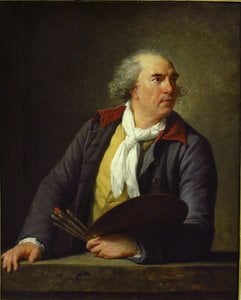
Hubert Robert fu un pittore francese celebrato per i suoi suggestivi paesaggi e dipinti a *capriccio*—rappresentazioni pittoresche semi-fittizie di rovine in Italia e Francia. È considerato una figura chiave che colma il divario tra i periodi Rococò e Neoclassico, anticipando aspetti del Romanticismo con la sua fascinazione per il decadimento, la storia e le ricostruzioni immaginarie.
Primi Anni e Formazione Artistica
Nicolas Robert, padre di Hubert, servì François-Joseph de Choiseul, marchese de Stainville. Robert ricevette un'istruzione gesuita al Collège de Navarre nel 1751. Successivamente studiò scultura con Michel-Ange Slodtz, che lo incoraggiò a dedicarsi alla pittura. Questa formazione iniziale gli instillò una solida base in disegno e prospettiva, elementi cruciali che avrebbero poi definito il suo stile artistico.
Gli Anni Romani e Sviluppo Artistico (1754-1765)
- Trasferimento a Roma: Nel 1754, Robert si trasferì a Roma con Étienne-François de Choiseul, figlio del suo datore di lavoro.
- Undici Anni in Italia: Trascorse undici anni a Roma, un periodo formativo per il suo sviluppo artistico.
- Sostegno e Patronato: Si mantenne creando opere per intenditori visitatori come l'Abbé de Saint-Non.
- Influenza di Giovanni Paolo Panini: Robert lavorò accanto a Giovanni Paolo Panini, la cui influenza è evidente nelle sue prime composizioni a *capriccio*.
- Schizzi e Osservazione: Schizzò meticolosamente rovine e paesaggi romani, documentando siti come Villa d'Este e Caprarola, dimostrando un occhio acuto per i dettagli e la prospettiva atmosferica.
Il suo periodo a Roma plasmò profondamente la visione artistica di Robert. La giustapposizione delle antiche rovine romane con la vita contemporanea scatenò il suo interesse nel rappresentare il decadimento insieme alla vitalità, un tema ricorrente in tutta la sua carriera.
Ritorno a Parigi e Riconoscimento (1765-1790)
- Rapido Successo: Al suo ritorno a Parigi nel 1765, Robert ottenne rapidamente riconoscimento.
- Ammissione all'Académie Royale de Peinture et de Sculpture: Fu ammesso all'Académie Royale de Peinture et de Sculpture con un *capriccio* romano, "Il Porto di Roma, Ornato di Diversi Monumenti dell'Architettura, Antichi e Moderni."
- Mostre al Salon: Le sue esposizioni al Salon (a partire dal 1767) ottennero notevole attenzione. Denis Diderot commentò famosamente la grandiosità evocata dalle sue rappresentazioni di rovine.
- Opere Notabili: Opere chiave di questo periodo includono "Paesaggio con le Rovine del Tempio Rotondo, con una Statua di Venere e un Monumento a Marco Aurelio," che mostra la sua padronanza della pittura a *capriccio*.
Il successo parigino di Robert derivò dalla sua capacità di catturare sia la grandezza dell'antichità classica che la vivacità della vita contemporanea. Le sue opere risuonarono con il pubblico affascinato dalla storia, dall'archeologia e dal pittoresco.
Ultimi Anni, Rivoluzione e Eredità (1790-1808)
- Rivoluzione Francese: Robert fu testimone e documentò la Rivoluzione Francese, compresa la demolizione di monumenti storici.
- Curatore del Muséum Central des Arts: Servì come curatore del neonato Muséum Central des Arts (poi il Louvre), dimostrando il suo impegno nella conservazione del patrimonio culturale.
- Continuata Produzione Artistica: Nonostante il clima politico turbolento, Robert continuò a dipingere e disegnare prolificamente.
- Riproduzione e Influenza: Le sue opere furono frequentemente riprodotte da artisti come l'Abbé de Saint-Non, Châtelain, Linard e Le Veau, testimonianza della sua diffusa influenza.
L'eredità di Hubert Robert risiede nella sua capacità unica di fondere accuratezza storica con visione immaginativa. Pioniere di un genere di pittura che celebrava sia la bellezza del decadimento che il potere duraturo della creatività umana. La sua opera continua a ispirare artisti e affascinare il pubblico, consolidando il suo posto come figura significativa nell'arte del XVIII secolo.



 Anteprima in scala reale
 Passa alle stampe
 Condividi
 Condividi
 Dettagli

 Scarica
 Articoli simili
 Radiografia
 Slideshow
 Statistiche


 Leggi tutto






































 L'opzione vetro è disponibile solo per dimensioni inferiori a 110 cm