x
Anteprima in scala realeAnteprima in scala reale Anteprima ARAnteprima AR Acquista il dipinto realizzato a mano Acquista il dipinto realizzato a manoAcquista immagine Acquista immagine InviaInvia
Dettagli operaDettagli opera Aggiungi ai preferiti Aggiungi ai preferiti Scarica immagineScarica immagine SimiliSimili RadiografiaRadiografia SlideshowSlideshow

LES CHANTEURS AMBULANTS

Hubert Robert’s "Les Chanteurs Ambulants" captures a nostalgic Roman scene with musicians and onlookers amidst ancient ruins, showcasing his mastery of light, atmosphere & romantic decay.

Hubert Robert (1733-1808): pittore francese celebre per paesaggi suggestivi e 'capricci' di rovine romane e francesi, catturando la bellezza nel decadimento.

Giclée / Stampe d'arte

Stampa giclée o su tela di qualità museale, con produzione rapida e diverse opzioni di finitura. (Acquista il dipinto realizzato a mano Acquista il dipinto realizzato a manoAcquista immagine Acquista immagine)

P118B $10
P118H $10
P118W $10
P438Z $10
P508JH $12
P508YH $12
P805H $10
P805Z $10
P919BZ $10
P919G $10
P919XJ $10
P959ZH $10
P968JZ $12
W106C $8
W218G $10
W218JH $8
W218Y $10
W307PJ $10
W316G $10
W316PJ $8
W316Y $10
W398PJ $8
W4111J $10
W500HY $15
W500JH $15
W692G $12
W849H $8
W940BG $15
W953PJ $8

Formato standard
su misura
CM
INCH

Scegli tra le nostre dimensioni predefinite, che rispettano le proporzioni originali dell'opera d'arte.

larghezza
altezza

È possibile inserire dimensioni personalizzate per adattare l'opera a una cornice o a uno spazio specifico. Se la dimensione selezionata non corrisponde alle proporzioni dell'immagine originale, procederemo al ritaglio dell'opera o all'estensione dell'immagine con un bordo specchiato o a tinta unita. Un mockup digitale ti verrà inviato per approvazione prima dell'inizio della produzione.
Si prega di notare che l'anteprima a schermo non riflette il ritaglio o l'estensione effettivi. Solo il mockup mostrerà accuratamente la composizione finale.
Sebbene siano disponibili dimensioni personalizzate, si raccomanda di selezionare una dimensione dall'elenco predefinito per preservare le proporzioni originali.

Consegna in tutto il mondo () in 2 settimane invece delle normali 4/5 settimane. (31 Agosto)

why_choose_icon
Spedizione espressa gratuita in tutto il mondo
why_choose_icon
Tela in lino di alta qualità
why_choose_icon
Assicurazione completa sulla spedizione
why_choose_icon
Garanzia di rimborso dei dazi doganali
why_choose_icon
Garanzia di fedeltà cromatica
why_choose_icon
Politica di reso entro 60 giorni (solo per difetti di fabbricazione)
why_choose_icon
Garanzia di rimborso al 100%
why_choose_icon
Offerta per acquisti multipli

Prezzo totale

$ 68

reproduction

LES CHANTEURS AMBULANTS

Giclée / Stampe d'arte

Dimensioni riproduzione

-

Prezzo totale calcolato

$ 68

Informazioni rapide

  • Subject or theme: Street performance
  • Artistic style: Neoclassical/Rococo
  • Notable elements: Ruins, musicians
  • Artist: Hubert Robert
  • Movement: Romanticism
  • Influences: Piranesi

Quiz d'arte

Per ogni domanda è presente una sola risposta corretta.

Domanda 1:
What is the dominant architectural element featured prominently in ‘Les Chanteurs Ambulants’?
Domanda 2:
The painting's muted color palette primarily evokes which mood or feeling?
Domanda 3:
Which artistic movement is most closely associated with Hubert Robert’s style as demonstrated in ‘Les Chanteurs Ambulants’?
Domanda 4:
The use of linear perspective and atmospheric perspective in the painting primarily serves to:
Domanda 5:
Considering Robert’s known interest in ruins, what is a key symbolic element conveyed by the presence of ancient structures in ‘Les Chanteurs Ambulants’?

Hubert Robert’s Roman Reveries: A Journey Through Time and Illusion

Hubert Robert's "Les Chanteurs Ambulants" (The Wandering Musicians) isn’t merely a depiction of a street scene; it’s an invitation to step back in time, a carefully constructed illusion that masterfully blends observation with the romanticism of the late 18th century. Painted around 1790, this artwork transports us to an imagined Roman setting – a place where antiquity and everyday life intertwine, creating a poignant tableau of beauty, decay, and the enduring power of human connection. Robert, a name intrinsically linked with the evocative allure of ruins and the art of ‘capriccio,’ possessed a unique ability to capture not just the appearance of a landscape but its emotional resonance. His work transcends simple documentation; it’s an exploration of memory, history, and the artist's own imaginative vision.

The composition itself is a testament to Robert’s skill. The monumental stone building on the left immediately establishes a strong vertical axis, anchoring the scene while simultaneously drawing the eye upwards towards the arched window – a portal through which we glimpse a musician lost in his performance. Below, a diverse group of figures gathers, their postures suggesting rapt attention and quiet enjoyment. The background, deliberately hazy and layered with hints of distant ruins and verdant foliage, creates a sense of depth that extends far beyond the immediate scene. This strategic division – building/window, audience, background – isn’t arbitrary; it's a deliberate orchestration designed to guide the viewer’s eye and immerse them in Robert’s carefully crafted world.

A Palette of Earth and Memory

The color palette of “Les Chanteurs Ambulants” is deliberately muted, dominated by earthy browns, tans, and subtle greens. This isn't a vibrant celebration of color; rather, it speaks to the passage of time, suggesting an aged and weathered world. The occasional flash of red in the clothing of some figures – perhaps a cloak or scarf – provides a delicate contrast, adding a touch of warmth without disrupting the overall sense of melancholy. Robert’s masterful use of light is equally subtle, creating a diffused glow that seems to emanate from the left side of the composition, illuminating the building and its inhabitants while leaving the background shrouded in gentle shadow. This soft lighting contributes significantly to the artwork's dreamlike quality.

Technique and the Illusion of Depth

Robert’s technique is characterized by a remarkable attention to detail combined with a loose, expressive brushwork. He employed a layering method – thin washes of paint applied over an underpainting – which creates a soft, blended effect that enhances the sense of atmosphere. While linear perspective is skillfully utilized to establish depth and create a believable spatial arrangement, atmospheric perspective—the subtle blurring and desaturation of distant elements—further reinforces this illusion. Notice how the details on the building diminish as they recede into the background, while the foliage in the distance appears softer and less defined. The visible brushstrokes themselves contribute to the artwork’s aged appearance, suggesting a surface worn by time and experience.

Symbolism of Ruin and Renewal

“Les Chanteurs Ambulants” is rich with symbolic meaning. The presence of classical architecture and ruins immediately evokes themes of history, time, and the inevitable decay of civilizations. Robert wasn’t simply depicting a picturesque scene; he was engaging with the Romantic fascination with the past – a desire to recapture lost glories and contemplate the fleeting nature of human endeavors. The wandering musicians themselves can be interpreted as symbols of art's enduring power—a reminder that beauty, entertainment, and connection can transcend temporal boundaries. The overall mood is one of quiet contemplation, tinged with a sense of nostalgia for a bygone era. It’s a poignant meditation on the relationship between memory, artistry, and the human spirit.

Bringing Robert's Vision Home

WahooArt offers meticulously crafted hand-painted reproductions of Hubert Robert’s “Les Chanteurs Ambulants,” allowing you to experience the beauty and emotional depth of this captivating artwork in your own space. Each reproduction is created using traditional techniques and high-quality materials, ensuring a faithful representation of Robert's original vision. Whether you are an art collector, interior designer, or simply someone seeking a touch of timeless elegance, a WahooArt reproduction of “Les Chanteurs Ambulants” will bring a sense of history, romance, and artistic inspiration to your home.


Biografia dell'artista

Hubert Robert: Pittore di Rovine e Visioni

  • Nato: 22 maggio 1733, Parigi, Francia
  • Morto: 15 aprile 1808, Parigi, Francia

Hubert Robert fu un pittore francese celebrato per i suoi suggestivi paesaggi e dipinti a *capriccio*—rappresentazioni pittoresche semi-fittizie di rovine in Italia e Francia. È considerato una figura chiave che colma il divario tra i periodi Rococò e Neoclassico, anticipando aspetti del Romanticismo con la sua fascinazione per il decadimento, la storia e le ricostruzioni immaginarie.

Primi Anni e Formazione Artistica

Nicolas Robert, padre di Hubert, servì François-Joseph de Choiseul, marchese de Stainville. Robert ricevette un'istruzione gesuita al Collège de Navarre nel 1751. Successivamente studiò scultura con Michel-Ange Slodtz, che lo incoraggiò a dedicarsi alla pittura. Questa formazione iniziale gli instillò una solida base in disegno e prospettiva, elementi cruciali che avrebbero poi definito il suo stile artistico.

Gli Anni Romani e Sviluppo Artistico (1754-1765)

  • Trasferimento a Roma: Nel 1754, Robert si trasferì a Roma con Étienne-François de Choiseul, figlio del suo datore di lavoro.
  • Undici Anni in Italia: Trascorse undici anni a Roma, un periodo formativo per il suo sviluppo artistico.
  • Sostegno e Patronato: Si mantenne creando opere per intenditori visitatori come l'Abbé de Saint-Non.
  • Influenza di Giovanni Paolo Panini: Robert lavorò accanto a Giovanni Paolo Panini, la cui influenza è evidente nelle sue prime composizioni a *capriccio*.
  • Schizzi e Osservazione: Schizzò meticolosamente rovine e paesaggi romani, documentando siti come Villa d'Este e Caprarola, dimostrando un occhio acuto per i dettagli e la prospettiva atmosferica.

Il suo periodo a Roma plasmò profondamente la visione artistica di Robert. La giustapposizione delle antiche rovine romane con la vita contemporanea scatenò il suo interesse nel rappresentare il decadimento insieme alla vitalità, un tema ricorrente in tutta la sua carriera.

Ritorno a Parigi e Riconoscimento (1765-1790)

  • Rapido Successo: Al suo ritorno a Parigi nel 1765, Robert ottenne rapidamente riconoscimento.
  • Ammissione all'Académie Royale de Peinture et de Sculpture: Fu ammesso all'Académie Royale de Peinture et de Sculpture con un *capriccio* romano, "Il Porto di Roma, Ornato di Diversi Monumenti dell'Architettura, Antichi e Moderni."
  • Mostre al Salon: Le sue esposizioni al Salon (a partire dal 1767) ottennero notevole attenzione. Denis Diderot commentò famosamente la grandiosità evocata dalle sue rappresentazioni di rovine.
  • Opere Notabili: Opere chiave di questo periodo includono "Paesaggio con le Rovine del Tempio Rotondo, con una Statua di Venere e un Monumento a Marco Aurelio," che mostra la sua padronanza della pittura a *capriccio*.

Il successo parigino di Robert derivò dalla sua capacità di catturare sia la grandezza dell'antichità classica che la vivacità della vita contemporanea. Le sue opere risuonarono con il pubblico affascinato dalla storia, dall'archeologia e dal pittoresco.

Ultimi Anni, Rivoluzione e Eredità (1790-1808)

  • Rivoluzione Francese: Robert fu testimone e documentò la Rivoluzione Francese, compresa la demolizione di monumenti storici.
  • Curatore del Muséum Central des Arts: Servì come curatore del neonato Muséum Central des Arts (poi il Louvre), dimostrando il suo impegno nella conservazione del patrimonio culturale.
  • Continuata Produzione Artistica: Nonostante il clima politico turbolento, Robert continuò a dipingere e disegnare prolificamente.
  • Riproduzione e Influenza: Le sue opere furono frequentemente riprodotte da artisti come l'Abbé de Saint-Non, Châtelain, Linard e Le Veau, testimonianza della sua diffusa influenza.

L'eredità di Hubert Robert risiede nella sua capacità unica di fondere accuratezza storica con visione immaginativa. Pioniere di un genere di pittura che celebrava sia la bellezza del decadimento che il potere duraturo della creatività umana. La sua opera continua a ispirare artisti e affascinare il pubblico, consolidando il suo posto come figura significativa nell'arte del XVIII secolo.

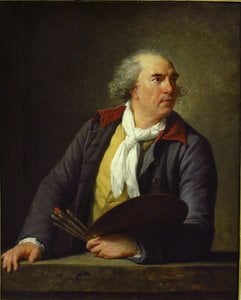
Hubert Robert

Hubert Robert

1733 - 1808 , Francia

Dati rapidi

  • Artisti Influenti: ['Giovanni Paolo Panini']
  • Data Di Nascita: 22 maggio 1733
  • Luogo Di Nascita: Parigi, Francia
  • Movimento Artistico: Romanticismo
  • Nazionalità: Francese
  • Nome Completo: Hubert Robert
  • Opere Notevoli:
    • Paesaggio con rovine
    • La fuga di Galatea
    • Arco di Trionfo in ruine
Esplora le opere d'arte organizzate per temi, stili e caratteristiche.