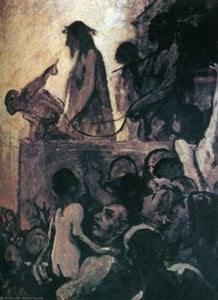
La Vita e l'Opera di Honoré Daumier
Honoré Victorin Daumier, nato a Marsiglia il 26 febbraio 1808 e morto a Parigi il 10 o 11 dicembre 1879, è stato un artista francese prolifico, noto per le sue caricature satiriche, i suoi dipinti e le sue sculture. La sua opera offre uno spaccato vivido della vita sociale e politica in Francia durante il XIX secolo.
Primi Anni e Formazione
Daumier nacque in una famiglia modesta; suo padre era un poeta e glasiatore. Trascorse la sua infanzia a Marsiglia, per poi trasferirsi con la famiglia a Parigi nel 1814. Iniziò presto a lavorare come garzone presso uno studio di notaio, ma trovò il tempo per dedicarsi al disegno. Studiò con Alexandre Lenoir e frequentò l'Académie Suisse, dove affinò le sue capacità artistiche. Si appassionò alla scultura classica e all’opera di Rubens e Tiziano.
Carriera Artistica e Impegno Politico
Daumier iniziò la sua carriera artistica producendo illustrazioni e caricature anonime per diverse pubblicazioni. Nel 1830, dopo la Rivoluzione di Luglio, divenne un collaboratore regolare de *La Caricature*, un giornale satirico che gli offrì una piattaforma per esprimere le sue opinioni politiche. Le sue opere, spesso critiche nei confronti della monarchia di Luigi Filippo e dell'aristocrazia, lo resero popolare ma anche controverso.
- Lithografie Politiche: Daumier utilizzò la litografia come strumento potente per criticare il potere costituito, affrontando temi come la corruzione giudiziaria, l’inefficienza del governo e le disuguaglianze sociali.
- Imprigionamento: Nel 1832, fu imprigionato per sei mesi a causa di una caricatura particolarmente offensiva nei confronti del re, *Gargantua*. Questo evento non lo fermò, anzi, rafforzò il suo impegno politico e artistico.
- Periodo Post-Imprigionamento: Dopo la sua liberazione, Daumier continuò a produrre opere satiriche, ma con un approccio più sottile per evitare ulteriori problemi legali. Si concentrò maggiormente sulla rappresentazione della vita quotidiana parigina e dei suoi personaggi.
Stile Artistico e Temi
Lo stile di Daumier è caratterizzato da una combinazione unica di realismo, caricatura e critica sociale. I suoi dipinti e le sue litografie sono notevoli per la loro capacità di catturare l'essenza della vita parigina del XIX secolo, con particolare attenzione alle classi lavoratrici e ai marginali.
- Realismo: Daumier si sforzò di rappresentare la realtà in modo accurato e senza idealizzazioni.
- Caricatura: Utilizzò l'esagerazione e la deformazione per satirizzare i personaggi e le istituzioni sociali.
- Temi Sociali: Le sue opere affrontano temi come la povertà, l’ingiustizia sociale, la corruzione politica e la condizione umana in generale.
Opere Principali e Eredità
Daumier ha lasciato un'eredità artistica vasta e significativa. Tra le sue opere più importanti si ricordano:
- Rue Transnonain, 15 aprile 1834: Un’opera potente che raffigura la repressione violenta di una rivolta popolare a Parigi.
- Les Gens de Justice: Una serie di litografie satiriche che prendono in giro il sistema giudiziario francese.
- Le Marchand d'ondes: Una caricatura pungente dei giornalisti e della stampa scandalistica.
- Don Quichotte et Sancho Panza: Un dipinto ispirato al romanzo di Cervantes, che esplora temi come l’illusione e la realtà.
Nonostante non abbia ricevuto un ampio riconoscimento durante la sua vita, Daumier è oggi considerato uno dei più grandi artisti francesi del XIX secolo. La sua opera ha influenzato profondamente numerosi pittori impressionisti e post-impressionisti, come Degas, Manet e Toulouse-Lautrec. La sua capacità di combinare l'arte con un forte impegno sociale lo rende ancora oggi un artista rilevante e stimolante.



 Anteprima in scala reale
 Ordina la riproduzione dipinta a mano
 Condividi
 Condividi
 Dettagli
 Guida stampabile

 Scarica
 Articoli simili
 Radiografia
 Slideshow
 Statistiche

 Leggi tutto






































 L'opzione vetro è disponibile solo per dimensioni inferiori a 110 cm