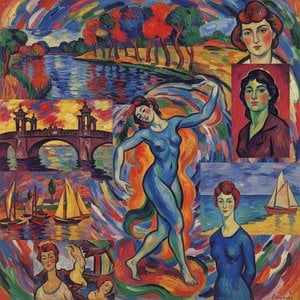
The Dramatic Presence of Henry Perronet Briggs
Henry Perronet Briggs’s “Ira Aldridge as Othello,” painted circa 1830, is more than a simple portrait; it's a carefully constructed tableau vivant capturing the essence of a pivotal moment in American theatrical history. Briggs, an English painter known for his meticulous realism and ability to imbue his subjects with profound emotion, masterfully portrays Ira Aldridge, the first African-American actor to achieve international renown. The painting immediately draws the eye to Aldridge’s commanding presence – seated on a simple wooden chair, he exudes both vulnerability and regal authority. His posture is relaxed yet alert, suggesting a man accustomed to captivating audiences with his dramatic performances.
The choice of attire is particularly significant. Aldridge wears a rich green costume accented by a vibrant red scarf, colors that speak to the intensity of the role he embodies. The crown perched upon his head isn’t merely decorative; it symbolizes Othello's status as a Moorish general and highlights the tragic irony of his downfall. Briggs’s skillful use of light and shadow further enhances this dramatic effect, sculpting Aldridge’s face and emphasizing the weight of his character’s burden.
A Pioneer in a Racist Landscape
To fully appreciate “Ira Aldridge as Othello,” it's crucial to understand the historical context. In 1825, when Briggs painted this portrait, America was grappling with deeply ingrained racial prejudices. Black actors faced systemic discrimination and were often relegated to minor roles or forced to perform in segregated theaters. Ira Aldridge’s success—his tours of Europe and his command of Shakespearean tragedy—represented a remarkable achievement against these odds. Briggs's decision to immortalize Aldridge on canvas was, in part, an act of defiance, a celebration of Black talent and artistic excellence within a society that frequently denied it.
Aldridge’s story is inextricably linked to the burgeoning abolitionist movement. He actively used his performances to advocate for freedom and equality, often portraying characters like Shylock in *The Merchant of Venice*, challenging racial stereotypes and prompting reflection on social injustice. Briggs's portrait serves as a visual testament to this courageous stance.
Technique and Composition: A Study in Detail
Briggs’s technical skill is evident in every brushstroke. The painting demonstrates a remarkable attention to detail, from the texture of Aldridge’s costume to the subtle nuances of his facial expression. He employs a refined oil-on-canvas technique, layering colors and creating a sense of depth and realism. Note the careful rendering of the wooden chair – its grain and imperfections contribute to the overall atmosphere of quiet contemplation.
The composition is carefully balanced, with Aldridge occupying the central space and two figures flanking him—one in the upper left corner and another on the right side. These secondary figures, though less defined, add a sense of narrative context, perhaps suggesting the audience or the world of drama that Aldridge embodies. The background, featuring a simple chair, is deliberately understated, drawing focus entirely to the central subject.
Symbolism and Emotional Resonance
Beyond its technical merits, “Ira Aldridge as Othello” resonates with profound emotional depth. The actor’s serious gaze—directed off into the distance—suggests a man burdened by his role, aware of the tragic fate that awaits him in Shakespeare's play. There is a palpable sense of melancholy and introspection within the portrait. Briggs doesn’t simply depict Aldridge; he captures the spirit of a pioneering artist who dared to challenge societal norms and achieve greatness despite facing significant adversity.
This painting remains a powerful reminder of Ira Aldridge's legacy—a testament to his talent, courage, and enduring impact on American theater. It’s a poignant exploration of identity, race, and the transformative power of art.



 Anteprima in scala reale
 Ordina la riproduzione dipinta a mano
 Condividi
 Condividi
 Dettagli
 Guida
Guida

 Scarica
 Articoli simili
 Radiografia
 Slideshow
 Statistiche


 Leggi tutto






































 L'opzione vetro è disponibile solo per dimensioni inferiori a 110 cm