CONSULENZA D'ARTE GRATUITA

x
Acquista stampa Acquista stampaAcquista download Acquista download InviaInvia
DetailsDetails Aggiungi ai preferiti Aggiungi ai preferiti ScaricaScarica SimiliSimili X-RayX-Ray SlideshowSlideshow

Provençal Winter

Discover "Provençal Winter" by Henry La Thangue – a serene Impressionist landscape of lemons & roses. Explore this 1903 oil painting's beauty & detail at the Glasgow Art Gallery.

Henry Herbert La Thangue: pittore inglese realista noto per paesaggi rurali dettagliati e scene di vita quotidiana, figura chiave della Scuola di Newlyn e sostenitore dell'arte democratica. Celebrazione del paesaggio britannico attraverso opere evocative e precise.

Riproduzione a olio fatta a mano

Olio su tela dipinto a mano nelle tue dimensioni e con la tua cornice, realizzato su ordinazione dai nostri artisti.

P118B $10
P118H $10
P118W $10
P438Z $10
P508JH $12
P508YH $12
P805H $10
P805Z $10
P919BZ $10
P919G $10
P919XJ $10
P959ZH $10
P968JZ $12
W106C $8
W218G $10
W218JH $8
W218Y $10
W307PJ $10
W316G $10
W316PJ $8
W316Y $10
W398PJ $8
W4111J $10
W500HY $15
W500JH $15
W692G $12
W849H $8
W940BG $15
W953PJ $8

Standard
custom
CM
INCH

Scegli tra le nostre dimensioni predefinite, che rispettano le proporzioni originali dell'opera d'arte.

larghezza
altezza

È possibile inserire dimensioni personalizzate per adattare l'opera a una cornice o a uno spazio specifico. Se la dimensione selezionata non corrisponde alle proporzioni dell'immagine originale, provvederemo a ritagliare l'opera o a estendere il dipinto con elementi aggiuntivi dipinti a mano. Un mockup digitale ti sarà inviato per approvazione prima dell'inizio della produzione.
Si prega di notare che l'anteprima a schermo non riflette il ritaglio o l'estensione effettivi. Solo il mockup mostrerà accuratamente la composizione finale.
Sebbene siano disponibili dimensioni personalizzate, consigliamo di selezionare una dimensione dall'elenco predefinito per preservare le proporzioni originali.

Esempi di modifiche possibili: sostituire il volto con una foto del cliente; aggiungere un animale domestico (ad esempio, sostituire un gatto con un cane); inserire un messaggio nascosto sullo sfondo; modificare il paesaggio o gli elementi dello sfondo.
Dopo l'ordine, il team di WahooArt.com invierà un'e-mail al cliente per le istruzioni e fornirà un'anteprima del mockup

Consegna in tutto il mondo () in 3/4 settimane anziché nelle normali 5 settimane. (1 Luglio). Nessun compromesso sulla qualità.

why_choose_icon
Spedizione espressa gratuita in tutto il mondo
why_choose_icon
Tela in lino di alta qualità
why_choose_icon
Assicurazione completa sulla spedizione
why_choose_icon
Garanzia di rimborso dei dazi doganali
why_choose_icon
Garanzia di fedeltà cromatica
why_choose_icon
Politica di reso entro 60 giorni (solo per difetti)
why_choose_icon
Garanzia di rimborso al 100%
why_choose_icon
Sconto per acquisti multipli

Prezzo totale

-

reproduction

Provençal Winter

Tecnica di riproduzione

Dimensioni riproduzione

-

Prezzo totale finale

-

Informazioni rapide

  • Title: Provençal Winter
  • Influences: French plein air
  • Subject or theme: Rural landscape
  • Artistic style: Impressionism
  • Notable elements: Lemon harvest, roses
  • Year: 1903
  • Movement: New English Art Club

Quiz d'arte

Per ogni domanda è presente una sola risposta corretta.

Domanda 1:
What is the title of the painting?
Domanda 2:
In what year was 'Provençal Winter' painted?
Domanda 3:
Which art movement is Henry Herbert La Thangue most closely associated with?
Domanda 4:
What type of landscape is predominantly depicted in the painting?
Domanda 5:
The lighting in 'Provençal Winter' is best described as:

Descrizione dell'opera

A Moment Frozen in Provençal Light: Exploring Henry Herbert La Thangue’s “Provençal Winter”

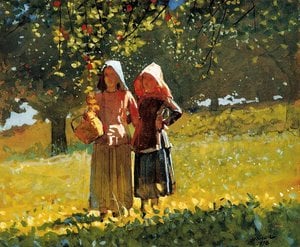
Henry Herbert La Thangue's "Provençal Winter," painted in 1903, isn’t merely a depiction of a rural scene; it’s an immersion into the very soul of the South of France. This oil on canvas transports us to a sun-drenched hillside, where a woman diligently harvests lemons beneath a canopy of roses and ancient trees – a tableau brimming with quiet industry and understated beauty. La Thangue, a key figure in the New English Art Club movement, masterfully captured the essence of Impressionism while firmly rooted in British realist tradition, creating an artwork that resonates with both familiarity and exotic allure.

The painting’s genesis lies within La Thangue's extensive travels throughout Europe. Following his time in Paris, where he honed his skills under Jean-Léon Gérôme, the artist sought to translate the vibrant light and atmosphere of Provence onto canvas. This period marked a significant shift in his style – moving away from purely academic representation towards a more evocative approach that prioritized capturing fleeting moments of natural beauty. “Provençal Winter” exemplifies this evolution; it’s less about precise detail and more about conveying the feeling of warmth, tranquility, and the rhythm of rural life.

Decoding the Palette: Technique and Artistic Choices

La Thangue's technique is characterized by a remarkable sensitivity to light and color. He employs broken brushstrokes – short, distinct marks that blend optically rather than through meticulous layering – creating a shimmering effect reminiscent of sunlight filtering through foliage. The dominant hues are warm earth tones: ochres, siennas, and umbers create the foundation for the landscape, while bursts of pink from the roses and the pale yellows of the lemons inject vibrant energy into the composition. Notice how he uses subtle gradations of color to suggest depth and volume; the distant trees recede into a hazy blue-grey, creating an illusion of atmospheric perspective.

The artist’s choice of medium – oil on canvas – further contributes to the painting's richness and texture. The slow drying time of oil paint allowed La Thangue to build up layers of color gradually, achieving a remarkable sense of luminosity and tactile quality. He skillfully utilizes impasto—thickly applied paint—to accentuate the rough bark of the trees and the textured surface of the lemons, adding a tangible dimension to the scene.

Symbolism and Narrative Resonance

Beyond its aesthetic beauty, “Provençal Winter” is rich in symbolic meaning. The woman harvesting lemons represents not just labor but also abundance, fertility, and the cyclical nature of life. Lemons, traditionally associated with prosperity and vitality, are a potent symbol within this context. The roses, with their delicate fragrance and vibrant color, evoke themes of love, beauty, and fleeting moments of joy. The scene itself suggests a harmonious relationship between humanity and nature – a quiet celebration of the simple pleasures of rural existence.

Furthermore, the painting’s setting—a sun-drenched hillside in Provence—holds historical significance. The region has long been associated with artistic inspiration, attracting painters like Cézanne and Van Gogh who sought to capture its unique light and atmosphere. La Thangue's work reflects this legacy, drawing upon the traditions of plein air painting while forging his own distinctive style.

A Timeless Masterpiece: Reproduction and Legacy

"Provençal Winter" stands as a testament to Henry Herbert La Thangue’s artistic vision and technical skill. WahooArt.com offers meticulously crafted, hand-painted oil reproductions that faithfully capture the essence of this iconic artwork. These reproductions are created by skilled artisans using high-quality materials, ensuring that they retain the luminosity, texture, and emotional impact of the original. Whether adorning a living room wall or gracing a corporate office, “Provençal Winter” continues to evoke feelings of serenity, warmth, and timeless beauty—a perfect embodiment of the idyllic charm of Provence.

Opere simili


Biografia dell'artista

Henry Herbert La Thangue: A Vision of Rural England

Henry Herbert La Thangue (1859 – 1929) occupies a prominent place in the annals of British realist landscape painting, inextricably linked to the influential Newlyn School movement. Born in Croydon, Surrey, his artistic genesis unfolded amidst the intellectual currents of Victorian London, nurtured by formative connections with fellow artists like Stanhope Forbes and Frederick Goodall at Dulwich College—a setting that instilled within him an unwavering dedication to meticulous observation and painstaking detail; qualities which would become hallmarks of his distinctive visual idiom. La Thangue’s artistic education encompassed both Lambeth School of Art and the Royal Academy in London, culminating in a prestigious gold medal awarded in 1879 – recognition that propelled him toward a scholarship at Jean-Léon Gérôme's atelier in Paris. This immersion into Parisian artistic circles exposed him to the Barbizon School’s core tenets of plein air painting—a deliberate rejection of studio conventions—and fostered an enduring fascination with capturing the ephemeral beauty of natural light and atmosphere. Despite critiques from his instructor regarding the movement’s perceived romantic inclinations, La Thangue skillfully assimilated its principles, harmoniously blending them with his own steadfast commitment to unflinching realism. Between 1881 and 1882, he undertook expeditions to Brittany and Donzère in the Rhône Valley—journeys that profoundly broadened his artistic horizons and deepened his understanding of landscape depiction. Membership in the Royal Institute of Oil Painters solidified his position within the established British art establishment, and he returned to England in 1886, presenting his oeuvre across London galleries and regional venues with considerable success. Notably, La Thangue’s involvement in a contentious effort to reform the Royal Academy—a venture ultimately unsuccessful—served as catalyst for the formation of the New English Art Club (NEAC), where he championed a more egalitarian model of artistic patronage and showcased his evocative portrayals of rural life—scenes imbued with palpable emotion and rendered with remarkable precision. His relocation to Bosham, Sussex, marked a pivotal juncture in La Thangue’s creative trajectory. Here, he established Haylands Estate – a tranquil retreat from the bustle of London – dedicating himself to prolific artistic production until his untimely demise in 1929. Among his most celebrated works is “Return of the Reapers” (1886), an ambitious undertaking that deliberately incorporated photographic techniques—a bold innovation for its time—reflecting an earnest desire to document reality with unprecedented accuracy and fidelity. This painting exemplifies La Thangue’s stylistic hallmark: a masterful synthesis of realism and observation, underpinned by a profound sensitivity to the nuances of tonal color and atmospheric perspective. Tate acquired “The Man With The Scythe” (1896), securing his legacy as one of the foremost chroniclers of British rural life—a testament to his enduring contribution to British art history and a poignant reminder of a bygone era.
  • Notable Paintings: "The Mulberry Tree", "Return of the Reapers", “The Man With The Scythe”
  • Influenced By: Jean-Léon Gérôme, Bastien Lepage, Frederic Goodall
  • Associated Movement: Newlyn School
Henry Herbert La Thangue

Henry Herbert La Thangue

1859 - 1929 , Regno Unito

Dati rapidi

  • Artistic Movement Or Style: Realist Landscape & Genre Painting
  • Artists Or Movements Influenced By This Artist: ['Newlyn School']
  • Artists Who Influenced This Artist:
    • Jean-Léon Gérôme
    • Bastien Lepage
    • Dagnan Bouveret
  • Date Of Birth: 1859
  • Full Name: Henry Herbert La Thangue
  • Nationality: English
  • Notable Artworks:
    • The Mulberry Tree
    • Return of the Reapers
    • The Man With The Scythe
  • Place Of Birth: Croydon, United Kingdom
Esplora opere d'arte organizzate per temi, stili e caratteristiche.