x
Anteprima in scala realeAnteprima in scala reale Anteprima ARAnteprima AR Acquista stampa Acquista stampaAcquista il dipinto realizzato a mano Acquista il dipinto realizzato a mano InviaInvia
Dettagli operaDettagli opera Aggiungi ai preferiti Aggiungi ai preferiti Scarica immagineScarica immagine SimiliSimili RadiografiaRadiografia SlideshowSlideshow

Cockington, Torquay

  • Dimensioni93.0 x 138.0 cm

Guy Lipscombe (1881-1952) was a British artist renowned for his WWI war paintings depicting scenes from the Italian & Front, showcasing realism and documenting history.

Acquista un'immagine digitale ad alta risoluzione e ottimizzata, di qualità nettamente superiore all'anteprima online.

Ogni file è meticolosamente preparato dai nostri specialisti interni attraverso l'uso di strumenti avanzati e un sapiente ritocco manuale. Garantiamo che ogni immagine presenti una chiarezza eccezionale, una precisione cromatica impeccabile e dettagli raffinati.

Il file finale viene consegnato via e-mail entro 72 ore, ottimizzato per un uso immediato in contesti professionali, editoriali e di stampa. Si tratta della stessa qualità affidata ai più prestigiosi studi di design, editori e gallerie d'arte.

Immagine Digitale

Scarica un file ad alta risoluzione per uso personale, per la stampa e per progetti creativi. (Acquista stampa Acquista stampaAcquista il dipinto realizzato a mano Acquista il dipinto realizzato a mano)

Prezzo totale

$ 24,90

Incluso in ogni ordine di immagini digitali

Consegna digitale professionale e garantita

Quando scegli WahooArt.com, non riceverai solo un'immagine: riceverai un'opera d'arte digitale professionalmente ottimizzata, realizzata con la massima precisione e accompagnata da una garanzia di soddisfazione. Ecco tutto ciò che include il tuo ordine, automaticamente:

shipping_icon
Consegna rapida via email

Riceverai il file dell'immagine digitale ad alta risoluzione via email entro 72 ore dall'ordine, pronto per un uso immediato.

canvas_icon
File digitale ottimizzato dall'IA

La tua opera d'arte viene ottimizzata professionalmente attraverso l'uso di strumenti avanzati di intelligenza artificiale e una revisione manuale, garantendo il massimo livello di dettaglio, nitidezza e accuratezza cromatica.

insurance_icon
Riconsegna gratuita a vita

Hai eliminato o perso accidentalmente il tuo file? Non preoccuparti: te lo invieremo di nuovo in qualsiasi momento, gratuitamente.

tax_icon
Nessun costo di importazione, mai

Goditi la tua opera d'arte istantaneamente senza costi doganali, dazi o spese di spedizione: i download digitali sono sempre esenti da tasse.

color_icon
Garanzia di fedeltà cromatica

Garantiamo che la tua immagine digitale rifletta i colori originali con la massima fedeltà, grazie all'uso di strumenti professionali e a una gestione accurata del colore.

return_icon
Garanzia soddisfazione 60 giorni

Se non sei soddisfatto della tua immagine digitale, la revisioneremo o ti rimborseremo il 100% entro 60 giorni, senza domande.

guarantee_icon
Garanzia di rimborso al 100%

Non sei soddisfatto? Ricevi un rimborso completo entro 60 giorni dal ricevimento del tuo file digitale, senza dover fornire spiegazioni.

discount_icon
Sconti per ordini multipli

Acquista 3 immagini, risparmia il 10% - Acquista 5, risparmia il 15% - Acquista 10+, risparmia il 20%. Ideale per progetti creativi, gallerie e agenzie.


Biografia dell'artista

The Painter of Cornish Light and War

Guy Lipscombe (1881 – 1952) remains a captivating figure in the annals of British art, a painter whose brush possessed the rare ability to oscillate between the serene beauty of the natural world and the harrowing realities of human conflict. Born in Teddington, London, on August 22, 1881, Lipscombe’s artistic journey was forged in some of the most prestigious institutions of his era. His meticulous training at Hatherley’s School of Art and the Slade School of Art, further enriched by a coveted scholarship at the Royal Academy Schools, provided him with a formidable technical foundation. This rigorous academic background allowed him to master the nuances of light and form, a skill that would later serve him both in the sun-drenched landscapes of Cornwall and the somber, gas-lit rooms of the Italian Front.

Before he became a chronicler of war and landscape, Lipscombe established himself as a masterful illustrator. In the early years of the twentieth century, his keen eye for movement and mechanical precision found a home in the pages of “The Motor,” a publication founded in 1903. His ability to capture the kinetic energy of early automobiles—most notably seen in his depiction of the 1907 French Grand Prix—solidified his reputation as an artist capable of rendering both speed and intricate detail. This period of his life, characterized by a fascination with the burgeoning age of technology, instilled in him a precision that would later lend a profound sense of realism to his more emotive works.

A Legacy of Light and Conflict

While his early career was defined by the mechanical, Lipscombe’s heart belonged to the landscape. Influenced heavily by the St Ives School, he embraced the plein air tradition, seeking to capture the ephemeral qualities of light as it danced across the Cornish coastline. His canvases from this period are celebrated for their vibrant palettes and expressive brushwork, reflecting an emotional depth that sought to convey the very soul of the landscape. He did not merely paint scenery; he painted the atmosphere, the salt spray, and the ethereal glow that defines the British coast.

However, the trajectory of his life and art was irrevocably altered by the outbreak of the Great War. Driven by a sense of duty, Lipscombe volunteered as a driver for the British Red Cross Society, serving with the No. 3 British Red Cross Ambulance Unit on the Italian Front. This transition from observer of light to witness of tragedy brought about a profound shift in his creative output. The landscapes of peace were replaced by the stark, often devastating imagery of combat and its aftermath. His experiences in Italy yielded several monumental oil paintings that serve as haunting historical documents, including:

  • British Red Cross Ambulance, Italian Front, 1916: A poignant look at the logistical and human efforts of medical relief during wartime.
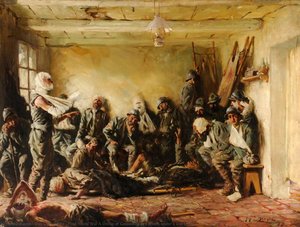
  • A Group of Casualties in a Room under a Gas Lamp: A work of profound atmospheric tension, capturing the vulnerability of the wounded.
  • The Arrival of the First Guns on the Carso Front: Documenting the encroaching machinery of war.

These works, several of which were commissioned by and now reside within the prestigious collection of the Imperial War Museum, stand as powerful testimonies to the era’s anxieties. Through his art, Lipscombe bridged the gap between the aesthetic beauty of the natural world and the visceral, often grim, realities of history. His ability to navigate these two extremes—the tranquil Cornish light and the shadows of the Italian Front—ensures his enduring significance as an artist who captured the full spectrum of the human experience during one of the most transformative periods in modern history.

guy lipscombe

guy lipscombe

1881 - 1952

In sintesi

  • Artistic Movement Or Style: Impressionism
  • Artists Or Movements Influenced By This Artist: ['St Ives School']
  • Artists Who Influenced This Artist: ['Claude Monet']
  • Date Of Birth: 1881
  • Date Of Death: 1952
  • Full Name: Guy Lipscombe
  • Nationality: British
  • Notable Artworks: ['The Arrival of the First Guns on the Carso Front, Italy, 1916']
  • Place Of Birth: Teddington