Anteprima in scala reale Prova in AR Passa alle stampe Passa all'immagine digitale Condividi
Dettagli Guida stampabile Aggiungi ai preferiti Scarica Articoli simili Radiografia Slideshow Statistiche

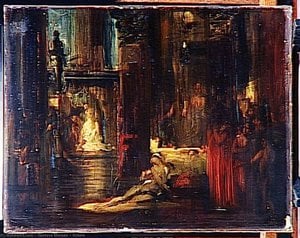
La Mort de Sapho

La Mort de Sapho depicts a woman lying on her side before a rocky landscape with a castle-like structure, symbolizing death and introspection through vibrant colors and intricate figures—a masterpiece by Gustave Moreau.

Esplora l'affascinante arte simbolista di Gustave Moreau (1826-1898). Scopri i suoi dipinti allegorici, scene mitologiche e la sua influenza su Matisse & Rouault. Visita il Musée Gustave Moreau a Parigi per sperimentare l'eredità di questa figura fondamentale.

Riproduzione a olio fatta a mano

Olio su tela dipinto a mano nelle tue dimensioni e con la tua cornice, realizzato su ordinazione dai nostri artisti. ( Passa alle stampe Passa all'immagine digitale)

P118B $10
P118H $10
P118W $10
P438Z $10
P508JH $12
P508YH $12
P805H $10
P805Z $10
P919BZ $10
P919G $10
P919XJ $10
P959ZH $10
P968JZ $12
W106C $8
W218G $10
W218JH $8
W218Y $10
W307PJ $10
W316G $10
W316PJ $8
W316Y $10
W398PJ $8
W4111J $10
W500HY $15
W500JH $15
W692G $12
W849H $8
W940BG $15
W953PJ $8

Standard
personalizzato
CM
INCH

Scegli tra le nostre dimensioni predefinite, che rispettano le proporzioni originali dell'opera d'arte.

larghezza
altezza

È possibile inserire dimensioni personalizzate per adattare l'opera a una cornice o a uno spazio specifico. Se la dimensione selezionata non corrisponde alle proporzioni dell'immagine originale, provvederemo a ritagliare l'opera o a estendere il dipinto con elementi aggiuntivi dipinti a mano. Un mockup digitale ti sarà inviato per approvazione prima dell'inizio della produzione.
Si prega di notare che l'anteprima a schermo non riflette il ritaglio o l'estensione effettivi. Solo il mockup mostrerà accuratamente la composizione finale.
Sebbene siano disponibili dimensioni personalizzate, consigliamo di selezionare una dimensione dall'elenco predefinito per preservare le proporzioni originali.

Esempi di personalizzazione: sostituire il volto con una foto del cliente; aggiungere un animale domestico (ad esempio, sostituire un gatto con un cane); inserire un messaggio nascosto nello sfondo; cambiare il paesaggio o gli elementi dello sfondo.
Dopo l'ordine, il team di WahooArt.com contatterà il cliente via e-mail per ricevere le istruzioni e fornirà un'anteprima del mockup

Consegna in tutto il mondo () in 3/4 settimane anziché nelle normali 5 settimane. (26 Settembre). Nessun compromesso sulla qualità.

why_choose_icon
Spedizione espressa gratuita in tutto il mondo
why_choose_icon
Tela in lino di alta qualità
why_choose_icon
Assicurazione completa sulla spedizione
why_choose_icon
Garanzia di rimborso dei dazi doganali
why_choose_icon
Garanzia di perfetta fedeltà cromatica
why_choose_icon
Politica di reso entro 100 giorni (solo per difetti di fabbricazione)
why_choose_icon
Garanzia di rimborso al 100%
why_choose_icon
Sconto per acquisti multipli

Prezzo totale

$ 272

reproduction

La Mort de Sapho

Tecnica di riproduzione

Dimensioni della riproduzione

-

Prezzo totale

$ 272

Dettagli rapidi

  • Artist: Gustave Moreau
  • Title: The Painting
  • Artistic style: Romantic Surrealism
  • Subject or theme: Mythology, Spirituality
  • Location: Private Collection
  • Medium: Oil on Canvas

Quiz d'arte

Per ogni domanda è presente una sola risposta corretta.

Domanda 1:
What artistic movement is Gustave Moreau associated with?
Domanda 2:
The painting depicts a woman lying on her side in front of what type of landscape?
Domanda 3:
What architectural element is prominently featured in the background of “La Mort de Sapho”?
Domanda 4:
Moreau’s artistic style prioritizes conveying what?
Domanda 5:
What is the overall atmosphere created by Moreau’s use of color in “La Mort de Sapho”?

A Dream Weaver of Symbolism: The Life and Art of Gustave Moreau

Gustave Moreau—a name that conjures images of opulent interiors bathed in muted hues, populated by fantastical figures drawn from mythology and folklore—stands apart as a titan among the Symbolist painters who dominated the artistic landscape of late 19th-century Paris. Unlike his Impressionist contemporaries obsessed with capturing sunlight’s ephemeral dance across landscapes, Moreau wrestled with profound questions about consciousness, spirituality, and the subconscious mind, translating these intellectual explorations into breathtaking visual narratives. His life itself was marked by an unusual blend of scholarly pursuits and artistic obsession—a testament to his unwavering commitment to forging a singular path toward aesthetic truth. Moreau’s formative years were spent immersed in the intellectual ferment of Parisian salons, where he encountered thinkers like Nietzsche and Wagner—figures who profoundly influenced his worldview and fueled his fascination with esoteric traditions. This exposure instilled within him a conviction that art possessed the capacity to transcend mere representation, achieving instead a communion with deeper realities beyond sensory perception. He rejected the prevailing scientific materialism of the era, arguing passionately for the importance of intuition and imagination as instruments of artistic creation. His distinctive style—characterized by meticulous detail, flattened perspectives, and an arresting use of color—was born from this intellectual crucible. Moreau eschewed the naturalistic conventions championed by Realism, opting instead for a deliberately stylized approach that prioritized symbolic resonance over photographic accuracy. He employed techniques honed through years of painstaking observation and experimentation, layering translucent glazes upon thickly impastoed surfaces to achieve luminous effects and imbue his canvases with an otherworldly glow. This masterful manipulation of pigment—often incorporating iridescent hues—created textures that seemed to pulsate with inner life, mirroring the artist’s own preoccupation with psychological depth. Moreau's artistic output spanned decades, producing a prolific body of work encompassing paintings, sculptures, decorative arts, and prints. However, it is his monumental canvases—particularly those depicting biblical scenes and mythological figures—that cemented his reputation as one of Symbolism’s foremost masters. Consider “The Tower of Babel,” for instance—a sprawling composition dominated by towering stone structures and populated by grotesque humanoids engaged in futile attempts to ascend toward the heavens. The painting's symbolism is multilayered, reflecting Moreau’s anxieties about societal fragmentation and humanity’s inability to grasp transcendent truths. Similarly, his depiction of “Saint George and the Dragon”—a dramatic tableau imbued with palpable tension—employs flattened perspectives and stylized figures to convey a visceral sense of struggle between good and evil. Beyond its technical brilliance, Moreau's art possesses an undeniable emotional impact. His canvases evoke feelings of melancholy, wonder, and apprehension—reflecting his profound engagement with existential concerns. He sought not merely to depict events but to communicate inner states of mind, inviting viewers into a realm of psychological contemplation. By confronting the viewer with unsettling imagery and ambiguous narratives, Moreau compelled them to grapple with questions about faith, morality, and the human condition—a legacy that continues to inspire artists and collectors alike. Ultimately, Gustave Moreau’s enduring influence stems from his unwavering conviction that art could serve as a conduit for accessing realms beyond the visible world. He remains an exemplar of artistic integrity and visionary imagination—a testament to the transformative power of pursuing beauty and truth with uncompromising passion. His paintings endure not simply as aesthetically pleasing objects but as profound meditations on the mysteries of human experience, securing his place among the most significant figures in Symbolist art history.

Biografia dell'artista

**primi anni di vita e istruzione**

gustave moreau, un artista francese, nacque il 6 aprile 1826 a Parigi. Ricevette una formazione accademica tradizionale nella pittura all'école des beaux-arts, dimostrando un’attitudine per il disegno fin da giovane.

**il movimento simbolista**

L'opera di Moreau, caratterizzata da soggetti allegorici e mitologici, lo ha posizionato come uno dei principali pittori simbolisti, soprattutto negli anni '90. La sua arte (e il simbolismo in generale) è caduta fuori moda ma è stata rivalutata dal 1960, con Moreau ora considerato tra i pittori simbolisti più importanti.

**opere notevoli ed esposizioni**

* salome alla prigione (dipinto di 'gustave moreau') è un esempio notevole del suo lavoro, che mostra la sua maestria nel simbolismo. * autoritratto (dipinto di 'gustave moreau') è un'altra potente rappresentazione dell’artista stesso.

**museo gustave moreau**

Il musée nazionale gustave-moreau (museo gustave moreau parigi, francia) a Parigi è dedicato al lavoro di Moreau, ospitando oltre 1.200 dipinti, acquerelli e disegni. Il museo è una testimonianza della sua eredità artistica.

**eredità e influenza**

L'influenza di Moreau sul movimento simbolista è innegabile. Ha insegnato all’école des beaux-arts, influenzando artisti notevoli come rené matisse e georges rouault. La sua natura reclusiva non ha diminuito il suo impatto sul mondo dell’arte. **in conclusione, l'eredità di gustave moreau come figura fondamentale nel movimento simbolista perdura, con la sua opera che continua a ispirare e influenzare gli artisti ancora oggi.**
Gustave Moreau

Gustave Moreau

1826 - 1898 , Francia

Informazioni rapide

  • Artisti Che Hanno Influenzato Questo Artista:
    • Eugène Delacroix
    • Michelangelo
    • Leonardo da Vinci
  • Artisti O Movimenti Influenzati Da Questo Artista:
    • Henri Matisse
    • Georges Rouault
  • Data Di Nascita: 6 aprile 1826
  • Luogo Di Nascita: Parigi, Francia
  • Movimento Artistico: Simbolismo
  • Nazionalità: Francese
  • Nome Completo: Gustave Moreau
  • Opere Notevoli:
    • Salomè alla prigione
    • Autoritratto
    • Ganymede
    • Voci della Sera
    • Phaeton
Esplora le opere d'arte organizzate per temi, stili e caratteristiche.