x
Anteprima in scala realeAnteprima in scala reale Anteprima ARAnteprima AR Acquista stampa Acquista stampaAcquista il dipinto realizzato a mano Acquista il dipinto realizzato a mano InviaInvia
Dettagli operaDettagli opera Aggiungi ai preferiti Aggiungi ai preferiti Scarica immagineScarica immagine SimiliSimili RadiografiaRadiografia SlideshowSlideshow

Perspective View (Stage design)

Discover Canaletto's 'Perspective View (Stage design)': A captivating capriccio depicting a fantastical Roman Capitol stage set, showcasing intricate details and masterful perspective.

Canaletto: maestro veneziano delle vedute, celebre per i suoi dipinti dettagliati e atmosferici di Venezia, testimonianze uniche del XVIII secolo.

Acquista un'immagine digitale ad alta risoluzione e ottimizzata, di qualità nettamente superiore all'anteprima online.

Ogni file è meticolosamente preparato dai nostri specialisti interni attraverso l'uso di strumenti avanzati e un sapiente ritocco manuale. Garantiamo che ogni immagine presenti una chiarezza eccezionale, una precisione cromatica impeccabile e dettagli raffinati.

Il file finale viene consegnato via e-mail entro 72 ore, ottimizzato per un uso immediato in contesti professionali, editoriali e di stampa. Si tratta della stessa qualità affidata ai più prestigiosi studi di design, editori e gallerie d'arte.

Immagine Digitale

Scarica un file ad alta risoluzione per uso personale, per la stampa e per progetti creativi. (Acquista stampa Acquista stampaAcquista il dipinto realizzato a mano Acquista il dipinto realizzato a mano)

Prezzo totale

$ 24,90

Incluso in ogni ordine di immagini digitali

Consegna digitale professionale e garantita

Quando scegli WahooArt.com, non riceverai solo un'immagine: riceverai un'opera d'arte digitale professionalmente ottimizzata, realizzata con la massima precisione e accompagnata da una garanzia di soddisfazione. Ecco tutto ciò che include il tuo ordine, automaticamente:

shipping_icon
Consegna rapida via email

Riceverai il file dell'immagine digitale ad alta risoluzione via email entro 72 ore dall'ordine, pronto per un uso immediato.

canvas_icon
File digitale ottimizzato dall'IA

La tua opera d'arte viene ottimizzata professionalmente attraverso l'uso di strumenti avanzati di intelligenza artificiale e una revisione manuale, garantendo il massimo livello di dettaglio, nitidezza e accuratezza cromatica.

insurance_icon
Riconsegna gratuita a vita

Hai eliminato o perso accidentalmente il tuo file? Non preoccuparti: te lo invieremo di nuovo in qualsiasi momento, gratuitamente.

tax_icon
Nessun costo di importazione, mai

Goditi la tua opera d'arte istantaneamente senza costi doganali, dazi o spese di spedizione: i download digitali sono sempre esenti da tasse.

color_icon
Garanzia di fedeltà cromatica

Garantiamo che la tua immagine digitale rifletta i colori originali con la massima fedeltà, grazie all'uso di strumenti professionali e a una gestione accurata del colore.

return_icon
Garanzia soddisfazione 60 giorni

Se non sei soddisfatto della tua immagine digitale, la revisioneremo o ti rimborseremo il 100% entro 60 giorni, senza domande.

guarantee_icon
Garanzia di rimborso al 100%

Non sei soddisfatto? Ricevi un rimborso completo entro 60 giorni dal ricevimento del tuo file digitale, senza dover fornire spiegazioni.

discount_icon
Sconti per ordini multipli

Acquista 3 immagini, risparmia il 10% - Acquista 5, risparmia il 15% - Acquista 10+, risparmia il 20%. Ideale per progetti creativi, gallerie e agenzie.

Informazioni rapide

  • Movement: Venetian School
  • Title: Perspective View (Stage design)
  • Medium: Oil on canvas
  • Notable elements or techniques: Perspective, foreshortening
  • Artistic style: Veduta, Capriccio
  • Artist: giovanni antonio canal

Quiz d'arte

Per ogni domanda è presente una sola risposta corretta.

Domanda 1:
What is the primary subject depicted in ‘Perspective View (Stage design)’?
Domanda 2:
The description mentions that the painting may have been created shortly after Canaletto’s stay in Rome. What does this suggest about its style?
Domanda 3:
The painting features a prominent equestrian monument. What historical figure does it resemble?
Domanda 4:
According to the description, what is a key characteristic of Canaletto’s style that has been debated by scholars?
Domanda 5:
What type of perspective is prominently featured in ‘Perspective View (Stage design)’?

A Captivating Vision of Venetian Theatre

Canaletto’s “Perspective View (Stage Design)” is more than just a depiction of a bustling scene; it's a window into the vibrant theatrical culture of 18th-century Venice. Painted likely in the early 1720s, this capriccio – a term Canaletto himself employed for imaginary or idealized views – transports us to a fantastical Capitol, glimpsed through a grand loggia adorned with Corinthian columns and shimmering with golden ornamentation. The composition is anchored by an equestrian monument, reminiscent of Marcus Aurelius, rising majestically from the steps of a triumphal arch, creating a powerful sense of grandeur and historical resonance.

The painting’s genius lies not merely in its technical precision but also in its evocative atmosphere. Canaletto masterfully employs linear perspective to draw the viewer into this meticulously rendered space. The receding lines of the loggia, the diminishing scale of the statues, and the subtle shifts in light create a convincing illusion of depth, inviting us to step through the painted world and become part of the scene. Notice how he uses atmospheric perspective – distant elements are paler and less defined, contributing to the overall sense of vastness and theatrical spectacle.

The Artist’s Context: Canaletto and Venetian Topography

Giovanni Antonio Canal, known as Canaletto, was a pivotal figure in the development of topographical painting. Born in Venice in 1697, he initially trained under his father, Bernardo Canal, a stage designer for theatrical productions. This early experience instilled in him a deep understanding of perspective and spatial relationships – skills that would later define his remarkable career. Canaletto’s work was profoundly shaped by the bustling commercial activity of Venice, a city renowned for its trade and artistic patronage. He meticulously documented the city's canals, palaces, markets, and everyday life, creating a vast archive of visual records.

His approach differed significantly from earlier Venetian painters who focused primarily on religious or mythological subjects. Canaletto’s interest lay in capturing the tangible reality of Venice – its architecture, its people, and its atmosphere. This shift towards secular subject matter reflected a broader cultural trend during the 18th century, as artists increasingly sought to depict the world around them with greater accuracy and detail. The painting's attribution has been debated by scholars, but Stefano Susinno recognized it as a unique example in Canaletto’s oeuvre due to its drawing, points of light, and similarities to other capricci.

Symbolism and Theatrical Allusion

Beyond its technical brilliance, “Perspective View (Stage Design)” is rich in symbolic meaning. The equestrian monument, a reference to Roman emperors, suggests an ideal of leadership and power. The triumphal arch evokes the grandeur of ancient Rome, while the golden ornaments symbolize wealth and prestige. The inclusion of figures engaged in various activities – musicians, spectators, and performers – underscores the importance of theatre as a central element of Venetian society. It’s a scene brimming with life, energy, and the allure of entertainment.

Interestingly, scholars believe this painting may have been created shortly after Canaletto's stay in Rome (1718-1720), possibly inspired by the city’s ancient ruins and theatrical traditions. The presence of numerous architectural elements reminiscent of Roman antiquity suggests a deliberate attempt to evoke the spirit of the classical world.

A Legacy of Precision and Vision

“Perspective View (Stage Design)” stands as a testament to Canaletto's exceptional skill and artistic vision. It’s a captivating blend of realism, imagination, and theatricality – a painting that continues to delight and intrigue viewers centuries after its creation. Reproductions of this work offer a remarkable opportunity to experience the beauty and detail of Canaletto’s artistry in your own home or office, bringing a touch of Venetian elegance and historical grandeur to any space.


Biografia dell'artista

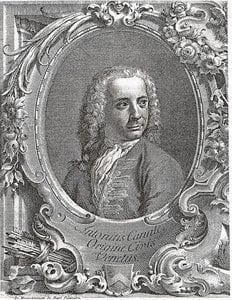
Giovanni Antonio Canal

Giovanni Antonio Canal, commonly known as canaletto, was born in Venice on October 18, 1697, to Bernardo Canal, a painter of theatrical scene settings, and Artemisia Barbieri. He was the son of an artist who instilled in him a passion for visual representation from a young age—a formative influence that would shape his entire artistic career. Canaletto’s early training encompassed both technical proficiency and aesthetic discernment, preparing him to excel as one of the foremost Venetian landscape painters of the eighteenth century.

The Making of a Master

His apprenticeship with Bernardo Canal provided invaluable experience in mastering the fundamentals of painting—perspective, composition, and color theory—skills that would become hallmarks of his distinctive style. Notably, he studied under Giovanni Paolo Pannini, whose meticulous topographical drawings served as inspiration for canaletto’s own approach to capturing the essence of Venice and its surroundings. This encounter cemented a commitment to precise observation and artistic innovation. Canaletto's dedication to detail extended beyond mere replication; he sought to convey not just what was seen but also how it felt—a characteristic that distinguishes his work from simpler depictions.

Notable Works and Collaborations

Canaletto’s fame rests primarily on his series of vedute—cityscapes—that offer unparalleled glimpses into the grandeur of Venice during his time. Among his most celebrated paintings are “The Stonemason's Yard” (c. 1725), a masterful depiction of Venetian daily life showcasing early skill, and “Regatta on the Grand Canal,” which vividly portrays public ceremonies and captures the dynamism of Venetian society. His collaborations with his nephew Bernardo Bellotto were equally significant; Bellotto’s talent complemented canaletto's vision, resulting in harmonious ensembles that further elevated the Venetian landscape tradition. Together they produced remarkable views of Dresden, Vienna and Warsaw.

Artistic Style and Technique

Canaletto’s artistic style is characterized by a profound understanding of perspective—a technique he honed through the use of a camera obscura—allowing him to achieve astonishing accuracy in representing architectural structures and spatial relationships. However, canaletto's genius lay not merely in technical precision but also in compositional design; he skillfully arranged elements within his canvases to create visually compelling images that transcended mere documentation. His paintings are imbued with an atmosphere of serenity and elegance, reflecting the Venetian ideal of beauty—a legacy that continues to inspire artists today.

Legacy and Collections

Canaletto’s influence on eighteenth-century art is undeniable, shaping the aesthetic sensibilities of generations of painters who followed him. His works reside in prestigious museums worldwide, including The National Gallery in London, where they stand as testament to his enduring artistic achievement. Canaletto's contribution to Venetian art history remains profound—a cornerstone of the city’s cultural heritage and a source of inspiration for artists seeking to capture the spirit of place.
Giovanni Antonio Canal

Giovanni Antonio Canal

1697 - 1768 , Italia

In sintesi

  • Artistic Movement Or Style: Vedute Venice
  • Artists Or Movements Influenced By This Artist: ['Tintoretto']
  • Artists Who Influenced This Artist: ['Giovanni Paolo Pannini']
  • Date Of Birth: October 18, 1697
  • Date Of Death: April 19, 1768
  • Full Name: Giovanni Antonio Canal
  • Nationality: Italian
  • Notable Artworks:
    • The Stonemason's Yard
    • Regatta on the Grand Canal
    • Eton College
  • Place Of Birth: Venice, Italy