CONSULENZA D'ARTE GRATUITA

x
Acquista stampa Acquista stampaAcquista download Acquista download InviaInvia
DettagliDettagli Aggiungi ai preferiti Aggiungi ai preferiti ScaricaScarica SimiliSimili RadiografiaRadiografia SlideshowSlideshow

Self-portrait

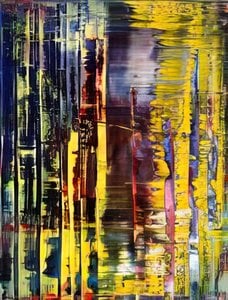
Explore Gerhard Richter's haunting 1996 self-portrait – a blurred, introspective study of identity and uncertainty. This oil on canvas captures the artist’s quiet contemplation, reflecting his complex life and artistic legacy.

Esplora l'arte rivoluzionaria di Gerhard Richter (nato nel 1932), un artista tedesco leader noto per i suoi dipinti astratti e fotorealisti, 'Realismo Capitalista' e grandi cartelle colorate. Scopri i suoi record d'asta e la sua influenza sull'arte contemporanea.

Riproduzione a olio fatta a mano

Olio su tela dipinto a mano nelle tue dimensioni e con la tua cornice, realizzato su ordinazione dai nostri artisti.

P118B $10
P118H $10
P118W $10
P438Z $10
P508JH $12
P508YH $12
P805H $10
P805Z $10
P919BZ $10
P919G $10
P919XJ $10
P959ZH $10
P968JZ $12
W106C $8
W218G $10
W218JH $8
W218Y $10
W307PJ $10
W316G $10
W316PJ $8
W316Y $10
W398PJ $8
W4111J $10
W500HY $15
W500JH $15
W692G $12
W849H $8
W940BG $15
W953PJ $8

Standard
custom
CM
INCH

Scegli tra le nostre dimensioni predefinite, che rispettano le proporzioni originali dell'opera d'arte.

larghezza
altezza

È possibile inserire dimensioni personalizzate per adattare l'opera a una cornice o a uno spazio specifico. Se la dimensione selezionata non corrisponde alle proporzioni dell'immagine originale, provvederemo a ritagliare l'opera o a estendere il dipinto con elementi aggiuntivi dipinti a mano. Un mockup digitale ti sarà inviato per approvazione prima dell'inizio della produzione.
Si prega di notare che l'anteprima a schermo non riflette il ritaglio o l'estensione effettivi. Solo il mockup mostrerà accuratamente la composizione finale.
Sebbene siano disponibili dimensioni personalizzate, consigliamo di selezionare una dimensione dall'elenco predefinito per preservare le proporzioni originali.

Esempi di modifiche possibili: sostituire il volto con una foto del cliente; aggiungere un animale domestico (ad esempio, sostituire un gatto con un cane); inserire un messaggio nascosto sullo sfondo; modificare il paesaggio o gli elementi dello sfondo.
Dopo l'ordine, il team di WahooArt.com invierà un'e-mail al cliente per le istruzioni e fornirà un'anteprima del mockup

Consegna in tutto il mondo () in 3/4 settimane anziché nelle normali 5 settimane. (2 Luglio). Nessun compromesso sulla qualità.

why_choose_icon
Spedizione espressa gratuita in tutto il mondo

why_choose_icon
Tela in lino di alta qualità
why_choose_icon
Assicurazione completa sulla spedizione
why_choose_icon
Garanzia di rimborso dei dazi doganali
why_choose_icon
Garanzia di fedeltà cromatica
why_choose_icon
Politica di reso entro 60 giorni (solo per difetti)
why_choose_icon
Garanzia di rimborso al 100%
why_choose_icon
Sconto per acquisti multipli

Prezzo totale

-

reproduction

Self-portrait

Tecnica di riproduzione

Dimensioni riproduzione

-

Prezzo totale finale

-

Informazioni rapide

  • Dimensions: 51 x 46 cm
  • Artist: Gerhard Richter
  • Subject or theme: Self-reflection
  • Influences: Photography
  • Notable elements: Blurry image
  • Location: MoMA, New York
  • Artistic style: Photorealism/Abstraction

Quiz d'arte

Per ogni domanda è presente una sola risposta corretta.

Domanda 1:
What is the primary visual focus of the image depicting Gerhard Richter’s ‘Self-Portrait’?
Domanda 2:
Based on the description, what is the overall artistic quality conveyed by the image?
Domanda 3:
Gerhard Richter is known for his work in which of the following styles?
Domanda 4:
Considering Richter’s biography, which of the following best describes a significant influence on his artistic development?

Descrizione dell'opera

Gerhard Richter’s ‘Self-Portrait’: A Study in Uncertainty and Reflection

Gerhard Richter's 1996 self-portrait is not merely a depiction of a man; it’s an embodiment of the anxieties and ambiguities that defined much of his oeuvre. This particular work, rendered in oil on linen and measuring a modest 51 x 46 cm, feels both intensely personal and profoundly detached, mirroring the artist's own complex relationship with representation and memory. The photograph itself – blurry, almost indistinct – immediately establishes an atmosphere of uncertainty. Richter deliberately obscures sharp detail, employing a technique he would later famously refine into his ‘photo-paintings,’ where he layers photographic images onto canvas, manipulating their source material to create works that are simultaneously familiar and unsettling. The subject, a man in a white shirt and tie, appears almost lost within the haze, his eyes holding a serious, contemplative gaze – a gaze that seems to question not just the viewer, but perhaps also himself.

A Life Shaped by Division: Contextualizing Richter’s Early Years

To fully appreciate this self-portrait, it's crucial to understand the formative experiences that shaped Gerhard Richter’s artistic vision. Born in Dresden in 1932, his childhood unfolded during a period of immense upheaval – the rise of Nazism and subsequent displacement. His family moved repeatedly throughout the war years, an experience that instilled within him a deep-seated sense of instability and a questioning spirit. This early exposure to political turmoil and social disruption profoundly influenced his later work, often characterized by a deliberate ambiguity and a refusal to offer definitive answers. Richter’s father, a schoolteacher navigating the complexities of life under authoritarian rule, and his mother, fostering a love for literature and music within their home, created a duality – a pragmatic acceptance of circumstance alongside a yearning for cultural expression—a tension that would become a recurring theme in his art. The landscapes of Reichenau and Waltersdorf, initially idyllic, were irrevocably altered by conflict, leaving an indelible mark on his psyche.

Technique and the Illusion of Reality: Richter’s ‘Photo-Paintings’

Richter's approach to painting is notoriously complex. He doesn’t simply replicate what he sees; instead, he engages in a process of layering and manipulation. This self-portrait exemplifies his signature technique – the ‘photo-painting.’ He begins with photographic images, often sourced from newspapers or magazines, which he then applies to canvas using thin layers of oil paint. The resulting surface is not smooth and polished but rather textured and fragmented, creating an illusion of reality that is simultaneously present and absent. The blur in this particular portrait isn’t a flaw; it's a deliberate choice, intensifying the sense of detachment and inviting the viewer to actively participate in constructing meaning. The subtle shifts in color and tone suggest movement and change, mirroring the instability inherent in memory and experience.

Symbolism and Emotional Resonance: A Portrait of Contemplation

While Richter’s work often resists straightforward interpretation, this self-portrait offers a glimpse into the artist's internal landscape. The man’s serious expression suggests introspection and perhaps even melancholy. The blurred features contribute to a sense of anonymity, transforming the portrait from a simple likeness into a meditation on identity and perception. It’s not a triumphant declaration of self but rather a quiet acknowledgment of one’s place within the world – a recognition of uncertainty and the difficulty of capturing a definitive truth. The photograph's lack of background further emphasizes this feeling of isolation, drawing all attention to the subject himself. Ultimately, Richter’s ‘Self-Portrait’ is a powerful reminder that art can be more than just representation; it can be an exploration of the complexities of human experience and the elusive nature of reality.

Further Information: Explore Gerhard Richter's work at The Metropolitan Museum of Art or delve deeper into his artistic journey on Wikipedia.

Opere simili


Biografia dell'artista

**primi anni di vita ed educazione**

Gerhard Richter, un rinomato artista visivo tedesco, è nato il 9 febbraio 1932 a Hospital Dresden-Neustadt, Dresda, Sassonia. È cresciuto a Reichenau, Basso Silisia (ora Bogatynia, Polonia), e Waltersdorf (Zittauer Gebirge), nella campagna superiore della Lusazia. Il padre di Richter, Horst Richter, era uno studente di matematica e fisica all'Technische Hochschule di Dresda.

**carriera artistica**

Richter ha iniziato il suo percorso artistico come apprendista pittore di cartelli pubblicitari e in seguito ha studiato alla Accademia delle belle arti di Dresda. Le sue opere iniziali sono state influenzate dagli stili di Picasso e Jean Arp, come si evince dai suoi dipinti astratti e fotorealistici. Nel 1957, Richter ha lavorato come tirocinante esperto all'accademia, accettando commissioni per lo stato dell'allora Germania Est.

**opere notevoli e risultati**

* Abstratto (2012) ha stabilito un record di prezzo d'asta per un dipinto di un artista vivente a 34 milioni di dollari (£21 milioni). * Domplatz, Mailand (Piazza del Duomo, Milano) (1968) è stato venduto per 37,1 milioni di dollari (£24,4 milioni) a New York. * Abstratto (2015) è stato venduto per 44,52 milioni di dollari (£30,4 milioni) all'asta contemporanea di Sotheby's.

**stile artistico e movimento**

Le opere di Richter sono caratterizzate dal loro eclettismo, che fonde stili astratti e fotorealistici. Insieme a Sigmar Polke, ha introdotto il termine Kapitalistischer Realismus (Realismo Capitalistico), uno stile anti-arte che appropria la sintassi pittorica della pubblicità.

**vita privata**

Richter si è sposato con Marianne Eufinger nel 1957 e ha avuto una figlia. In seguito si è sposato con Isa Genzken nel 1982 e Sabine Moritz nel 1995, con cui ha avuto due figli e una figlia. **Nota:** questo articolo si basa sulle informazioni fornite e potrebbe non essere una biografia completa. Per informazioni più dettagliate, visitare le fonti collegate.
Gerhard Richter

Gerhard Richter

1932 - , Germania

Dati rapidi

  • Artisti Influenti:
    • Pablo Picasso
    • Jean Arp
  • Data Di Nascita: 9 febbraio 1932
  • Influenza Artistica: Arte contemporanea tedesca
  • Luogo Di Nascita: Dresda, Germania
  • Movimento Artistico:
    • Espressionismo astratto
    • Fotorealismo
  • Nazionalità: Tedesca
  • Nome Completo: Gerhard Richter
  • Opere Notevoli:
    • Abstraktes Bild (2012)
    • Domplatz, Milano (1968)
    • Nuvole
    • S. con Bambino
Esplora opere d'arte organizzate per temi, stili e caratteristiche.