Anteprima in scala reale Prova in AR Ordina la riproduzione dipinta a mano Passa all'immagine digitale Condividi
Dettagli Guida stampabile Aggiungi ai preferiti Scarica Articoli simili Radiografia Slideshow Statistiche

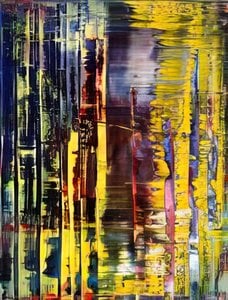
Basel 2

Esplora 'Basel 2' di Gerhard Richter: un'opera astratta intensa e suggestiva, caratterizzata da sfumature grigie e linee che creano profondità e movimento. Un'immersione nell'arte del fotorealismo.

Esplora l'arte rivoluzionaria di Gerhard Richter (nato nel 1932), un artista tedesco leader noto per i suoi dipinti astratti e fotorealisti, 'Realismo Capitalista' e grandi cartelle colorate. Scopri i suoi record d'asta e la sua influenza sull'arte contemporanea.

L'opera d'arte visualizzata in questa pagina è protetta dalle leggi sul diritto d'autore, il che significa che non possiamo legalmente creare o vendere una riproduzione identica. Tale protezione è garantita da accordi internazionali quali la Convenzione di Berna e dalle leggi nazionali, incluse quelle stabilite da Legge sul copyright degli Stati Uniti - Titolo 17. Tutti i diritti riservati. Le immagini presenti su questo sito sono protette da copyright e non possono essere riprodotte o utilizzate senza l'autorizzazione scritta di WahooArt.com o dei rispettivi proprietari del copyright.

Questo metodo è pienamente conforme alle normative sul diritto d'autore poiché non prevede la copia o la duplicazione dell'opera protetta. Si tratta invece di una rielaborazione creativa: un nuovo dipinto che trae ispirazione dall'originale, senza tuttavia esserne identico.

Giclée / Stampe d'arte

Stampa giclée o su tela di qualità museale, con produzione rapida e diverse opzioni di finitura. ( Ordina la riproduzione dipinta a mano Passa all'immagine digitale)

Corner sample of the P118B picture frame: moulded polystyrene, 5 cm wide and 3 cm thick
P118B €10
Corner sample of the P118H picture frame: moulded polystyrene, 5 cm wide and 3 cm thick
P118H €10
Corner sample of the P118W picture frame: moulded polystyrene, 5 cm wide and 3 cm thick
P118W €10
Corner sample of the P438Z picture frame: moulded polystyrene, 5.5 cm wide and 3.5 cm thick
P438Z €10
Corner sample of the P508JH picture frame: moulded polystyrene, 7 cm wide and 3.5 cm thick
P508JH €12
Corner sample of the P508YH picture frame: moulded polystyrene, 7 cm wide and 3.5 cm thick
P508YH €12
Corner sample of the P805H picture frame: moulded polystyrene, 5 cm wide and 3.5 cm thick
P805H €10
Corner sample of the P805Z picture frame: moulded polystyrene, 5 cm wide and 3.5 cm thick
P805Z €10
Corner sample of the P919BZ picture frame: moulded polystyrene, 7 cm wide and 3.5 cm thick
P919BZ €10
Corner sample of the P919G picture frame: moulded polystyrene, 7 cm wide and 3.5 cm thick
P919G €10
Corner sample of the P919XJ picture frame: moulded polystyrene, 7 cm wide and 3.5 cm thick
P919XJ €10
Corner sample of the P959ZH picture frame: moulded polystyrene, 5 cm wide and 3 cm thick
P959ZH €10
Corner sample of the P968JZ picture frame: moulded polystyrene, 6 cm wide and 4 cm thick
P968JZ €12
Corner sample of the W106C picture frame: solid wood, 5 cm wide and 3 cm thick
W106C €8
Corner sample of the W218G picture frame: solid wood, 5 cm wide and 3 cm thick
W218G €10
Corner sample of the W218JH picture frame: solid wood, 5 cm wide and 3 cm thick
W218JH €8
Corner sample of the W218Y picture frame: solid wood, 5 cm wide and 3 cm thick
W218Y €10
Corner sample of the W307PJ picture frame: solid wood, 6 cm wide and 3 cm thick
W307PJ €10
Corner sample of the W316G picture frame: solid wood, 6 cm wide and 3 cm thick
W316G €10
Corner sample of the W316PJ picture frame: solid wood, 6 cm wide and 3 cm thick
W316PJ €8
Corner sample of the W316Y picture frame: solid wood, 6 cm wide and 3 cm thick
W316Y €10
Corner sample of the W398PJ picture frame: solid wood, 5 cm wide and 3 cm thick
W398PJ €8
Corner sample of the W4111J picture frame: solid wood, 6.5 cm wide and 3.5 cm thick
W4111J €10
Corner sample of the W500HY picture frame: solid wood, 7 cm wide and 5 cm thick
W500HY €15
Corner sample of the W500JH picture frame: solid wood, 7 cm wide and 5 cm thick
W500JH €15
Corner sample of the W692G picture frame: solid wood, 8 cm wide and 4 cm thick
W692G €12
Corner sample of the W849H picture frame: solid wood, 5 cm wide and 3 cm thick
W849H €8
Corner sample of the W940BG picture frame: solid wood, 7.5 cm wide and 4.5 cm thick
W940BG €15
Corner sample of the W953PJ picture frame: solid wood, 6 cm wide and 3.5 cm thick
W953PJ €8

Standard
personalizzato
CM
INCH

Scegli tra le nostre dimensioni predefinite, che rispettano le proporzioni originali dell'opera d'arte.

larghezza
altezza

È possibile inserire dimensioni personalizzate per adattare l'opera a una cornice o a uno spazio specifico. Se la dimensione selezionata non corrisponde alle proporzioni dell'immagine originale, procederemo al ritaglio dell'opera o all'estensione dell'immagine con un bordo specchiato o a tinta unita. Un mockup digitale ti verrà inviato per approvazione prima dell'inizio della produzione.
Si prega di notare che l'anteprima a schermo non riflette il ritaglio o l'estensione effettivi. Solo il mockup mostrerà accuratamente la composizione finale.
Sebbene siano disponibili dimensioni personalizzate, si raccomanda di selezionare una dimensione dall'elenco predefinito per preservare le proporzioni originali.

Consegna in tutto il mondo () in 2 settimane invece delle normali 4/5 settimane. (9 Ottobre)

Spedizione espressa gratuita in tutto il mondo

Tela in lino di alta qualità
Assicurazione completa sulla spedizione
Garanzia di rimborso dei dazi doganali
Garanzia di perfetta fedeltà cromatica
Politica di reso entro 100 giorni (solo per difetti di fabbricazione)
Garanzia di rimborso al 100%
Sconto per acquisti multipli

Prezzo totale

€ 59

Basel 2

Giclée / Stampe d'arte

Dimensioni della riproduzione

-

Prezzo totale

€ 59

Dettagli rapidi

  • Artist: Gerhard Richter
  • Artistic style: Abstract Expressionism
  • Subject or theme: Ambiguity/Introspection
  • Title: Basel 2
  • Medium: Oil/Acrylic on Canvas
  • Notable elements: Blurred forms, layers

Quiz d'arte

Per ogni domanda è presente una sola risposta corretta.

Domanda 1:
What is the primary style of Gerhard Richter’s painting ‘Basel 2’?
Domanda 2:
The image description highlights which of the following key characteristics of ‘Basel 2’?
Domanda 3:
Which artist’s technique is most closely associated with Gerhard Richter's approach in ‘Basel 2’?
Domanda 4:
Based on the provided information, what materials are most likely used in creating ‘Basel 2’?
Domanda 5:
Gerhard Richter is known for his work in which of the following styles?

Basel 2: Unveiling Layers of Memory – A Dialogue with Gerhard Richter

Gerhard Richter’s “Basel 2,” a work that exists primarily as a meticulously rendered digital reproduction, invites us into a realm where memory and perception intertwine. Far from a straightforward depiction of a scene, it's an exploration of atmosphere, texture, and the elusive nature of experience – a signature characteristic of Richter’s oeuvre. The image presents a grayscale landscape, not sharply defined but imbued with a profound sense of depth and movement. It’s a world constructed through blurred forms, horizontal streaks, and vertical bands, creating a hazy, almost dreamlike quality that immediately draws the viewer in.

The genesis of this piece lies within Richter's distinctive technique – a process he famously described as “painting with a squeegee.” This method, developed over decades, allows him to apply paint with a controlled fluidity, resulting in layers of varying opacity and texture. The deliberate blurring isn’t an accident; it’s a conscious choice to prioritize the *feeling* of a place over its precise representation. The absence of sharp edges encourages us to engage our own memories and associations, projecting our own interpretations onto the canvas.

A Reflection on Time and Place – Historical Context

To understand “Basel 2,” it’s crucial to consider Richter's broader artistic trajectory and the historical context in which he operates. Born in Dresden in 1932, Richter’s early life was profoundly shaped by the tumultuous events of World War II and the subsequent division of Germany. His childhood experiences – displacement, loss, and the ever-present shadow of political upheaval – deeply influenced his artistic vision. This sense of uncertainty and fragmentation is subtly reflected in works like “Basel 2,” where the blurred forms evoke a feeling of temporal ambiguity.

Richter’s work often engages with themes of memory, history, and the subjective nature of reality. He frequently utilizes photographic sources as inspiration, but rarely reproduces them directly. Instead, he transforms these images through his unique technique, creating abstract compositions that are both familiar and unsettling. This deliberate distancing from literal representation allows him to explore deeper emotional and psychological dimensions.

Decoding the Language of Form – Technique and Composition

The composition of “Basel 2” is remarkably controlled despite its apparent spontaneity. The dominant horizontal lines create a sense of rhythm and movement, guiding the viewer’s eye through the image. These lines vary in thickness and opacity, contributing to the overall layering effect and enhancing the feeling of depth. The central area of blurred forms acts as a focal point, drawing attention to the interplay of light and shadow.

Noticeably absent are strong contrasts or vibrant colors. The grayscale palette – ranging from pale gray to deep black – amplifies the textural qualities of the work. This monochromatic approach further emphasizes the atmospheric mood, creating a sense of quiet contemplation. The subtle shifts in shade contribute significantly to the illusion of depth and volume, suggesting a vast, undefined space.

Beyond Representation – The Emotional Resonance

“Basel 2” isn’t simply a visual experience; it's an invitation to engage with complex emotions. It evokes feelings of nostalgia, melancholy, and perhaps even a touch of unease. The blurred forms suggest the fragility of memory and the difficulty of capturing fleeting moments in time. The work speaks to the inherent subjectivity of perception – each viewer will bring their own experiences and associations to bear on the image.

As a reproduction, “Basel 2” retains much of the original’s power. It offers a tangible connection to Richter's artistic vision, allowing us to appreciate the nuances of his technique and the depth of his emotional exploration. Whether displayed in a contemporary art gallery or incorporated into a carefully curated interior space, this piece serves as a reminder of the enduring beauty and complexity of abstract art.

Domande e risposte

Chi ha creato "Basel 2"?

"Basel 2" è stata creata da Gerhard Richter. Le informazioni contenute in questa pagina descrivono l'opera originale di Gerhard Richter.

Dove posso acquistare una riproduzione dipinta a mano di "Basel 2" di Gerhard Richter?

Puoi ordinare una riproduzione dipinta a mano di "Basel 2" di Gerhard Richter direttamente su questa pagina: una riproduzione a olio dipinta a mano su tela di lino, realizzata su ordinazione.

Che atmosfera saprebbe conferire a una stanza una riproduzione di "Basel 2" di Gerhard Richter?

Con la sua atmosfera Serenità, "Basel 2" è ideale per Zona giorno.

Posso esaminare "Basel 2" più nel dettaglio?

La pagina Raggi X di "Basel 2" di Gerhard Richter è un visualizzatore interattivo che permette di scorrere tra undici livelli ottici dell'immagine dell'opera, inclusa una vista in stile raggi X.

Come posso ottenere un file digitale di "Basel 2" di Gerhard Richter?

È possibile acquistare un'immagine digitale di "Basel 2" di Gerhard Richter su questa pagina: download di un'immagine digitale ad alta risoluzione.

Come posso acquistare una stampa di "Basel 2" di Gerhard Richter?

Per ordinare una stampa di "Basel 2" di Gerhard Richter, ti basta procedere con l'ordine su questa pagina: una stampa fine art su tela di cotone o carta canvas d'archivio.

Quale formato e orientamento di stampa si consigliano per "Basel 2" di Gerhard Richter?

Per "Basel 2", la configurazione di stampa consigliata è un formato Formato grande con orientamento Formato orizzontale.


Biografia dell'artista

**primi anni di vita ed educazione**

Gerhard Richter, un rinomato artista visivo tedesco, è nato il 9 febbraio 1932 a Hospital Dresden-Neustadt, Dresda, Sassonia. È cresciuto a Reichenau, Basso Silisia (ora Bogatynia, Polonia), e Waltersdorf (Zittauer Gebirge), nella campagna superiore della Lusazia. Il padre di Richter, Horst Richter, era uno studente di matematica e fisica all'Technische Hochschule di Dresda.

**carriera artistica**

Richter ha iniziato il suo percorso artistico come apprendista pittore di cartelli pubblicitari e in seguito ha studiato alla Accademia delle belle arti di Dresda. Le sue opere iniziali sono state influenzate dagli stili di Picasso e Jean Arp, come si evince dai suoi dipinti astratti e fotorealistici. Nel 1957, Richter ha lavorato come tirocinante esperto all'accademia, accettando commissioni per lo stato dell'allora Germania Est.

**opere notevoli e risultati**

* Abstratto (2012) ha stabilito un record di prezzo d'asta per un dipinto di un artista vivente a 34 milioni di dollari (£21 milioni). * Domplatz, Mailand (Piazza del Duomo, Milano) (1968) è stato venduto per 37,1 milioni di dollari (£24,4 milioni) a New York. * Abstratto (2015) è stato venduto per 44,52 milioni di dollari (£30,4 milioni) all'asta contemporanea di Sotheby's.

**stile artistico e movimento**

Le opere di Richter sono caratterizzate dal loro eclettismo, che fonde stili astratti e fotorealistici. Insieme a Sigmar Polke, ha introdotto il termine Kapitalistischer Realismus (Realismo Capitalistico), uno stile anti-arte che appropria la sintassi pittorica della pubblicità.

**vita privata**

Richter si è sposato con Marianne Eufinger nel 1957 e ha avuto una figlia. In seguito si è sposato con Isa Genzken nel 1982 e Sabine Moritz nel 1995, con cui ha avuto due figli e una figlia. **Nota:** questo articolo si basa sulle informazioni fornite e potrebbe non essere una biografia completa. Per informazioni più dettagliate, visitare le fonti collegate.
Gerhard Richter

Gerhard Richter

1932 - , Germania

Informazioni rapide

  • Artisti Influenti:
    • Pablo Picasso
    • Jean Arp
  • Data Di Nascita: 9 febbraio 1932
  • Influenza Artistica: Arte contemporanea tedesca
  • Luogo Di Nascita: Dresda, Germania
  • Movimento Artistico:
    • Espressionismo astratto
    • Fotorealismo
  • Nazionalità: Tedesca
  • Nome Completo: Gerhard Richter
  • Opere Notevoli:
    • Abstraktes Bild (2012)
    • Domplatz, Milano (1968)
    • Nuvole
    • S. con Bambino
Esplora le opere d'arte organizzate per temi, stili e caratteristiche.