x
Anteprima in scala realeAnteprima in scala reale Anteprima ARAnteprima AR Acquista stampa Acquista stampaAcquista immagine Acquista immagine InviaInvia
Dettagli operaDettagli opera Aggiungi ai preferiti Aggiungi ai preferiti Scarica immagineScarica immagine SimiliSimili RadiografiaRadiografia SlideshowSlideshow


Merry Company

Explore Gerard van Honthorst’s ‘Merry Company,’ a dramatic Baroque oil painting featuring intense emotion & chiaroscuro. A captivating scene of sorrow & urgency, showcasing his masterful technique.

Scopri Gerard van Honthorst (1590-1656), maestro dell'età dell'oro olandese e figura chiave del Caravaggismo di Utrecht. Esplora ritratti, opere bibliche e la sua influenza sull'arte barocca.

Riproduzione a olio fatta a mano

Olio su tela dipinto a mano nelle tue dimensioni e con la tua cornice, realizzato su ordinazione dai nostri artisti. (Acquista stampa Acquista stampaAcquista immagine Acquista immagine)

P118B $10
P118H $10
P118W $10
P438Z $10
P508JH $12
P508YH $12
P805H $10
P805Z $10
P919BZ $10
P919G $10
P919XJ $10
P959ZH $10
P968JZ $12
W106C $8
W218G $10
W218JH $8
W218Y $10
W307PJ $10
W316G $10
W316PJ $8
W316Y $10
W398PJ $8
W4111J $10
W500HY $15
W500JH $15
W692G $12
W849H $8
W940BG $15
W953PJ $8

Standard
custom
CM
INCH

Scegli tra le nostre dimensioni predefinite, che rispettano le proporzioni originali dell'opera d'arte.

larghezza
altezza

È possibile inserire dimensioni personalizzate per adattare l'opera a una cornice o a uno spazio specifico. Se la dimensione selezionata non corrisponde alle proporzioni dell'immagine originale, provvederemo a ritagliare l'opera o a estendere il dipinto con elementi aggiuntivi dipinti a mano. Un mockup digitale ti sarà inviato per approvazione prima dell'inizio della produzione.
Si prega di notare che l'anteprima a schermo non riflette il ritaglio o l'estensione effettivi. Solo il mockup mostrerà accuratamente la composizione finale.
Sebbene siano disponibili dimensioni personalizzate, consigliamo di selezionare una dimensione dall'elenco predefinito per preservare le proporzioni originali.

Esempi di ciò che può essere modificato: sostituire il volto con una foto del cliente; aggiungere un animale domestico (ad esempio, sostituire un gatto con un cane); inserire un messaggio nascosto nello sfondo; cambiare il paesaggio o gli elementi dello sfondo.
Dopo l'ordine, il team di WahooArt.com contatterà il cliente via e-mail per le istruzioni e fornirà un'anteprima del mockup

Consegna in tutto il mondo () in 3/4 settimane anziché nelle normali 5 settimane. (25 Agosto). Nessun compromesso sulla qualità.

why_choose_icon
Spedizione espressa gratuita in tutto il mondo
why_choose_icon
Tela in lino di alta qualità
why_choose_icon
Assicurazione completa sulla spedizione
why_choose_icon
Garanzia di rimborso dei dazi doganali
why_choose_icon
Garanzia di fedeltà cromatica
why_choose_icon
Politica di reso entro 60 giorni (solo per difetti di fabbricazione)
why_choose_icon
Garanzia di rimborso al 100%
why_choose_icon
Offerta per acquisti multipli

Prezzo totale

$ 347

reproduction

Merry Company

Tecnica di riproduzione

Dimensioni riproduzione

-

Prezzo totale calcolato

$ 347

Informazioni rapide

  • Subject or theme: Genre scene
  • Medium: Oil on canvas
  • Artistic style: Realistic
  • Notable elements or techniques: Dramatic chiaroscuro, tenebrism
  • Movement: Baroque
  • Location: Alte Pinakothek
  • Artist: Gerard van Honthorst

Descrizione dell'opera

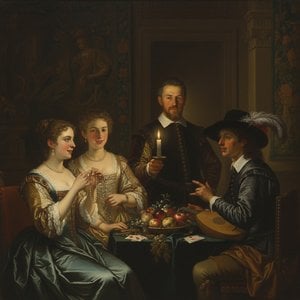
A Dance in Shadow: The Luminous Drama of Honthorst’s Merry Company

In the quiet, amber-hued corners of the Dutch Golden Age, few works capture the pulse of human connection as viscerally as Gerard van Honthorst’s “Merry Company.” Completed in 1622, this masterpiece is far more than a mere snapshot of a tavern gathering; it is a carefully orchestrated tableau of light, social intimacy, and the subtle, flickering drama inherent in life's fleeting moments. As one gazes upon the canvas, the viewer is immediately pulled into a world where the boundaries between celebration and melancholy blur, held together by the artist’s unparalleled command over chiaroscuro.

The scene unfolds within a richly appointed space, perhaps a well-established tavern, where a group of figures is gathered around a table laden with the remnants of a feast. Wine goblets catch the light, and platters of delicacies sit amidst the conversation, suggesting a recent bout of revelry. At the heart of this composition lies a profound tension; while the title suggests merriment, there is an underlying sense of urgency and perhaps even a touch of sorrow. The figures—an elderly woman, a bearded man, and younger companions—are caught in a moment of intense emotional exchange, their faces illuminated by a theatrical, directional light that seems to emerge from an unseen source, casting deep, velvety shadows that swallow the periphery of the room.

The Mastery of the Night: Technique and Tenebrism

To understand the brilliance of “Merry Company,” one must recognize the influence of the Italian master Caravaggio upon Honthorst. During his formative years in Rome, Honthorst embraced tenebrism, a technique characterized by the bold juxtaposition of intense light against impenetrable darkness. This earned him the evocative nickname “Gherardo delle Notti”—Gerard of the Nights. In this painting, the technique is used not merely for aesthetic flair but to sculpt the very air around the subjects. The light does not simply illuminate; it carves forms out of the gloom, creating a palpable sense of three-dimensional space through masterful foreshortening and delicate glazing.

The artist’s meticulous attention to texture invites a tactile experience for the viewer. One can almost feel the weight of the heavy drapery, the cool smoothness of the pewter goblets, and the warmth of the skin under the candlelight. Through painstaking brushwork, Honthorst achieves a level of realism that transcends mere representation, turning a genre scene into a psychological study. The pyramidal structure of the composition, with figures positioned to draw the eye upward and inward, ensures that the viewer’s gaze wanders through the layers of light and shadow, discovering new details in every corner of this nocturnal feast.

A Timeless Inspiration for the Modern Collector

For the discerning collector or interior designer, a reproduction of “Merry Company” offers much more than a decorative element; it provides a focal point of profound character. The painting’s ability to command attention through its dramatic contrasts makes it an ideal centerpiece for spaces that value depth, history, and atmosphere. Whether placed in a contemporary gallery-style room or a classic study, the work brings with it an aura of sophisticated mystery and the enduring elegance of the Baroque era.

Owning a piece that echoes Honthorst’s vision is an invitation to contemplate the beauty found in the shadows. It serves as a reminder of the Dutch Golden Age's fascination with capturing the ephemeral—the way light hits a glass, the way a face falls into thought, and the way a shared moment can feel both monumental and fleeting. This artwork is not just a window into the 17th century; it is a timeless exploration of the human spirit, rendered in the most magnificent light.


Biografia dell'artista

La Vita e la Formazione di Gerard van Honthorst

Gerard van Honthorst, nato a Utrecht il 4 novembre 1590, fu un pittore olandese di grande rilievo durante l'età dell'oro olandese. Figlio di un pittore decorativo, ricevette le prime istruzioni artistiche dal padre e successivamente affinò la sua tecnica sotto la guida di Abraham Bloemaert. Questa formazione iniziale gettò le basi per il suo sviluppo artistico futuro.

Il Periodo Italiano e l'Influenza del Caravaggismo

Un momento cruciale nella carriera di van Honthorst fu il suo viaggio a Roma, dove rimase profondamente influenzato dallo stile di Caravaggio. L’incontro con la pittura tenebrista e drammatica di Caravaggio lo portò ad adottare un approccio simile nelle sue opere, caratterizzato da forti contrasti chiaroscurali e scene illuminate artificialmente. Questo periodo romano gli valse il soprannome di "Gherardo delle Notti" ("Gerard of the Nights"), in riferimento alla sua predilezione per le scene notturne. Durante la sua permanenza a Roma, lavorò per importanti mecenati come Vincenzo Giustiniani, che commissionò l'opera "Cristo davanti al Sommo Sacerdote", ora conservata nella National Gallery di Londra.

Il Ritorno in Olanda e il Successo come Ritrattista

Nel 1620, van Honthorst fece ritorno nei Paesi Bassi, stabilendosi a Utrecht. Qui, divenne una figura di spicco nel panorama artistico olandese, acquisendo rapidamente fama come ritrattista di successo. La sua abilità nel catturare la somiglianza e l'essenza dei suoi soggetti lo rese molto richiesto da nobili e personalità influenti dell’epoca. Nel 1623, divenne presidente della gilda di San Luca a Utrecht, un segno del suo prestigio e riconoscimento all'interno della comunità artistica.

Stile Artistico e Contributi al Barocco Olandese

Lo stile di van Honthorst si caratterizza per l’uso magistrale della luce e dell’ombra, ereditato dal caravaggismo, ma reinterpretato in chiave olandese. Le sue opere spesso raffigurano scene bibliche o mitologiche illuminate da una fonte luminosa artificiale, creando un'atmosfera drammatica e suggestiva. Van Honthorst contribuì significativamente allo sviluppo del barocco olandese, influenzando numerosi artisti contemporanei e successivi. La sua capacità di combinare l’influenza italiana con la tradizione pittorica olandese lo rese una figura unica nel panorama artistico del XVII secolo.

Collaborazioni e Opere Significative

Van Honthorst collaborò con altri importanti artisti dell'epoca, tra cui Peter Paul Rubens, dimostrando la sua apertura alle influenze artistiche internazionali. Tra le sue opere più significative si ricordano "Cristo davanti al Sommo Sacerdote", commissionata da Vincenzo Giustiniani, e "L’adorazione del Bambino", un dipinto che esemplifica il suo stile tenebrista. La "Presa di Cristo", inizialmente attribuita interamente a van Honthorst, è ora riconosciuta come opera collaborativa, testimoniando la complessità delle dinamiche artistiche dell'epoca.
Gerard van Honthorst

Gerard van Honthorst

1590 - 1656 , Paesi Bassi

Dati rapidi

  • Artisti Influenti:
    • Caravaggio
    • Abraham Bloemaert
  • Data Di Morte: 1656
  • Data Di Nascita: 4 novembre 1590
  • Luogo Di Nascita: Utrecht, Paesi Bassi
  • Movimento Artistico: Caravaggismo olandese
  • Nazionalità: Olandese
  • Nome Completo: Gerard van Honthorst
  • Opere Notevoli:
    • Cristo davanti al sommo sacerdote
    • L'adorazione del Bambino
Esplora le opere d'arte organizzate per temi, stili e caratteristiche.