


 Oil On CanvasWallArtBaroque Dutch Painting
 1660Renaissance
 76.0 x 68.0 cm
 The National Trust
Stampa giclée o su tela di qualità museale, con produzione rapida e diverse opzioni di finitura. ( Acquista il dipinto realizzato a mano Acquista immagine)





























Scegli tra le nostre dimensioni predefinite, che rispettano le proporzioni originali dell'opera d'arte.

È possibile inserire dimensioni personalizzate per adattare l'opera a una cornice o a uno spazio specifico. Se la dimensione selezionata non corrisponde alle proporzioni dell'immagine originale, procederemo al ritaglio dell'opera o all'estensione dell'immagine con un bordo specchiato o a tinta unita. Un mockup digitale ti verrà inviato per approvazione prima dell'inizio della produzione.
Si prega di notare che l'anteprima a schermo non riflette il ritaglio o l'estensione effettivi. Solo il mockup mostrerà accuratamente la composizione finale.
Sebbene siano disponibili dimensioni personalizzate, si raccomanda di selezionare una dimensione dall'elenco predefinito per preservare le proporzioni originali.
Consegna in tutto il mondo () in 2 settimane invece delle normali 4/5 settimane. (7 Settembre)


The Dancing Couple
Dimensioni riproduzione
Gerard ter Borch's "The Dancing Couple," painted circa 1660, offers a rare and intimate glimpse into the social life of the Dutch Republic during its golden age. Measuring a modest 76 x 68 cm, this seemingly simple portrait belies a profound depth of observation and technical mastery that firmly establishes ter Borch as a pioneer of Dutch genre painting – a movement dedicated to depicting everyday scenes and human interactions with unprecedented realism.
The scene unfolds within the confines of a richly furnished room, dominated by a dining table and several figures engaged in what appears to be a lively gathering. The central couple, a man impeccably dressed in a dark suit and the woman radiant in a flowing white gown, are caught in a moment of poised movement, suggesting an impromptu dance or perhaps a sophisticated conversation. Their proximity speaks volumes about social status and the carefully cultivated etiquette of the era. The inclusion of other figures – one on the left, two near the center, and another to the right – adds layers of narrative complexity, hinting at relationships, conversations, and the subtle dynamics of group interaction that were central to ter Borch’s artistic concerns.
Ter Borch’s skill lies not merely in depicting a scene but in rendering it with an almost photographic precision. His technique, honed through extensive travels across Europe – including London, Germany, France, Spain, and Italy – is characterized by meticulous attention to detail and a profound understanding of light and shadow. Note the subtle variations in texture: the worn fabric of the chair, the polished surface of the table, the delicate folds of the woman’s dress. These details are not mere decorative flourishes; they contribute significantly to the painting's overall sense of realism and immediacy.
The artist employs a muted palette – predominantly browns, grays, and creams – which further enhances the scene’s atmosphere of quiet contemplation. Light plays a crucial role, illuminating key elements while casting deep shadows that add depth and volume to the figures. This masterful manipulation of light is characteristic of ter Borch's approach and elevates the painting beyond a simple portrait into a study of form and perception.
"The Dancing Couple" transcends a mere depiction of social activity; it offers subtle commentary on the values and conventions of 17th-century Dutch society. The couple’s attire, particularly the man's formal suit, signifies wealth and status – hallmarks of the burgeoning merchant class that dominated the Dutch economy at the time. The act of dancing itself was a popular pastime among the upper classes, representing leisure, social connection, and refined taste.
Furthermore, ter Borch’s focus on capturing fleeting moments of human interaction reflects a broader trend in Dutch art during this period – a shift away from grand historical or mythological subjects towards more intimate and relatable scenes of everyday life. This emphasis on realism and psychological depth cemented ter Borch's legacy as one of the most important figures in the development of genre painting, influencing generations of artists to come.
WahooArt offers a meticulously crafted hand-painted reproduction of Gerard ter Borch’s “The Dancing Couple,” allowing you to bring this remarkable work of art into your home or office. Each reproduction is created using the highest quality materials and techniques, ensuring that it faithfully captures the original's beauty and detail. This artwork is more than just a decoration; it’s an investment in artistic heritage and a testament to the enduring power of ter Borch’s vision.

Gerard ter Borch (Zwolle, dicembre 1617 – Deventer, 8 dicembre 1681) è stato un pittore olandese, figura chiave del periodo dell’età dell’oro. La sua abilità nel catturare la vita quotidiana e i dettagli intimi lo ha reso uno dei più apprezzati artisti del suo tempo.
Gerard ter Borch nacque a Zwolle, in una famiglia di artisti. Suo padre, Gerard ter Borch il Vecchio, fu un pittore e poeta che gli fornì le prime istruzioni artistiche. Ter Borch dimostrò presto un talento eccezionale, viaggiando per l'Europa tra il 1632 e il 1650. Questi viaggi lo esposero a diverse influenze artistiche, tra cui quelle italiane, spagnole e francesi. Studiò con Pieter de Molijn ad Haarlem e trascorse del tempo a Londra, Roma e Münster.
Lo stile di ter Borch è caratterizzato da un realismo attento ai dettagli, una luce soffusa e una composizione equilibrata. I suoi dipinti spesso raffigurano scene di vita quotidiana, come interni domestici, ritratti e momenti di conversazione. Un elemento distintivo del suo lavoro è la capacità di catturare l'atmosfera intima e psicologica dei soggetti rappresentati.
Tra le opere più significative di Gerard ter Borch si annoverano:
Ter Borch ottenne un notevole successo durante la sua vita, diventando membro del consiglio cittadino di Deventer e godendo della stima dei suoi contemporanei.
L'opera di Gerard ter Borch ha esercitato una profonda influenza su numerosi pittori olandesi, tra cui Gabriel Metsu, Gerrit Dou, Eglon van der Neer e Johannes Vermeer. La sua attenzione ai dettagli, la sua capacità di creare atmosfere intime e il suo realismo attento hanno contribuito a definire l'estetica del periodo dell’età dell’oro olandese. Ter Borch è oggi considerato uno dei maestri indiscussi della pittura olandese del XVII secolo.

1617 - 1681 , Paesi Bassi

Esplora il mondo di Gerard ter Borch, maestro dell'Età dell'Oro olandese. Analisi approfondita del suo stile pittorico, le scene di genere e l'uso magistrale della luce. Scopri i simboli nascosti nelle sue opere e la sua eredità artistica.

Explore the Dutch Golden Age of painting! Discover key artists like Vermeer & ter Borch, their innovative techniques, and the rich cultural context behind these Baroque masterpieces. Learn about collecting & appreciating this iconic art period.
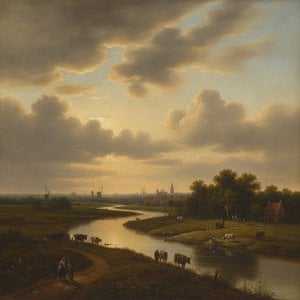
Discover the breathtaking beauty of Dutch Golden Age landscapes. Explore the mastery of light, chiaroscuro, and 17th-century realism through an expert art history lens, celebrating the enduring legacy of the Dutch Masters for discerning collectors and art lovers.

Esplora i 10 capolavori dell'Età d'Oro Olandese con ! Rembrandt, Vermeer e altri maestri rivivono in dipinti iconici. Scopri storia, tecnica e colori di opere senza tempo per arredare la tua casa con arte di qualità museale. Esplora la collezione online!

Embark on a cultural journey through the Dutch Golden Age. Explore the masterful interplay of light and shadow in 17th-century masterpieces, from Rembrandt to Vermeer, and discover how this era of profound realism continues to inspire fine art collectors today.

 Anteprima in scala reale
 Invia
Invia Condividi
 Dettagli opera

 Scarica immagine
 Simili
 Radiografia
 Slideshow
 Espandi i dettagli







 L'opzione vetro è disponibile solo per dimensioni inferiori a 110 cm


