


 Oil On CanvasWallArtDutch Golden Age
 1654
1654 70.0 x 60.0 cm
 Staatliche Museen zu Berlin
Olio su tela dipinto a mano nelle tue dimensioni e con la tua cornice, realizzato su ordinazione dai nostri artisti. ( Acquista stampa Acquista immagine)





























Scegli tra le nostre dimensioni predefinite, che rispettano le proporzioni originali dell'opera d'arte.

È possibile inserire dimensioni personalizzate per adattare l'opera a una cornice o a uno spazio specifico. Se la dimensione selezionata non corrisponde alle proporzioni dell'immagine originale, provvederemo a ritagliare l'opera o a estendere il dipinto con elementi aggiuntivi dipinti a mano. Un mockup digitale ti sarà inviato per approvazione prima dell'inizio della produzione.
Si prega di notare che l'anteprima a schermo non riflette il ritaglio o l'estensione effettivi. Solo il mockup mostrerà accuratamente la composizione finale.
Sebbene siano disponibili dimensioni personalizzate, consigliamo di selezionare una dimensione dall'elenco predefinito per preservare le proporzioni originali.
Consegna in tutto il mondo () in 3/4 settimane anziché nelle normali 5 settimane. (6 Settembre). Nessun compromesso sulla qualità.


Paternal Admonition
Dimensioni riproduzione
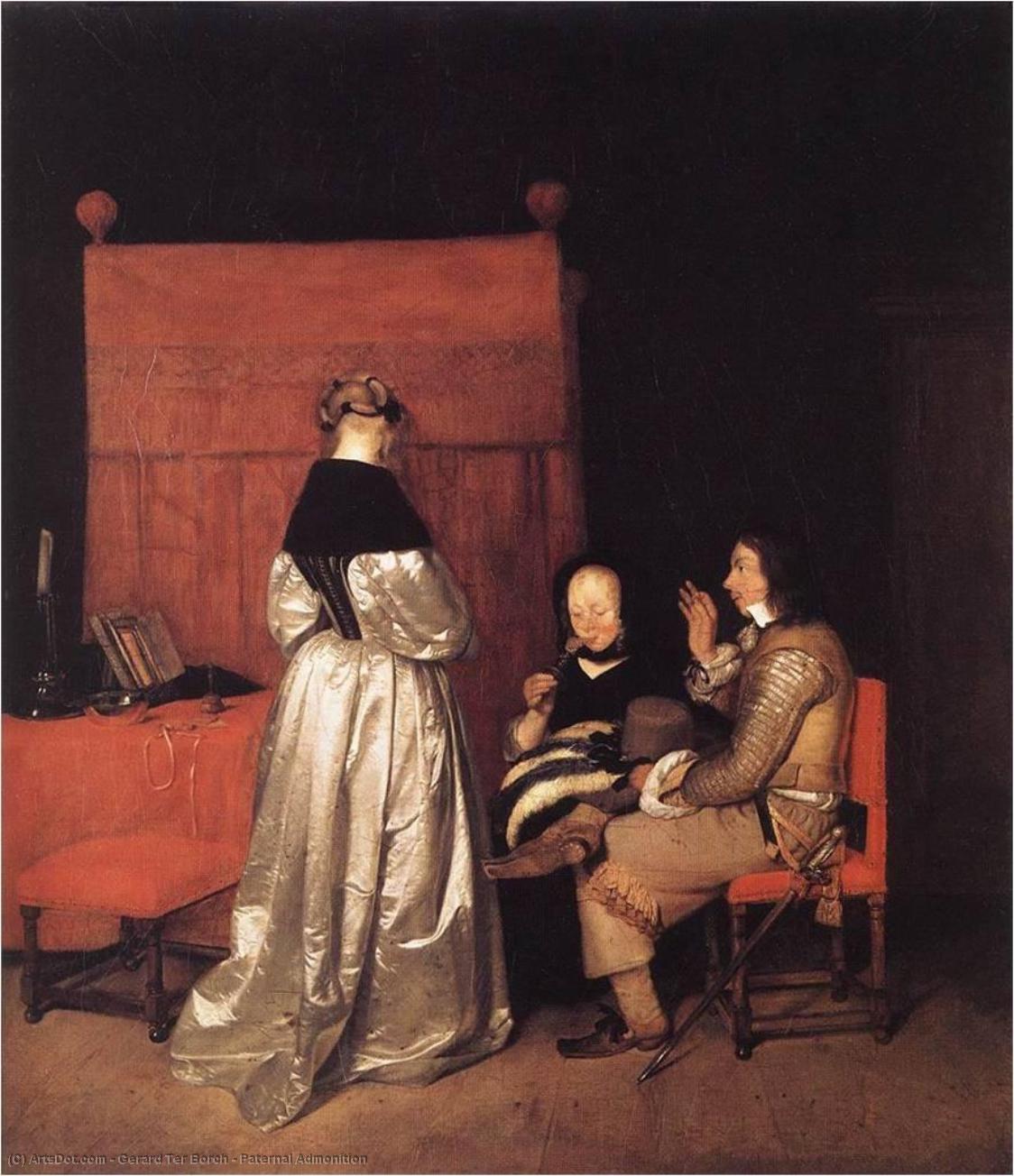
Gerard ter Borch's *Paternal Admonition*, painted around 1654, isn’t merely a portrait; it’s a meticulously crafted tableau of unspoken tension and veiled desire. Within the confines of a modestly furnished room—a subtle blend of domestic comfort and quiet restraint—three figures occupy a space brimming with psychological depth. The painting immediately draws the eye to the woman seated between two men, her posture suggesting both vulnerability and a carefully guarded composure. Her silver satin gown, shimmering with an almost ethereal light, acts as a focal point, demanding attention while simultaneously hinting at a hidden world of pleasure and intrigue.
Ter Borch’s genius lies not in dramatic gestures or overt displays of emotion, but rather in his ability to capture the subtle nuances of human interaction. The man, dressed in the formal attire of a military officer, holds a hat on his lap – a gesture that simultaneously conveys authority and a certain awkwardness. His gaze is directed towards the woman, yet his expression remains ambiguous, leaving us to ponder his intentions. The third figure, partially obscured behind the seated woman, adds another layer of complexity to the scene, suggesting a silent observer or perhaps even a participant in this unspoken exchange.
Technically, *Paternal Admonition* is a remarkable achievement. Ter Borch was a pioneer in Dutch genre painting, renowned for his unparalleled skill in rendering texture and light. He employed a technique of carefully layered glazes to create an astonishingly realistic depiction of fabrics – the luxurious sheen of the satin, the velvet upholstery, even the delicate folds of the woman’s dress are rendered with breathtaking detail. The use of chiaroscuro—the dramatic contrast between light and shadow—further enhances the painting's depth and atmosphere, drawing our attention to key elements while simultaneously creating a sense of mystery.
Notice how the light source seems to originate from an unseen window, casting soft shadows that accentuate the contours of the figures and their surroundings. This masterful manipulation of light not only adds visual interest but also contributes significantly to the painting’s overall mood—a blend of intimacy, restraint, and underlying tension.
The initial interpretation of *Paternal Admonition* as a scene of paternal guidance has been largely superseded by more nuanced readings. While the man undoubtedly holds a position of authority, many scholars now believe that the painting depicts an amorous negotiation between a soldier and a prostitute within a brothel setting. The presence of the bed, the mirror, and the various objects of feminine beauty on the table all lend credence to this interpretation.
However, Ter Borch’s genius lies in his refusal to offer easy answers. He presents us with a scene pregnant with ambiguity, inviting us to interpret the unspoken dynamics between the figures. The woman's averted gaze and the man's hesitant posture suggest a delicate dance of power and desire—a silent conversation that transcends simple categorization.
*Paternal Admonition* offers a fascinating glimpse into the social customs and moral sensibilities of 17th-century Holland. The painting reflects a society where appearances were carefully cultivated, and private interactions often concealed deeper desires. Ter Borch’s ability to capture this complex interplay of public and private life is what makes his work so enduringly captivating.
Reproductions of *Paternal Admonition* can bring this world into your own space, offering a subtle yet powerful reminder of the complexities of human relationships and the enduring allure of unspoken desires. Its quiet intensity and masterful technique make it a truly exceptional addition to any art collection or interior design scheme.

Gerard ter Borch (Zwolle, dicembre 1617 – Deventer, 8 dicembre 1681) è stato un pittore olandese, figura chiave del periodo dell’età dell’oro. La sua abilità nel catturare la vita quotidiana e i dettagli intimi lo ha reso uno dei più apprezzati artisti del suo tempo.
Gerard ter Borch nacque a Zwolle, in una famiglia di artisti. Suo padre, Gerard ter Borch il Vecchio, fu un pittore e poeta che gli fornì le prime istruzioni artistiche. Ter Borch dimostrò presto un talento eccezionale, viaggiando per l'Europa tra il 1632 e il 1650. Questi viaggi lo esposero a diverse influenze artistiche, tra cui quelle italiane, spagnole e francesi. Studiò con Pieter de Molijn ad Haarlem e trascorse del tempo a Londra, Roma e Münster.
Lo stile di ter Borch è caratterizzato da un realismo attento ai dettagli, una luce soffusa e una composizione equilibrata. I suoi dipinti spesso raffigurano scene di vita quotidiana, come interni domestici, ritratti e momenti di conversazione. Un elemento distintivo del suo lavoro è la capacità di catturare l'atmosfera intima e psicologica dei soggetti rappresentati.
Tra le opere più significative di Gerard ter Borch si annoverano:
Ter Borch ottenne un notevole successo durante la sua vita, diventando membro del consiglio cittadino di Deventer e godendo della stima dei suoi contemporanei.
L'opera di Gerard ter Borch ha esercitato una profonda influenza su numerosi pittori olandesi, tra cui Gabriel Metsu, Gerrit Dou, Eglon van der Neer e Johannes Vermeer. La sua attenzione ai dettagli, la sua capacità di creare atmosfere intime e il suo realismo attento hanno contribuito a definire l'estetica del periodo dell’età dell’oro olandese. Ter Borch è oggi considerato uno dei maestri indiscussi della pittura olandese del XVII secolo.

1617 - 1681 , Paesi Bassi

Esplora il mondo di Gerard ter Borch, maestro dell'Età dell'Oro olandese. Analisi approfondita del suo stile pittorico, le scene di genere e l'uso magistrale della luce. Scopri i simboli nascosti nelle sue opere e la sua eredità artistica.

Explore the Dutch Golden Age of painting! Discover key artists like Vermeer & ter Borch, their innovative techniques, and the rich cultural context behind these Baroque masterpieces. Learn about collecting & appreciating this iconic art period.
Discover the breathtaking beauty of Dutch Golden Age landscapes. Explore the mastery of light, chiaroscuro, and 17th-century realism through an expert art history lens, celebrating the enduring legacy of the Dutch Masters for discerning collectors and art lovers.

Esplora i 10 capolavori dell'Età d'Oro Olandese con ! Rembrandt, Vermeer e altri maestri rivivono in dipinti iconici. Scopri storia, tecnica e colori di opere senza tempo per arredare la tua casa con arte di qualità museale. Esplora la collezione online!

Embark on a cultural journey through the Dutch Golden Age. Explore the masterful interplay of light and shadow in 17th-century masterpieces, from Rembrandt to Vermeer, and discover how this era of profound realism continues to inspire fine art collectors today.

 Anteprima in scala reale
 Invia
Invia Condividi
 Dettagli opera

 Scarica immagine
 Simili
 Radiografia
 Slideshow
 Espandi i dettagli







 L'opzione vetro è disponibile solo per dimensioni inferiori a 110 cm


