Anteprima in scala realeAnteprima in scala reale Anteprima ARAnteprima AR Passa a Stampe Passa a StampePassa all'immagine digitale Passa all'immagine digitale InviaInvia
Dettagli operaDettagli opera Aggiungi ai preferiti Aggiungi ai preferiti Scarica immagineScarica immagine SimiliSimili RadiografiaRadiografia SlideshowSlideshow StatisticheStatistiche

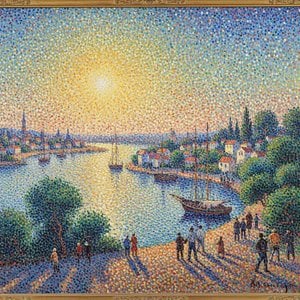
untitled (4615)

Witness Georges Seurat's revolutionary Pointillism in 'Bathers at Asnières'! This iconic Neo-Impressionist masterpiece, meticulously crafted with tiny dots of color, captures a Parisian afternoon with unparalleled precision and light. A must-see for art lovers!

Scopri Georges Seurat (1859-1891), pioniere del Puntinismo e Neoimpressionismo! Ammira 'Una domenica a La Grande Jatte' e la sua rivoluzionaria teoria del colore che cattura la vita moderna. Acquista riproduzioni dipinte a mano!

Riproduzione a olio fatta a mano

Olio su tela dipinto a mano nelle tue dimensioni e con la tua cornice, realizzato su ordinazione dai nostri artisti. (Passa a Stampe Passa a StampePassa all'immagine digitale Passa all'immagine digitale)

P118B $10
P118H $10
P118W $10
P438Z $10
P508JH $12
P508YH $12
P805H $10
P805Z $10
P919BZ $10
P919G $10
P919XJ $10
P959ZH $10
P968JZ $12
W106C $8
W218G $10
W218JH $8
W218Y $10
W307PJ $10
W316G $10
W316PJ $8
W316Y $10
W398PJ $8
W4111J $10
W500HY $15
W500JH $15
W692G $12
W849H $8
W940BG $15
W953PJ $8

Formato standard
su misura
CM
INCH

Scegli tra le nostre dimensioni predefinite, che rispettano le proporzioni originali dell'opera d'arte.

larghezza
altezza

È possibile inserire dimensioni personalizzate per adattare l'opera a una cornice o a uno spazio specifico. Se la dimensione selezionata non corrisponde alle proporzioni dell'immagine originale, provvederemo a ritagliare l'opera o a estendere il dipinto con elementi aggiuntivi dipinti a mano. Un mockup digitale ti sarà inviato per approvazione prima dell'inizio della produzione.
Si prega di notare che l'anteprima a schermo non riflette il ritaglio o l'estensione effettivi. Solo il mockup mostrerà accuratamente la composizione finale.
Sebbene siano disponibili dimensioni personalizzate, consigliamo di selezionare una dimensione dall'elenco predefinito per preservare le proporzioni originali.

Esempi di ciò che può essere modificato: sostituire il volto con una foto del cliente; aggiungere un animale domestico (ad esempio, sostituire un gatto con un cane); inserire un messaggio nascosto nello sfondo; cambiare il paesaggio o gli elementi dello sfondo.
Dopo l'ordine, il team di WahooArt.com contatterà il cliente via e-mail per le istruzioni e fornirà un'anteprima del mockup

Consegna in tutto il mondo () in 3/4 settimane anziché nelle normali 5 settimane. (9 Settembre). Nessun compromesso sulla qualità.

why_choose_icon
Spedizione espressa gratuita in tutto il mondo
why_choose_icon
Tela in lino di alta qualità
why_choose_icon
Assicurazione completa sulla spedizione
why_choose_icon
Garanzia di rimborso dei dazi doganali
why_choose_icon
Garanzia di fedeltà cromatica
why_choose_icon
Politica di reso entro 100 giorni (solo per difetti)
why_choose_icon
Garanzia di rimborso al 100%
why_choose_icon
Offerta per acquisti multipli

Prezzo totale

$ 272

reproduction

untitled (4615)

Tecnica di riproduzione

Dimensioni riproduzione

-

Prezzo totale calcolato

$ 272

Informazioni rapide

  • Artist: Georges Seurat
  • Subject or theme: Modern life, leisure
  • Medium: Oil on canvas
  • Influences:
    • Impressionism
    • Delacroix
  • Artistic style: Neo-Impressionism
  • Notable elements or techniques: Pointillism
  • Year: 1884–1886

Quiz d'arte

Per ogni domanda è presente una sola risposta corretta.

Domanda 1:
What artistic technique is most prominently displayed in the painting "untitled (4615)"?
Domanda 2:
The description mentions the painting utilizes a ‘post-impressionist style’. What does this generally indicate about its approach?
Domanda 3:
According to the description, what is a key characteristic of the painting’s visual effect?
Domanda 4:
Georges Seurat is best known for his pioneering work in which artistic movement?
Domanda 5:
The description highlights the meticulous detail of the painting. What does this suggest about Seurat’s artistic process?

Georges Seurat’s *A Sunday Afternoon on the Island of La Grande Jatte* – A Symphony of Light and Modernity

Georges Pierre Seurat's *A Sunday Afternoon on the Island of La Grande Jatte*, completed between 1884 and 1886, stands as a monumental achievement not just within Impressionism, but as a foundational work of modern art. More than simply a depiction of a Parisian leisure scene, it’s a meticulously constructed meditation on time, modernity, and the evolving relationship between humanity and its environment – a theme that continues to resonate powerfully today. The painting's scale alone—a colossal 17 feet by 25 feet—immediately commands attention, drawing the viewer into a world of carefully orchestrated observation and scientific precision.

  • The Technique: Pointillism Seurat’s revolutionary technique, known as Pointillism or Divisionism, is the very heart of this masterpiece. Rather than blending colors directly on the canvas, he applied tiny dots of pure color – meticulously calculated to create optical mixtures when viewed from a distance. This method, inspired by scientific theories of optics and championed by Seurat himself, aimed to capture the fleeting effects of light and atmosphere with unprecedented accuracy.
  • Color Theory The painting’s palette is remarkably restrained, dominated by blues, greens, ochres, and browns – colors that evoke the hazy summer afternoon and the industrial landscape surrounding La Grande Jatte. Seurat's understanding of color theory was exceptional; he used complementary colors strategically to heighten visual impact and create a sense of shimmering light.
  • Composition The composition is carefully balanced, with figures arranged in shallow depth planes, creating an illusion of space that’s both realistic and stylized. The diagonal lines of the boats and the receding shoreline draw the viewer's eye into the scene, while the central grouping of figures anchors the composition.

A Reflection on Modern Life

Painted during a period of rapid industrialization and social change in Paris, *A Sunday Afternoon* offers a complex commentary on the burgeoning modern world. The island itself was a popular leisure spot for Parisians escaping the city’s bustle, but Seurat presents a scene that feels strangely detached from everyday life. The figures are posed awkwardly, seemingly unaware of each other, and their activities – boating, sunbathing, picnicking – feel almost ritualistic. This detachment reflects the growing alienation and anonymity experienced by individuals in an increasingly urbanized society.

Symbolism: Some scholars interpret the painting as a critique of bourgeois leisure, suggesting that the figures’ detached behavior represents a superficial enjoyment of wealth and status. The industrial backdrop – the factory chimneys and the boats powered by steam – subtly underscores the impact of technology on human life. The painting's stillness is also significant; it captures a moment frozen in time, reflecting the anxieties surrounding the relentless march of progress.

Historical Context & Seurat’s Vision

Seurat was deeply influenced by scientific advancements of the late 19th century, particularly those related to optics and color theory. He studied the work of Eugène Delacroix, but rejected his expressive brushwork in favor of a more objective approach. His ambition was not simply to paint what he saw, but to capture the *impression* of light and atmosphere with scientific rigor. This pursuit led him to develop Pointillism as a revolutionary technique that would transform the course of modern art.

Neo-Impressionism: Seurat’s work is considered a cornerstone of Neo-Impressionism, an artistic movement that emerged in response to Impressionism. While Impressionists focused on capturing fleeting moments of light and color, Neo-Impressionists, led by Seurat and Paul Signac, employed scientific principles to create works with a more structured and systematic approach. *A Sunday Afternoon* is arguably the most significant example of this movement.

Emotional Impact & Legacy

Despite its intellectual rigor, *A Sunday Afternoon on the Island of La Grande Jatte* possesses a profound emotional impact. The painting’s scale, combined with Seurat's masterful use of color and light, creates a sense of immersive beauty that draws the viewer into the scene. It is a work that invites contemplation – about time, modernity, human connection, and the enduring power of art to capture the essence of our experience.


Biografia dell'artista

Georges Pierre Seurat: Un Pioniere del Neoimpressionismo

Primi Anni di Vita e Formazione

  • Nato il: 2 dicembre 1859 a Parigi, Francia.
  • La famiglia di Seurat si trasferì sul Boulevard de Magenta poco dopo la sua nascita.
  • Suo padre, Antoine Chrysostome Seurat, era un ex funzionario legale che divenne ricco grazie alla speculazione immobiliare.
  • Iniziò il suo addestramento artistico all'École Municipale di Scultura e Disegno, vicino a casa sua, sotto lo scultore Justin Lequien.
  • Nel 1878, si iscrisse alla prestigiosa École des Beaux-Arts, studiando sotto Henri Lehmann.

Sviluppo Artistico e Influenze

  • La personalità artistica di Seurat era un'affascinante combinazione di sensibilità e astrazione logica. Combinava una delicata sensibilità con la precisione matematica.
  • Influenze: Mentre le influenze specifiche sono dibattute, studiò le teorie del colore degli scienziati come Michel Eugène Chevreul e Ogden Rood.
  • Inizialmente sperimentò tecniche di disegno tradizionali prima di sviluppare il suo stile distintivo.
  • Le sue opere giovanili mostrano interesse per la pittura accademica ma si sono gradualmente spostate verso un approccio più innovativo.

Chromoluminarismo e Puntinismo

  • Seurat ideò le tecniche di chromoluminarismo (la scienza del colore) e puntinismo, applicando piccoli punti distinti di puro colore su una tela.
  • Utilizzava il Conté crayon per disegni dettagliati su carta con superfici ruvide come parte del suo processo.
  • Obiettivo del Puntinismo: L'idea era che l'occhio dello spettatore avrebbe mescolato questi colori otticamente, creando un effetto vibrante e luminoso.

Realizzazioni Principali e Opere Notevoli

  • Un pomeriggio di domenica sull’isola della Grande Jatte (1884-1886): Il suo lavoro più famoso, che segna l'inizio del Neoimpressionismo. Esemplifica la sua tecnica puntinista e il suo approccio meticoloso.
  • Alfalfa, Saint-Denis (1886-1887): Dimostra la sua applicazione della teoria del colore a un paesaggio rurale.
  • Paesaggio a Saint-Ouen (1882-1883): Un esempio precoce che mostra il suo stile in evoluzione e il suo interesse per la luce e l'atmosfera.
  • La Torre Eiffel (1889): Una rappresentazione dell’iconico monumento parigino, resa con tecniche puntilliste.
  • Bagnanti ad Asnières (1884): Un altro lavoro significativo che esplora il tempo libero e la vita moderna con il suo stile distintivo.

Significato Storico ed Eredità

  • Il lavoro di Seurat ha influenzato profondamente lo sviluppo dell'arte moderna, in particolare attraverso l'enfasi sull'espressione soggettiva ed esplorazione di nuove tecniche.
  • Ha aperto la strada: Ha aperto la strada a movimenti come il Fauvismo, il Cubismo e l’Espressionismo astratto.
  • Il suo approccio scientifico alla pittura ha sfidato le convenzioni artistiche tradizionali.
  • Nonostante la sua breve vita (morì all'età di 31 anni), Seurat ha lasciato un segno indelebile nella storia dell’arte, ispirando generazioni di artisti con la sua visione innovativa.
Georges Pierre Seurat

Georges Pierre Seurat

1859 - 1891 , Francia

Dati rapidi

  • Artistic Movement Or Style: Neo-Impressionismo, Puntinismo
  • Artists Or Movements Influenced By This Artist:
    • Fauvismo
    • Cubismo
    • Espressionismo astratto
  • Artists Who Influenced This Artist:
    • Michel Eugène Chevreul
    • Ogden Rood
  • Date Of Birth: 2 dicembre 1859
  • Full Name: Georges Pierre Seurat
  • Nationality: Francese
  • Notable Artworks:
    • Una domenica a La Grande Jatte
    • Bagnanti ad Asnières
    • La Torre Eiffel
    • Alfalfa, Saint-Denis
  • Place Of Birth (City And Country): Parigi, Francia
Esplora le opere d'arte organizzate per temi, stili e caratteristiche.