CONSULENZA D'ARTE GRATUITA

x
Ordina la riproduzione Ordina la riproduzioneAcquista download Acquista download InviaInvia
DettagliDettagli Aggiungi ai preferiti Aggiungi ai preferiti ScaricaScarica SimiliSimili RadiografiaRadiografia SlideshowSlideshow

untitled (9656)

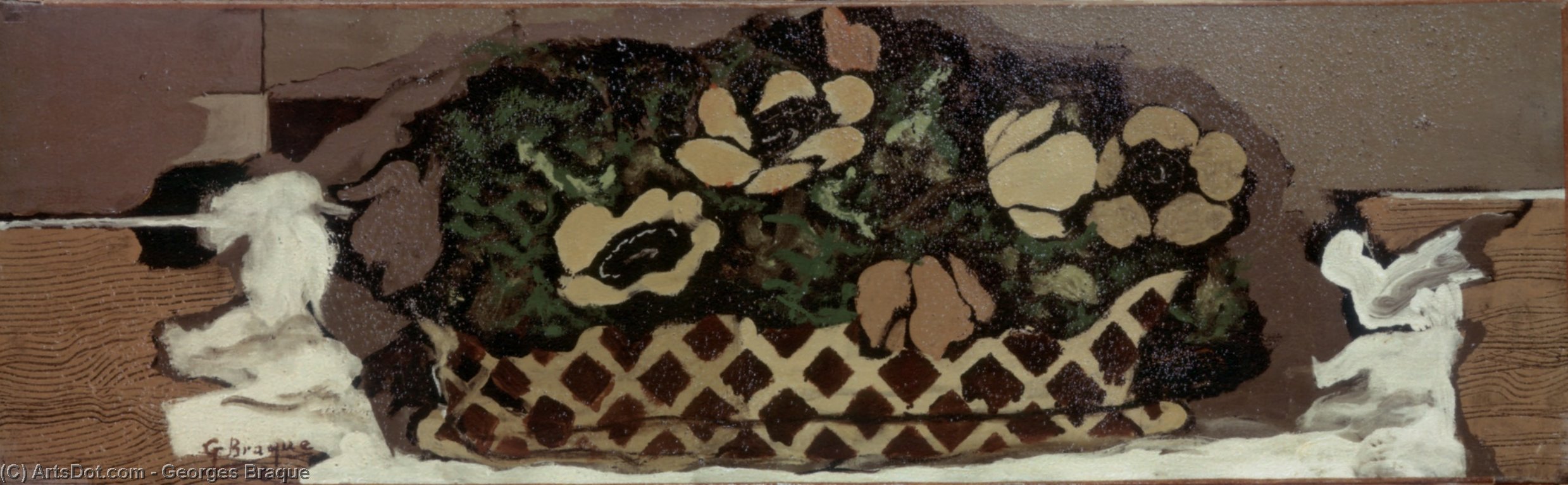
Georges Braque's 'Untitled (9656)' captures a serene nature scene with a tree and birds, showcasing the artist’s pioneering Cubist style. Explore the interplay of form and perspective in this captivating hand-painted reproduction.

Esplora la vita e l'arte di Georges Braque (1882-1963), una figura chiave della pittura del XX secolo. Pioniere del Cubismo insieme a Picasso, noto per il Fauvismo, il collage e forme geometriche innovative. Scopri la sua eredità su WahooArt!

Giclée / Stampa d'arte

Stampa giclée o su tela di qualità museale, con produzione rapida e diverse opzioni di finitura.

P118B $10
P118H $10
P118W $10
P438Z $10
P508JH $12
P508YH $12
P805H $10
P805Z $10
P919BZ $10
P919G $10
P919XJ $10
P959ZH $10
P968JZ $12
W106C $8
W218G $10
W218JH $8
W218Y $10
W307PJ $10
W316G $10
W316PJ $8
W316Y $10
W398PJ $8
W4111J $10
W500HY $15
W500JH $15
W692G $12
W849H $8
W940BG $15
W953PJ $8

Standard
custom
CM
INCH

Scegli tra le nostre dimensioni predefinite, che rispettano le proporzioni originali dell'opera d'arte.

larghezza
altezza

È possibile inserire dimensioni personalizzate per adattare l'opera a una cornice o a uno spazio specifico. Se la dimensione selezionata non corrisponde alle proporzioni dell'immagine originale, procederemo al ritaglio dell'opera o all'estensione dell'immagine con un bordo specchiato o a tinta unita. Un mockup digitale ti verrà inviato per approvazione prima dell'inizio della produzione.
Si prega di notare che l'anteprima a schermo non riflette il ritaglio o l'estensione effettivi. Solo il mockup mostrerà accuratamente la composizione finale.
Sebbene siano disponibili dimensioni personalizzate, si raccomanda di selezionare una dimensione dall'elenco predefinito per preservare le proporzioni originali.

Consegna in tutto il mondo () in 2 settimane invece delle normali 4/5 settimane. (4 Luglio)

why_choose_icon
Spedizione espressa gratuita in tutto il mondo

why_choose_icon
Tela in lino di alta qualità
why_choose_icon
Assicurazione completa sulla spedizione
why_choose_icon
Garanzia di rimborso dei dazi doganali
why_choose_icon
Garanzia di fedeltà cromatica
why_choose_icon
Politica di reso entro 60 giorni (solo per difetti)
why_choose_icon
Garanzia di rimborso al 100%
why_choose_icon
Sconto per acquisti multipli

Prezzo totale

-

reproduction

untitled (9656)

Giclée / Stampa d'arte

Dimensioni riproduzione

-

Prezzo totale finale

-

Informazioni rapide

  • Artist: Georges Braque
  • Title: untitled (9656)
  • Movement: Cubism, Fauvism

  • Artistic style: Abstract, Naturalistic
  • Subject or theme: Nature, Serenity
  • Notable elements: Tree, birds, figure

Quiz d'arte

Per ogni domanda è presente una sola risposta corretta.

Domanda 1:
Based on the image description, what is the primary focus of this artwork?
Domanda 2:
The artwork is attributed to which artist?
Domanda 3:
Which artistic movement is most closely associated with the style depicted in this artwork?
Domanda 4:
The image description mentions a person observing the tree. What is the likely purpose of this figure?
Domanda 5:
Considering Georges Braque's biography, what influenced his early artistic development?

Descrizione dell'opera

Georges Braque’s Serene Observation: A Window into Early Cubism

This untitled work by Georges Braque, created around 1926 (though the exact date remains elusive), offers a captivating glimpse into the artist's evolving approach to form and space during his pivotal period within the development of Cubism. It’s not merely a depiction of a forest scene; it’s an exploration of perception itself – a deliberate fracturing of reality to reveal its underlying geometric structure, mirroring Braque’s deep engagement with the ideas of Paul Cézanne. The painting's stark black and white palette immediately establishes a formal rigor, stripping away any superfluous detail and forcing the viewer to confront the essential shapes and planes that constitute the landscape.

The composition is dominated by a towering tree, its branches reaching upwards in a complex network of lines and angles. This isn’t a naturalistic representation; rather, it's an abstracted embodiment of the tree’s skeletal structure – a series of interlocking geometric forms that suggest both solidity and fragility. The leaves, rendered as dense clusters of overlapping planes, contribute to this sense of fragmentation, creating a visual texture that is simultaneously chaotic and meticulously controlled. Notice how Braque avoids smooth transitions; instead, he employs sharp edges and distinct planes, anticipating the key tenets of Cubism’s deconstruction of traditional perspective.

The Human Element: A Quiet Contemplation

Adding to the painting's intrigue is the presence of a solitary figure standing near the left side of the scene. This individual, partially obscured by the foliage, appears to be gazing intently at the tree. Their posture – slightly turned towards the subject – suggests a moment of quiet contemplation, perhaps an appreciation for the tree’s inherent beauty or a deeper engagement with its geometric form. The figure's inclusion isn’t merely decorative; it serves as a focal point, inviting the viewer to consider their own relationship to nature and art. Braque frequently used human figures in his work not to represent specific individuals, but rather to embody universal themes of observation and experience – a silent witness to the unfolding drama of the natural world.

Cubist Principles & Artistic Innovation

This painting is firmly rooted within the principles of Cubism, a revolutionary movement that Braque co-founded with Pablo Picasso. Unlike earlier artistic styles that prioritized realistic representation, Cubism sought to depict objects from multiple viewpoints simultaneously, breaking them down into their fundamental geometric components and reassembling them on the canvas in an abstract manner. Braque’s approach, often referred to as “Analytical Cubism,” involved a deliberate reduction of color palettes – typically limited to monochromatic schemes – to emphasize form and structure. The use of overlapping planes, fragmented forms, and ambiguous spatial relationships are hallmarks of this style, creating a sense of visual complexity that challenges the viewer's perception.

Symbolic Resonance & Emotional Impact

Beyond its formal innovations, the painting carries a subtle symbolic resonance. The tree itself can be interpreted as a symbol of strength, resilience, and connection to the earth – qualities deeply valued in Braque’s native France. The stark contrast between light and shadow further enhances this sense of drama, creating a visual tension that draws the viewer's eye across the composition. Ultimately, “Untitled (9656)” is not simply a landscape; it’s an invitation to engage with the complexities of perception, form, and the enduring beauty of the natural world – a testament to Braque’s pioneering spirit and his profound influence on the course of modern art.

Opere simili


Biografia dell'artista

**primi anni di vita e formazione**

Georges Braque, un illustre pittore francese, collageur, disegnatore, stampatore e scultore, nacque il 13 maggio 1882 ad Argenteuil, Val-d'Oise. È cresciuto a Le Havre e inizialmente si è formato per diventare pittore di facciate e decoratore come suo padre e nonno. Tuttavia, le inclinazioni artistiche di Braque lo hanno portato a studiare pittura all’École des Beaux-Arts a Le Havre dal 1897 al 1899.

**evoluzione artistica e fauvismo**

Nel 1902, dopo aver completato il suo apprendistato con un decoratore a Parigi, Braque ha frequentato l'Académie Humbert fino al 1904. Questo periodo ha segnato la sua introduzione al fauvismo, uno stile caratterizzato da colori vivaci e risposte emotive. Influenzato dalle opere di Henri Matisse e André Derain, Braque ha adottato un approccio fauvista, come si può vedere nel suo dipinto La Pazienza (fauvismo, olio su tela).

**contributo al cubismo**

La collaborazione di Braque con Pablo Picasso dal 1908 al 1912 ha portato allo sviluppo del cubismo. Le loro opere cubiste analitiche, come Georges Braque: La Pazienza e Pablo Picasso: Clarinet(cubismo analitico, olio su tela), sono oggi considerate pietre miliari della storia dell'arte.

**eredità e opere notevoli**

* Le Case all’Éstaque: una testimonianza dell'uso innovativo di geometria e prospettiva simultanea da parte di Braque. * La Pazienza(fauvismo, olio su tela): dimostra lo stile fauvista di Braque. * Clarinet(cubismo analitico, olio su tela): un'opera cubista collaborativa con Picasso.

**musei e collezioni**

* Musée d’Orsay: presenta una vasta collezione di arte impressionista e post-impressionista, inclusi lavori di Braque. * Musée de l’Orangerie: espone una vasta gamma di opere d'arte, inclusi quelle di Braque e altri artisti notevoli. **Lo stile innovativo di Georges Braque e la sua collaborazione con Pablo Picasso continuano a ispirare artisti e appassionati d'arte.**
Georges Braque

Georges Braque

1882 - 1963 , Francia

Dati rapidi

  • Artisti Influenti:
    • Henri Matisse
    • André Derain
    • Paul Cézanne
  • Artisti Influenzati: ['Pablo Picasso']
  • Data Di Nascita: 13 maggio 1882
  • Luogo Di Nascita: Argenteuil, Francia
  • Movimento Artistico: Cubismo, Fauvismo
  • Nazionalità: Francese
  • Nome Completo: Georges Braque
  • Opere Notevoli:
    • Case a L'Estaque
    • La Pazienza (fauvista)
    • Chitarra, Frutta e Brocca
    • Natura morta con Bass
Esplora opere d'arte organizzate per temi, stili e caratteristiche.