Anteprima in scala reale Prova in AR Passa alle stampe Passa all'immagine digitale Condividi
Dettagli Aggiungi ai preferiti Scarica Articoli simili Radiografia Slideshow Statistiche

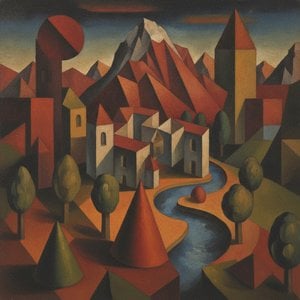
Musical instruments and Fruit

Explore Georges Braque’s ‘Musical Instruments & Fruit,’ a Cubist still life showcasing fragmented forms & dramatic lighting. Discover this iconic artwork's geometric abstraction.

Esplora la vita e l'arte di Georges Braque (1882-1963), una figura chiave della pittura del XX secolo. Pioniere del Cubismo insieme a Picasso, noto per il Fauvismo, il collage e forme geometriche innovative. Scopri la sua eredità su WahooArt!

Riproduzione a olio fatta a mano

Olio su tela dipinto a mano nelle tue dimensioni e con la tua cornice, realizzato su ordinazione dai nostri artisti. ( Passa alle stampe Passa all'immagine digitale)

P118B $10
P118H $10
P118W $10
P438Z $10
P508JH $12
P508YH $12
P805H $10
P805Z $10
P919BZ $10
P919G $10
P919XJ $10
P959ZH $10
P968JZ $12
W106C $8
W218G $10
W218JH $8
W218Y $10
W307PJ $10
W316G $10
W316PJ $8
W316Y $10
W398PJ $8
W4111J $10
W500HY $15
W500JH $15
W692G $12
W849H $8
W940BG $15
W953PJ $8

Standard
personalizzato
CM
INCH

Scegli tra le nostre dimensioni predefinite, che rispettano le proporzioni originali dell'opera d'arte.

larghezza
altezza

È possibile inserire dimensioni personalizzate per adattare l'opera a una cornice o a uno spazio specifico. Se la dimensione selezionata non corrisponde alle proporzioni dell'immagine originale, provvederemo a ritagliare l'opera o a estendere il dipinto con elementi aggiuntivi dipinti a mano. Un mockup digitale ti sarà inviato per approvazione prima dell'inizio della produzione.
Si prega di notare che l'anteprima a schermo non riflette il ritaglio o l'estensione effettivi. Solo il mockup mostrerà accuratamente la composizione finale.
Sebbene siano disponibili dimensioni personalizzate, consigliamo di selezionare una dimensione dall'elenco predefinito per preservare le proporzioni originali.

Esempi di personalizzazione: sostituire il volto con una foto del cliente; aggiungere un animale domestico (ad esempio, sostituire un gatto con un cane); inserire un messaggio nascosto nello sfondo; cambiare il paesaggio o gli elementi dello sfondo.
Dopo l'ordine, il team di WahooArt.com contatterà il cliente via e-mail per ricevere le istruzioni e fornirà un'anteprima del mockup

Consegna in tutto il mondo () in 3/4 settimane anziché nelle normali 5 settimane. (19 Settembre). Nessun compromesso sulla qualità.

why_choose_icon
Spedizione espressa gratuita in tutto il mondo
why_choose_icon
Tela in lino di alta qualità
why_choose_icon
Assicurazione completa sulla spedizione
why_choose_icon
Garanzia di rimborso dei dazi doganali
why_choose_icon
Garanzia di perfetta fedeltà cromatica
why_choose_icon
Politica di reso entro 100 giorni (solo per difetti di fabbricazione)
why_choose_icon
Garanzia di rimborso al 100%
why_choose_icon
Sconto per acquisti multipli

Prezzo totale

$ 272

reproduction

Musical instruments and Fruit

Tecnica di riproduzione

Dimensioni della riproduzione

-

Prezzo totale

$ 272

Dettagli rapidi

  • Location: Tate Modern, London
  • Medium: Oil on canvas
  • Title: Musical Instruments and Fruit
  • Year: 1927
  • Influences: Cézanne
  • Movement: Cubism
  • Artist: Georges Braque

Quiz d'arte

Per ogni domanda è presente una sola risposta corretta.

Domanda 1:
What artistic movement is most closely associated with Georges Braque’s ‘Musical Instruments and Fruit’?
Domanda 2:
The painting utilizes a fragmented perspective, characteristic of which art movement?
Domanda 3:
What is the primary subject matter depicted in ‘Musical Instruments and Fruit’?
Domanda 4:
Based on the image description, what is a prominent feature of the lighting in ‘Musical Instruments and Fruit’?
Domanda 5:
Which artist is most closely associated with Georges Braque, particularly during the development of Cubism?

A Fragmented World: The Genesis of Cubism

Georges Braque's "Musical Instruments and Fruit" isn’t merely a still life; it’s a carefully orchestrated dismantling of perception, a visual embodiment of the revolutionary ideas taking shape in early 20th-century Paris. Painted in 1927, during a period of intense collaboration with Pablo Picasso, this work represents a pivotal moment in the development of Cubism – an artistic movement that sought to redefine how we see and represent reality. The canvas isn’t concerned with replicating a single, unified view; instead, it presents multiple viewpoints simultaneously, as if peering through fractured lenses at a commonplace scene. This deliberate fragmentation reflects the burgeoning anxieties and intellectual shifts of the era, mirroring a world grappling with rapid industrialization, technological advancements, and a growing sense of instability.

Braque’s approach was deeply rooted in Cézanne's geometric explorations, particularly his emphasis on analyzing objects into their fundamental forms. Cézanne’s influence is palpable in the painting’s flattened perspective and the reduction of recognizable elements – the bowl, the sheet of paper, the draped cloth – to a series of interlocking planes and angles. This isn’t an attempt at photographic realism; rather, it's a conscious rejection of traditional representation, prioritizing the exploration of form, space, and the very nature of seeing itself. The muted color palette—primarily ochres, browns, and grays—further enhances this sense of detachment from the tangible world, contributing to the painting’s contemplative mood.

The Language of Geometry: Form and Structure

The composition is dominated by a rigorous geometric vocabulary. Rectangular blocks define the table and its contents, while triangular shapes suggest the contours of the fruit bowl and draped cloth. These forms aren't smoothly blended; they are sharply delineated, creating a dynamic tension between solidity and instability. Notice how Braque uses overlapping planes to create an illusion of depth – not through linear perspective, but by layering geometric shapes that seem to shift and rearrange themselves before your eyes. This technique is central to Cubism’s challenge to traditional spatial representation, forcing the viewer to actively engage with the painting and reconstruct its form in their mind.

  • The Bowl of Fruit: Representing abundance and fertility, the fruit itself becomes a collection of fragmented shapes, mirroring the overall fractured composition.
  • The Sheet of Paper: Suggests intellectual activity and documentation – perhaps reflecting Braque’s own role as an artist documenting his explorations of form.
  • The Draped Cloth: Adds a layer of complexity to the arrangement, its folds and creases contributing to the overall sense of dynamism and instability.

Musicality in Monochrome: Symbolism and Emotion

Beyond its purely formal qualities, “Musical Instruments and Fruit” resonates with a subtle emotional depth. The inclusion of musical instruments – specifically a mandolin – introduces an element of melody and rhythm into the composition. This suggests that Braque wasn’t simply interested in dissecting objects; he was also exploring their inherent relationships and the ways they could evoke feelings and associations. The painting's title itself hints at this interplay between visual form and auditory experience, inviting the viewer to imagine a silent symphony of shapes and colors.

Furthermore, the still life genre traditionally held symbolic weight, often representing the five senses. Braque’s choice to depict fruit and musical instruments aligns with this tradition, suggesting an exploration of pleasure, nourishment, and artistic creation. The muted color palette contributes to a sense of quiet contemplation, inviting viewers to reflect on the beauty and complexity of everyday objects.

A Legacy in Fragments: Reproduction and Interpretation

Reproductions of “Musical Instruments and Fruit” offer a remarkable opportunity to appreciate Braque’s groundbreaking innovations. The painting's fragmented composition and geometric forms are particularly well-suited to digital reproduction, allowing viewers to examine the intricate details of its construction. Whether displayed in a modern interior or a dedicated art gallery, this work continues to challenge our perceptions of reality and inspire new ways of seeing the world – a testament to Braque’s enduring legacy as one of the most influential artists of the 20th century.


Biografia dell'artista

**primi anni di vita e formazione**

Georges Braque, un illustre pittore francese, collageur, disegnatore, stampatore e scultore, nacque il 13 maggio 1882 ad Argenteuil, Val-d'Oise. È cresciuto a Le Havre e inizialmente si è formato per diventare pittore di facciate e decoratore come suo padre e nonno. Tuttavia, le inclinazioni artistiche di Braque lo hanno portato a studiare pittura all’École des Beaux-Arts a Le Havre dal 1897 al 1899.

**evoluzione artistica e fauvismo**

Nel 1902, dopo aver completato il suo apprendistato con un decoratore a Parigi, Braque ha frequentato l'Académie Humbert fino al 1904. Questo periodo ha segnato la sua introduzione al fauvismo, uno stile caratterizzato da colori vivaci e risposte emotive. Influenzato dalle opere di Henri Matisse e André Derain, Braque ha adottato un approccio fauvista, come si può vedere nel suo dipinto La Pazienza (fauvismo, olio su tela).

**contributo al cubismo**

La collaborazione di Braque con Pablo Picasso dal 1908 al 1912 ha portato allo sviluppo del cubismo. Le loro opere cubiste analitiche, come Georges Braque: La Pazienza e Pablo Picasso: Clarinet(cubismo analitico, olio su tela), sono oggi considerate pietre miliari della storia dell'arte.

**eredità e opere notevoli**

* Le Case all’Éstaque: una testimonianza dell'uso innovativo di geometria e prospettiva simultanea da parte di Braque. * La Pazienza(fauvismo, olio su tela): dimostra lo stile fauvista di Braque. * Clarinet(cubismo analitico, olio su tela): un'opera cubista collaborativa con Picasso.

**musei e collezioni**

* Musée d’Orsay: presenta una vasta collezione di arte impressionista e post-impressionista, inclusi lavori di Braque. * Musée de l’Orangerie: espone una vasta gamma di opere d'arte, inclusi quelle di Braque e altri artisti notevoli. **Lo stile innovativo di Georges Braque e la sua collaborazione con Pablo Picasso continuano a ispirare artisti e appassionati d'arte.**
Georges Braque

Georges Braque

1882 - 1963 , Francia

Informazioni rapide

  • Artisti Influenti:
    • Henri Matisse
    • André Derain
    • Paul Cézanne
  • Artisti Influenzati: ['Pablo Picasso']
  • Data Di Nascita: 13 maggio 1882
  • Luogo Di Nascita: Argenteuil, Francia
  • Movimento Artistico: Cubismo, Fauvismo
  • Nazionalità: Francese
  • Nome Completo: Georges Braque
  • Opere Notevoli:
    • Case a L'Estaque
    • La Pazienza (fauvista)
    • Chitarra, Frutta e Brocca
    • Natura morta con Bass
Esplora le opere d'arte organizzate per temi, stili e caratteristiche.