x
Anteprima in scala realeAnteprima in scala reale Anteprima ARAnteprima AR Acquista il dipinto realizzato a mano Acquista il dipinto realizzato a manoAcquista immagine Acquista immagine InviaInvia
Dettagli operaDettagli opera Aggiungi ai preferiti Aggiungi ai preferiti Scarica immagineScarica immagine SimiliSimili RadiografiaRadiografia SlideshowSlideshow


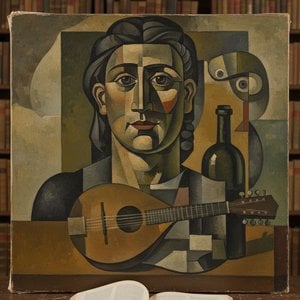
A Black Pedestal

Explore Georges Braque's 'The Pedestal' (1938), a stunning example of Analytical Cubism. This fragmented still life features musical instruments in muted tones, offering a unique blend of abstraction and contemplation. Hand-painted reproductions avai

Esplora la vita e l'arte di Georges Braque (1882-1963), una figura chiave della pittura del XX secolo. Pioniere del Cubismo insieme a Picasso, noto per il Fauvismo, il collage e forme geometriche innovative. Scopri la sua eredità su WahooArt!

Giclée / Stampe d'arte

Stampa giclée o su tela di qualità museale, con produzione rapida e diverse opzioni di finitura. (Acquista il dipinto realizzato a mano Acquista il dipinto realizzato a manoAcquista immagine Acquista immagine)

P118B $10
P118H $10
P118W $10
P438Z $10
P508JH $12
P508YH $12
P805H $10
P805Z $10
P919BZ $10
P919G $10
P919XJ $10
P959ZH $10
P968JZ $12
W106C $8
W218G $10
W218JH $8
W218Y $10
W307PJ $10
W316G $10
W316PJ $8
W316Y $10
W398PJ $8
W4111J $10
W500HY $15
W500JH $15
W692G $12
W849H $8
W940BG $15
W953PJ $8

Formato standard
su misura
CM
INCH

Scegli tra le nostre dimensioni predefinite, che rispettano le proporzioni originali dell'opera d'arte.

larghezza
altezza

È possibile inserire dimensioni personalizzate per adattare l'opera a una cornice o a uno spazio specifico. Se la dimensione selezionata non corrisponde alle proporzioni dell'immagine originale, procederemo al ritaglio dell'opera o all'estensione dell'immagine con un bordo specchiato o a tinta unita. Un mockup digitale ti verrà inviato per approvazione prima dell'inizio della produzione.
Si prega di notare che l'anteprima a schermo non riflette il ritaglio o l'estensione effettivi. Solo il mockup mostrerà accuratamente la composizione finale.
Sebbene siano disponibili dimensioni personalizzate, si raccomanda di selezionare una dimensione dall'elenco predefinito per preservare le proporzioni originali.

Consegna in tutto il mondo () in 2 settimane invece delle normali 4/5 settimane. (31 Agosto)

why_choose_icon
Spedizione espressa gratuita in tutto il mondo
why_choose_icon
Tela in lino di alta qualità
why_choose_icon
Assicurazione completa sulla spedizione
why_choose_icon
Garanzia di rimborso dei dazi doganali
why_choose_icon
Garanzia di fedeltà cromatica
why_choose_icon
Politica di reso entro 60 giorni (solo per difetti di fabbricazione)
why_choose_icon
Garanzia di rimborso al 100%
why_choose_icon
Offerta per acquisti multipli

Prezzo totale

$ 68

reproduction

A Black Pedestal

Giclée / Stampe d'arte

Dimensioni riproduzione

-

Prezzo totale calcolato

$ 68

Informazioni rapide

  • Subject or theme: Still Life
  • Movement: Cubism
  • Notable elements or techniques: Fragmented geometric shapes
  • Medium: Oil on Canvas
  • Year: 1919
  • Artistic style: Analytical Cubism
  • Influences: Paul Cézanne

Quiz d'arte

Per ogni domanda è presente una sola risposta corretta.

Domanda 1:
What artistic movement is Georges Braque’s ‘A Black Pedestal’ primarily associated with?
Domanda 2:
The painting depicts a still life featuring musical instruments. What is the dominant stylistic approach employed by Braque in this piece?
Domanda 3:
What material was used to create ‘A Black Pedestal’?
Domanda 4:
The painting’s composition emphasizes disorder and chaos. What artistic technique contributes to this effect?
Domanda 5:
Georges Braque collaborated closely with Pablo Picasso during the Cubist period. How did their artistic styles differ?

The Architecture of Silence: Deconstructing Braque’s Vision

To encounter Georges Braque’s “A Black Pedestal” is to step into a world where the boundaries between object and space begin to dissolve. Painted during a period of profound artistic maturity, this work serves as a masterful window into the heart of Cubism—a movement that sought not to mirror the world, but to reconstruct it through an intellectual lens. At first glance, the composition presents a stark, commanding black pedestal, yet this central anchor supports much more than mere physical weight; it holds a collection of musical instruments—a violin, cello, clarinet, and trumpet—rendered in a way that defies traditional perspective. The painting does not merely show us these objects; it invites us to experience their fragmented essence, pulling the viewer into a rhythmic dance of planes and muted tonal harmonies.

The brilliance of this piece lies in its ability to transform the mundane into the monumental. Braque, whose early life was shaped by the practical precision of his family’s trade as house painters and decorators, brings an unparalleled sensitivity to structure and form. In “A Black Pedestal,” we see the legacy of Analytical Cubism at its most potent. Rather than relying on the fleeting light of Impressionism, Braque employs a meticulous dissection of reality. He breaks down the solid forms of the instruments and the pedestal into constituent geometric planes, creating a sense of depth that is paradoxically flat and multidimensional. This technique forces the eye to wander, reconstructing the scene piece by piece, much like a melody being assembled from individual notes.

A Symphony of Form and Fragmented Reality

Beyond its technical prowess, the artwork carries a profound emotional and symbolic resonance. The choice of musical instruments is far from accidental; music, like Cubism, relies on the relationship between distinct parts to create a cohesive whole. There is a quiet, almost meditative tension within the composition—a sense of "ordered chaos" where the arrangement of a chair, a bowl, or a spoon feels both spontaneous and mathematically precise. The muted color palette, dominated by earthy tones and deep blacks, strips away the distraction of vibrant color to focus our attention on the structural rhythm of the piece. This restraint creates an atmosphere of sophisticated introspection, making it a work that demands slow, contemplative viewing.

For the discerning collector or the interior designer, “A Black Pedestal” offers more than just aesthetic beauty; it provides a focal point of intellectual depth. Its large-scale presence (75 x 129 cm) and commanding subject matter make it an ideal centerpiece for modern, minimalist, or avant-garde interiors. A high-quality reproduction of this masterpiece allows the complex interplay of light and shadow to breathe within a contemporary space, adding a layer of historical gravity and artistic sophistication. It is a piece that does not merely decorate a wall; it initiates a dialogue between the history of modernism and the contemporary soul, reminding us that even in fragmentation, there is a profound and enduring harmony.


Biografia dell'artista

**primi anni di vita e formazione**

Georges Braque, un illustre pittore francese, collageur, disegnatore, stampatore e scultore, nacque il 13 maggio 1882 ad Argenteuil, Val-d'Oise. È cresciuto a Le Havre e inizialmente si è formato per diventare pittore di facciate e decoratore come suo padre e nonno. Tuttavia, le inclinazioni artistiche di Braque lo hanno portato a studiare pittura all’École des Beaux-Arts a Le Havre dal 1897 al 1899.

**evoluzione artistica e fauvismo**

Nel 1902, dopo aver completato il suo apprendistato con un decoratore a Parigi, Braque ha frequentato l'Académie Humbert fino al 1904. Questo periodo ha segnato la sua introduzione al fauvismo, uno stile caratterizzato da colori vivaci e risposte emotive. Influenzato dalle opere di Henri Matisse e André Derain, Braque ha adottato un approccio fauvista, come si può vedere nel suo dipinto La Pazienza (fauvismo, olio su tela).

**contributo al cubismo**

La collaborazione di Braque con Pablo Picasso dal 1908 al 1912 ha portato allo sviluppo del cubismo. Le loro opere cubiste analitiche, come Georges Braque: La Pazienza e Pablo Picasso: Clarinet(cubismo analitico, olio su tela), sono oggi considerate pietre miliari della storia dell'arte.

**eredità e opere notevoli**

* Le Case all’Éstaque: una testimonianza dell'uso innovativo di geometria e prospettiva simultanea da parte di Braque. * La Pazienza(fauvismo, olio su tela): dimostra lo stile fauvista di Braque. * Clarinet(cubismo analitico, olio su tela): un'opera cubista collaborativa con Picasso.

**musei e collezioni**

* Musée d’Orsay: presenta una vasta collezione di arte impressionista e post-impressionista, inclusi lavori di Braque. * Musée de l’Orangerie: espone una vasta gamma di opere d'arte, inclusi quelle di Braque e altri artisti notevoli. **Lo stile innovativo di Georges Braque e la sua collaborazione con Pablo Picasso continuano a ispirare artisti e appassionati d'arte.**
Georges Braque

Georges Braque

1882 - 1963 , Francia

Dati rapidi

  • Artisti Influenti:
    • Henri Matisse
    • André Derain
    • Paul Cézanne
  • Artisti Influenzati: ['Pablo Picasso']
  • Data Di Nascita: 13 maggio 1882
  • Luogo Di Nascita: Argenteuil, Francia
  • Movimento Artistico: Cubismo, Fauvismo
  • Nazionalità: Francese
  • Nome Completo: Georges Braque
  • Opere Notevoli:
    • Case a L'Estaque
    • La Pazienza (fauvista)
    • Chitarra, Frutta e Brocca
    • Natura morta con Bass
Esplora le opere d'arte organizzate per temi, stili e caratteristiche.