x
Acquista il dipinto realizzato a mano Acquista il dipinto realizzato a manoAcquista immagine Acquista immagine InviaInvia
Dettagli operaDettagli opera Aggiungi ai preferiti Aggiungi ai preferiti Scarica immagineScarica immagine SimiliSimili SlideshowSlideshow

Bronco Buster

Experience Frederic Remington's iconic "Bronco Buster" sculpture – a dynamic bronze depiction of a cowboy’s daring ride. A timeless symbol of the American West, now available as a hand-painted reproduction.

Scopri Frederic Remington (1861-1909), pittore iconico del West americano! Cowboy, nativi americani e cavalleria prendono vita nelle sue opere immortali.

Giclée / Stampe d'arte

Stampa giclée o su tela di qualità museale, con produzione rapida e diverse opzioni di finitura. (Acquista il dipinto realizzato a mano Acquista il dipinto realizzato a manoAcquista immagine Acquista immagine)

Formato standard
su misura
CM
INCH

Scegli tra le nostre dimensioni predefinite, che rispettano le proporzioni originali dell'opera d'arte.

larghezza
altezza

È possibile inserire dimensioni personalizzate per adattare l'opera a una cornice o a uno spazio specifico. Se la dimensione selezionata non corrisponde alle proporzioni dell'immagine originale, procederemo al ritaglio dell'opera o all'estensione dell'immagine con un bordo specchiato o a tinta unita. Un mockup digitale ti verrà inviato per approvazione prima dell'inizio della produzione.
Si prega di notare che l'anteprima a schermo non riflette il ritaglio o l'estensione effettivi. Solo il mockup mostrerà accuratamente la composizione finale.
Sebbene siano disponibili dimensioni personalizzate, si raccomanda di selezionare una dimensione dall'elenco predefinito per preservare le proporzioni originali.

Consegna in tutto il mondo () in 2 settimane invece delle normali 4/5 settimane. (31 Agosto)

why_choose_icon
Spedizione espressa gratuita in tutto il mondo
why_choose_icon
Tela in lino di alta qualità
why_choose_icon
Assicurazione completa sulla spedizione
why_choose_icon
Garanzia di rimborso dei dazi doganali
why_choose_icon
Garanzia di fedeltà cromatica
why_choose_icon
Politica di reso entro 60 giorni (solo per difetti di fabbricazione)
why_choose_icon
Garanzia di rimborso al 100%
why_choose_icon
Offerta per acquisti multipli

Prezzo totale

$ 68

reproduction

Bronco Buster

Giclée / Stampe d'arte

Dimensioni riproduzione

-

Prezzo totale calcolato

$ 68

Informazioni rapide

  • Influences: Remington sketches
  • Movement: American West Art
  • Title: The Bronco Buster
  • Artist: Frederic Remington
  • Subject or theme: Cowboy & Bronco
  • Dimensions: 22.5 × 18.5 × 14 in.
  • Medium: Bronze

Quiz d'arte

Per ogni domanda è presente una sola risposta corretta.

Domanda 1:
What is the primary subject depicted in Frederic Remington’s ‘The Bronco Buster’?
Domanda 2:
The sculpture ‘The Bronco Buster’ was originally cast using which technique?
Domanda 3:
What is the significance of ‘The Bronco Buster’ in Frederic Remington's artistic career?
Domanda 4:
The image description highlights which aspect of the sculpture’s texture?
Domanda 5:
According to the text, what inspired Frederic Remington to create ‘The Bronco Buster’?

A Chronicle of the Wild West: Frederic Remington’s “The Bronco Buster”

Frederic Remington's "The Bronco Buster," sculpted in 1895 and cast in bronze, isn’t merely a depiction of a cowboy wrestling with a bucking bronco; it’s a potent distillation of the American West itself – a landscape forged by rugged individualism, relentless challenge, and an enduring spirit of frontier life. Remington, born in Canton, New York, initially distanced from the dusty trails he so vividly captured, found his artistic voice through a deep fascination with military themes and a keen eye for storytelling. His early exposure to the narratives surrounding the Civil War and subsequent westward expansion ignited a passion that would define his career, transforming him into arguably the most recognizable artist of this pivotal era.

The sculpture’s genesis lies in Remington's own sketches, notably “Pitching Broncho,” published in Harper’s Weekly in 1892. This drawing served as the foundational inspiration for "The Bronco Buster," a piece that transcends simple illustration and embodies the raw energy of the Western experience. Remington masterfully captured not just the physical struggle but also the psychological tension between man and beast, conveying a sense of both danger and controlled dominance. The dynamic pose—the cowboy’s outstretched arm grappling with the horse's mane, the stirrup swinging free—immediately draws the viewer into the heart of the action, creating an immersive experience that speaks to the fundamental human desire for mastery over nature.

A Masterclass in Bronze Casting and Realistic Detail

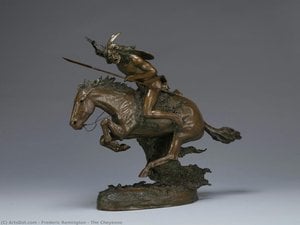
Technically, “The Bronco Buster” represents a significant leap forward for Remington. Moving beyond the limitations of flat paper, he embraced the three-dimensional possibilities of bronze casting – a technique that allowed him to imbue his subject with unprecedented realism and dynamism. The sculpture’s creation involved both sand-casting and later, lost-wax methods, resulting in a remarkably detailed surface texture. The rough, uneven quality of the bronze reflects the inherent materiality of the medium, while subtle variations in tone create depth and highlight the musculature of both man and horse. Close examination reveals sharp edges where details like clothing folds or the horse’s mane are sculpted, further enhancing the sense of tactile realism.

The choice of bronze itself is crucial to the sculpture's impact. Bronze possesses a remarkable durability, ensuring that “The Bronco Buster” has endured as a powerful symbol of the American West for over a century. Furthermore, the patina – the natural oxidation process that develops on copper and bronze surfaces – adds layers of history and character, subtly altering the color and texture of the metal over time. This aging process not only enhances the sculpture’s aesthetic appeal but also serves as a visual reminder of its enduring legacy.

Symbolism and the Spirit of the Frontier

Beyond its technical brilliance, “The Bronco Buster” is rich in symbolic meaning. It embodies themes of courage, skill, and the eternal struggle between man and nature – core values that defined the American frontier experience. The cowboy’s determined stance, his outstretched hand grasping for control, speaks to a relentless pursuit of mastery over an untamed environment. The rearing horse represents the unpredictable forces of nature, demanding respect and unwavering resolve. The sculpture isn't simply about conquering a wild animal; it’s about asserting one’s place within a vast and challenging landscape.

Furthermore, “The Bronco Buster” reflects Remington’s broader artistic vision – a desire to document and celebrate the vanishing West. As the frontier gradually succumbed to settlement and industrialization, Remington sought to preserve its spirit through his art, capturing the essence of a bygone era before it was lost forever. The sculpture stands as a poignant reminder of a time when individuals faced immense challenges with grit, determination, and an unwavering belief in their own capabilities.

A Legacy Enduring Through Reproduction

Today, “The Bronco Buster” continues to captivate audiences worldwide, thanks in part to the availability of high-quality reproductions. These meticulously crafted prints allow art lovers to experience the sculpture’s power and beauty without the expense or logistical challenges of owning the original. Whether displayed in a private collection or incorporated into interior design schemes, these reproductions serve as a lasting tribute to Frederic Remington's artistic genius and his enduring portrayal of the American West.


Biografia dell'artista

La Vita e l'Educazione di Frederic Remington

  • Nascita e Famiglia: Frederic Sackrider Remington nacque il 4 ottobre 1861 a Canton, New York. La sua famiglia aveva origini franco-basche.
  • Influenza Militare: Suo padre, il Colonnello Seth Pierrepont Remington, proprietario di un negozio di ferramenta e veterano della Guerra Civile Americana, influenzò significativamente la sua vita iniziale. L'esposizione a temi militari avrebbe poi plasmato la sua arte.
  • Educazione Iniziale: Frequentò l'Istituto Episcopale del Vermont, una scuola militare dove iniziò a disegnare. Successivamente trasferendosi in un'altra accademia militare, alla fine scelse di perseguire l'arte invece di una carriera militare a causa della mancanza di concentrazione.

La Carriera Artistica e lo Stile

  • Prime Illustrazioni: La sua prima illustrazione pubblicata fu un cartone animato per il Yale Courant, dimostrando una precoce abilità nel rappresentare scene d'azione.
  • Focus sul West Americano: Un viaggio fondamentale in Montana nel 1881 accese la sua passione per il West americano, diventando il tema centrale della sua carriera artistica.
  • Soggetti Artistici: Il suo lavoro presentava principalmente cowboy, nativi americani e la cavalleria statunitense, catturando lo spirito e le sfide della vita di frontiera.
  • Stile Artistico: Remington sviluppò uno stile distintivo caratterizzato da composizioni dinamiche, pennellate energiche e un focus sul realismo mescolato con un'espressività drammatica. Spesso utilizzava schizzi rapidi per catturare movimento ed emozione.

Opere Principali e Realizzazioni

  • Dipinti Notabili: Diverse opere si distinguono come esempi significativi del suo talento:
    • My Ranch – Mostra lo stile unico di Remington e la sua prospettiva sul West.
    • Waiting in the Moonlight – Dimostra la sua capacità di catturare l'essenza del West americano attraverso immagini evocative.
    • Ridden Down (1905) - Una potente rappresentazione di un attacco della cavalleria.
    • The Long-Horn Cattle Sign (1908) – Cattura la vivacità della vita da cowboy.
  • Illustrazioni e Sculture: Oltre alla pittura, Remington fu anche un prolifico illustratore per riviste come Harper's Weekly e Collier’s. Creò anche sculture, dimostrando ulteriormente la sua versatilità artistica.
  • Riconoscimento: Il suo lavoro ottenne ampio riconoscimento durante la sua vita, stabilendolo come una figura di spicco nell'arte del West americano.

Influenze e Sviluppo Artistico

  • Primi Anni: L’infanzia di Remington fu segnata dall’influenza del padre, un veterano della guerra civile, che gli raccontò storie dell’esercito e del West. Questo contribuì a formare il suo interesse per i soggetti militari e western. La sua breve formazione artistica alla Yale University e all'Art Students League fornì le basi tecniche, ma fu l’esperienza diretta nel West che plasmò veramente il suo stile.
  • Sviluppo dello Stile: Inizialmente, Remington si ispirò ai pittori accademici francesi come Ernest Meissonier ed Édouard Detaille, adottando uno stile preciso e dettagliato. Tuttavia, col tempo sviluppò un approccio più dinamico e impressionistico, catturando il movimento e l'energia della vita nel West.
  • Influenze: Oltre ai pittori accademici, Remington fu influenzato dalla fotografia e dall’illustrazione di riviste come Harper's Weekly. La sua capacità di combinare elementi realistici con una sensibilità romantica lo rese unico nel suo genere.

Eredità e Significato Storico

  • Impatto sull'Arte del West: I contributi di Frederic Remington alla rappresentazione del West americano sono innegabili. Aiutò a definire il genere e a popolare immagini di cowboy, nativi americani e vita di frontiera.
  • Influenza su Altri Artisti: Il suo lavoro ha ispirato numerosi artisti, tra cui N.C. Wyeth e Zane Grey.
  • Museo d'Arte Frederic Remington: Il Museo d'Arte Frederic Remington a Ogdensburg, New York, preserva la sua eredità attraverso un’estesa collezione di dipinti, schizzi e sculture.
  • Significato Storico: L'arte di Remington fornisce preziose informazioni sulla storia, la cultura e la mitologia del West americano durante un periodo di significativi cambiamenti e conflitti. Le sue rappresentazioni, sebbene a volte romanticizzate, offrono uno sguardo su un’epoca cruciale della storia americana.

Ultimi Anni e Morte

  • Prolifica Produzione Artistica: Remington continuò a produrre arte prolificamente fino alla sua morte.
  • Declino della Salute: Nel 1909, soffrì di appendicite mentre era in servizio in Florida.
  • Morte: Frederic Remington morì il 26 dicembre 1909 a Bronxville, New York, all'età di 48 anni. La sua eredità come artista americano significativo continua ad ispirare e affascinare il pubblico oggi.
Frederic Remington

Frederic Remington

1861 - 1909 , Stati Uniti d'America

Dati rapidi

  • Artistic Movement Or Style: Realismo pittorico
  • Artists Or Movements Influenced By This Artist:
    • N. C. Wyeth
    • Zane Grey
  • Date Of Birth: 4 ottobre 1861
  • Date Of Death: 26 dicembre 1909
  • Full Name: Frederic Sackrider Remington
  • Nationality: Americano
  • Notable Artworks:
    • My Ranch
    • Waiting in the Moonlight
    • Ridden Down
    • The Long-Horn Cattle Sign
    • The Trooper
    • Cavalryman of the Line, Mexico
  • Place Of Birth: Canton, Stati Uniti d'America
Esplora le opere d'arte organizzate per temi, stili e caratteristiche.