Anteprima in scala reale Anteprima in AR Passa alle stampe Acquista il dipinto realizzato a mano Invia
Dettagli opera Guida Aggiungi ai preferiti Scarica Simili Radiografia Slideshow Statistiche

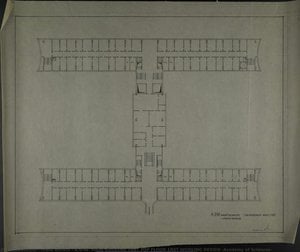
CONSTRUCTION SCHEDULE FOR THE MOST FAVOURABLE IMPLEMENTATION OF AN INVESTMENT PROJECT TV STUDIOS FOR 4-HOUR PER WEEK PROGRAM

A detailed 1959 architectural drawing by Franz Ehrlich showcasing an intricate construction schedule for a TV studio project, blending Bauhaus precision with graphic design excellence for your collection.

Franz Ehrlich: architetto tedesco, calligrafo e grafico con influenze Bauhaus e legami comunisti. Scopri le sue opere innovative e il suo contributo all’arte del XX secolo.

Get a print-ready file that goes far beyond the web preview. Every digital image we sell comes from a high-resolution master in our stock database — usually 5,000 to 15,000 pixels wide — so you can print large, crop tightly, or reproduce fine detail with confidence.

No file leaves our studio untouched. A digital expert checks the colors against the original painting and corrects them if needed, then improves clarity and detail with professional retouching tools — always staying faithful to the artist's brushwork and style. The result is an image that looks like the painting, not like a filtered scan.

You approve before you're done: our expert sends the image by e-mail within 72 hours for your review. Not satisfied? Ask for improvements or corrections, or request a refund if the quality falls short.

This is the quality relied on by publishers, design studios, galleries and print shops.

Immagine Digitale

Scarica un file ad alta risoluzione per uso personale, per la stampa e per progetti creativi. ( Passa alle stampe Acquista il dipinto realizzato a mano)

Prezzo totale

€ 21,90

Incluso in ogni ordine di immagini digitali

Consegna digitale professionale e garantita

Quando scegli WahooArt.com, non riceverai solo un'immagine: riceverai un'opera d'arte digitale professionalmente ottimizzata, realizzata con la massima precisione e accompagnata da una garanzia di soddisfazione. Ecco tutto ciò che include il tuo ordine, automaticamente:

Consegna rapida via email

Riceverai il file dell'immagine digitale ad alta risoluzione via email entro 72 ore dall'ordine, pronto per un uso immediato.

File digitale ottimizzato dall'IA

La tua opera d'arte viene ottimizzata professionalmente attraverso l'uso di strumenti avanzati di intelligenza artificiale e una revisione manuale, garantendo il massimo livello di dettaglio, nitidezza e accuratezza cromatica.

Riconsegna gratuita a vita

Hai eliminato o perso accidentalmente il tuo file? Non preoccuparti: te lo invieremo di nuovo in qualsiasi momento, gratuitamente.

Nessun costo di importazione, mai

Goditi la tua opera d'arte istantaneamente senza costi doganali, dazi o spese di spedizione: i download digitali sono sempre esenti da tasse.

Garanzia di fedeltà cromatica

Garantiamo che la tua immagine digitale rifletta i colori originali con la massima fedeltà, grazie all'uso di strumenti professionali e a una gestione accurata del colore.

Garanzia soddisfatti o rimborsati 100 giorni

Se non sei soddisfatto della tua immagine digitale, la revisioneremo o ti rimborseremo il 100% entro 100 giorni, senza domande.

Garanzia di rimborso al 100%

Non sei soddisfatto? Ricevi un rimborso completo entro 100 giorni dal ricevimento del tuo file digitale, senza dover fornire spiegazioni.

Sconti per ordini multipli

Acquista 3 immagini, risparmia il 10% - Acquista 5, risparmia il 15% - Acquista 10+, risparmia il 20%. Ideale per progetti creativi, gallerie e agenzie.

Informazioni rapide

  • Location: Bauhaus Dessau Foundation
  • Notable elements: Tables, diagrams, and charts
  • Title: CONSTRUCTION SCHEDULE FOR TV STUDIOS
  • Dimensions: 49 x 84 cm

The Precision of Progress: A Blueprint of Visionary Intent

In the intersection of architectural rigor and graphic artistry lies a remarkable piece of mid-century documentation: CONSTRUCTION SCHEDULE FOR THE MOST FAVOURABLE IMPLEMENTATION OF AN INVESTMENT PROJECT TV STUDIOS FOR 4-HOUR PER WEEK PROGRAM. Created in 1959 by the master of form, Franz Ehrlich, this work transcends its utilitarian origins to become a captivating study of order and anticipation. At first glance, the viewer is met with an intricate tapestry of tables, diagrams, and charts that map out the birth of a media space. It is not merely a schedule; it is a visual manifesto of structural possibility, where every line and cell serves as a heartbeat in the rhythm of industrial progress.

The painting, executed on paper with a delicate yet commanding presence, measures 49 x 84 cm, offering a panoramic view into the meticulous mind of its creator. Ehrlich utilizes a technique that blends the precision of technical drafting with the expressive soul of graphic design. The composition is dense with information, yet it maintains a rhythmic balance that guides the eye through a labyrinth of data. For the collector or interior designer, this piece offers a sophisticated geometric complexity that serves as a stunning focal point in modern, minimalist, or industrial-themed spaces, providing a sense of intellectual depth and structured elegance.

A Legacy Forged in Bauhaus Discipline

To understand the soul of this work, one must look to the hands that held the pen. Franz Ehrlich was a product of the legendary Bauhaus Dessau, an institution that redefined the relationship between art, craft, and industry. Having studied there between 1927 and 1930, Ehrlich carried the avant-garde principles of functionalism and clarity into his later works. This specific piece, created decades after his formative years, reflects a matured mastery of the Bauhaus ethos—the idea that beauty is found in the most efficient and logical arrangement of elements.

The historical context of 1959 adds a layer of profound gravity to the work. Living through the turbulent shifts of mid-century Germany, Ehrlich’s work often mirrored the tension between individual creativity and the collective necessity of reconstruction and planning. The subject matter—the implementation of TV studios—speaks to an era of burgeoning communication and the technological optimism of the post-war period. There is a quiet heroism in these charts; they represent the blueprint for a new way of seeing the world through the lens of emerging mass media.

The Aesthetic of Order and Emotional Resonance

Beyond its technical merits, the artwork possesses an evocative emotional impact that resonates with anyone moved by the beauty of logic. There is a certain serenity found in its absolute organization. The repetition of tables and the structured flow of diagrams create a meditative quality, inviting the viewer to lose themselves in the details of the project's timeline. It evokes a sense of nostalgia for an era when progress was measured in tangible, meticulously planned steps.

For those seeking to adorn a curated collection or a professional studio, this reproduction offers more than just decoration; it offers a conversation piece that bridges the gap between historical documentation and fine art. The interplay of light and shadow within the intricate linework provides a tactile richness that makes every viewing a new discovery. It is a celebration of the architect's vision—a moment frozen in time where the future was being carefully, beautifully constructed.

Domande e risposte

Quale formato e orientamento di stampa si consigliano per "CONSTRUCTION SCHEDULE FOR THE MOST FAVOURABLE IMPLEMENTATION OF AN INVESTMENT PROJECT TV STUDIOS FOR 4-HOUR PER WEEK PROGRAM" di Franz Ehrlich?

Per "CONSTRUCTION SCHEDULE FOR THE MOST FAVOURABLE IMPLEMENTATION OF AN INVESTMENT PROJECT TV STUDIOS FOR 4-HOUR PER WEEK PROGRAM", la configurazione di stampa consigliata è un formato Large con orientamento Panoramic.

"CONSTRUCTION SCHEDULE FOR THE MOST FAVOURABLE IMPLEMENTATION OF AN INVESTMENT PROJECT TV STUDIOS FOR 4-HOUR PER WEEK PROGRAM" di Franz Ehrlich è un'opera dai toni chiari o scuri?

Nel complesso, "CONSTRUCTION SCHEDULE FOR THE MOST FAVOURABLE IMPLEMENTATION OF AN INVESTMENT PROJECT TV STUDIOS FOR 4-HOUR PER WEEK PROGRAM" è classificata come bright. La luminosità percepita indica quanto l'opera appaia chiara o scura.

A quale epoca risale "CONSTRUCTION SCHEDULE FOR THE MOST FAVOURABLE IMPLEMENTATION OF AN INVESTMENT PROJECT TV STUDIOS FOR 4-HOUR PER WEEK PROGRAM"?

Il periodo storico di "CONSTRUCTION SCHEDULE FOR THE MOST FAVOURABLE IMPLEMENTATION OF AN INVESTMENT PROJECT TV STUDIOS FOR 4-HOUR PER WEEK PROGRAM" di Franz Ehrlich è Modern. Questa classificazione colloca l'opera all'interno della storia dell'arte.


Biografia dell'artista

Early Life and Education

Franz Ehrlich, a name synonymous with both architectural innovation and poignant political experience, was born in Reuth, Germany, in 1907. From his earliest years, a deep-seated passion for the arts ignited within him – a desire to translate vision into tangible form. This innate inclination led him to enroll at the Bauhaus in Dessau, one of the most influential art schools of the 20th century, from 1927 to 1930. The Bauhaus wasn’t merely an educational institution; it was a crucible where radical ideas about design, function, and aesthetics were forged. Here, Ehrlich immersed himself in the avant-garde movements of the time, absorbing the philosophies of Walter Gropius, László Moholy-Nagy, Paul Klee, and Joost Schmidt – figures who profoundly shaped his artistic perspective. His training encompassed carpentry, typography, and a deep understanding of spatial relationships, laying the groundwork for his future architectural endeavors. The rigorous environment fostered a meticulous approach to craft and a commitment to exploring new forms of expression.

Artistic Career and Communist Affiliation

Ehrlich’s life took a dramatic turn when he became deeply involved with the communist party in Germany. This political engagement, while driven by a genuine belief in social justice, ultimately led to his arrest and imprisonment by the Nazi regime in 1935. His incarceration in Zwickau prison and later at Buchenwald concentration camp represents a harrowing chapter in his life – an experience that indelibly marked his artistic trajectory. Despite these immense hardships, Ehrlich refused to abandon his creative pursuits. He continued to work as an architect and designer, producing works that reflected both the constraints of his circumstances and his unwavering spirit. Notably, he designed the entrance gate inscription for Buchenwald: “Jedem das Seine” – a phrase laden with irony and profound meaning in the context of the camp’s brutal reality. This act, simultaneously defiant and deeply sorrowful, stands as a testament to his complex moral compass. His work during this period demonstrates an extraordinary ability to find beauty and purpose even amidst unimaginable suffering.

Notable Works

Ehrlich's artistic output spanned diverse disciplines, showcasing his versatility and innovative spirit. Among his most significant achievements are: the “800 YRS. FRAMEWORK WALL 3,” a monumental installation that explored the relationship between space and time; an exhibit display rack design for the Leipzig Trade Fair, demonstrating his mastery of spatial planning and visual communication; and the execution plan for Professor Dr. Baumann’s house, revealing his meticulous attention to detail and architectural expertise. Perhaps most strikingly, he conceived of “1933,” a groundbreaking photo-sculptural advertising project that seamlessly blended photography and sculpture – an experimental approach that foreshadowed later developments in multimedia art. These projects weren't simply functional; they were imbued with a sense of intellectual curiosity and a desire to push the boundaries of artistic expression. His work consistently sought to integrate form, function, and meaning in innovative ways.

Museums and Collections

Ehrlich’s legacy is preserved through several key institutions: The WahooArt.com website features an extensive collection of his works, offering a comprehensive overview of his artistic output. Furthermore, the Bauhaus Dessau Foundation in Dessau-Roßlau, Germany, serves as a vital repository for his architectural drawings, models, and other archival materials. The museum’s dedication to preserving and interpreting the Bauhaus legacy ensures that Ehrlich's contributions to modern design continue to be recognized and appreciated. His work is also featured within the broader context of German art history, offering valuable insights into the artistic landscape of the interwar period.

Legacy and Impact

Franz Ehrlich’s life story is a poignant reflection of the tumultuous era in which he lived – a time marked by political upheaval, social unrest, and profound human suffering. His experiences as an artist, architect, and political activist shaped his creative vision and left an enduring impact on the world of art and design. He demonstrated remarkable resilience in the face of adversity, refusing to allow his circumstances to extinguish his artistic spirit. Ehrlich’s work serves as a reminder of the power of art to transcend boundaries, challenge conventions, and bear witness to the complexities of human experience. His legacy continues to inspire artists and designers today, urging them to embrace innovation, social responsibility, and the enduring pursuit of beauty.
Franz Ehrlich

Franz Ehrlich

1907 - 1984 , Germania

Informazioni essenziali

  • Artistic Movement Or Style: Bauhaus, Espressionismo
  • Artists Or Movements Influenced By This Artist: ['Young Communist League']
  • Artists Who Influenced This Artist:
    • Walter Gropius
    • Moholy-Nagy
    • Klee
    • Joost Schmidt
  • Date Of Birth: 1907
  • Full Name: Franz Ehrlich
  • Nationality: Tedesco
  • Notable Artworks:
    • 800 YRS. FRAMEWORK WALL 3
    • Painting with Violin
    • Ground Plan and Views
  • Place Of Birth: Reuth, Germania