Vendi le tue opere
x
Anteprima in scala realeAnteprima in scala reale Anteprima ARAnteprima AR Acquista stampa Acquista stampaAcquista immagine Acquista immagine InviaInvia
Dettagli operaDettagli opera Aggiungi ai preferiti Aggiungi ai preferiti Scarica immagineScarica immagine SimiliSimili RadiografiaRadiografia SlideshowSlideshow

The Serenade

Experience the delicate intrigue of Frans van Mieris' masterful fijnschilder technique in The Serenade, capturing 17th-century Dutch life through dramatic light and shadow; discover this masterpiece today.

Frans van Mieris (1635-1681), maestro dell'età dell'oro olandese, celebre per le sue raffinate scene di genere e ritratti 'fijnschilder', che immortalano la vita agiata con dettagli impeccabili.

Riproduzione a olio fatta a mano

Olio su tela dipinto a mano nelle tue dimensioni e con la tua cornice, realizzato su ordinazione dai nostri artisti. (Acquista stampa Acquista stampaAcquista immagine Acquista immagine)

P118B $10
P118H $10
P118W $10
P438Z $10
P508JH $12
P508YH $12
P805H $10
P805Z $10
P919BZ $10
P919G $10
P919XJ $10
P959ZH $10
P968JZ $12
W106C $8
W218G $10
W218JH $8
W218Y $10
W307PJ $10
W316G $10
W316PJ $8
W316Y $10
W398PJ $8
W4111J $10
W500HY $15
W500JH $15
W692G $12
W849H $8
W940BG $15
W953PJ $8

Standard
custom
CM
INCH

Scegli tra le nostre dimensioni predefinite, che rispettano le proporzioni originali dell'opera d'arte.

larghezza
altezza

È possibile inserire dimensioni personalizzate per adattare l'opera a una cornice o a uno spazio specifico. Se la dimensione selezionata non corrisponde alle proporzioni dell'immagine originale, provvederemo a ritagliare l'opera o a estendere il dipinto con elementi aggiuntivi dipinti a mano. Un mockup digitale ti sarà inviato per approvazione prima dell'inizio della produzione.
Si prega di notare che l'anteprima a schermo non riflette il ritaglio o l'estensione effettivi. Solo il mockup mostrerà accuratamente la composizione finale.
Sebbene siano disponibili dimensioni personalizzate, consigliamo di selezionare una dimensione dall'elenco predefinito per preservare le proporzioni originali.

Esempi di ciò che può essere modificato: sostituire il volto con una foto del cliente; aggiungere un animale domestico (ad esempio, sostituire un gatto con un cane); inserire un messaggio nascosto nello sfondo; cambiare il paesaggio o gli elementi dello sfondo.
Dopo l'ordine, il team di WahooArt.com contatterà il cliente via e-mail per le istruzioni e fornirà un'anteprima del mockup

Consegna in tutto il mondo () in 3/4 settimane anziché nelle normali 5 settimane. (23 Agosto). Nessun compromesso sulla qualità.

why_choose_icon
Spedizione espressa gratuita in tutto il mondo
why_choose_icon
Tela in lino di alta qualità
why_choose_icon
Assicurazione completa sulla spedizione
why_choose_icon
Garanzia di rimborso dei dazi doganali
why_choose_icon
Garanzia di fedeltà cromatica
why_choose_icon
Politica di reso entro 60 giorni (solo per difetti di fabbricazione)
why_choose_icon
Garanzia di rimborso al 100%
why_choose_icon
Offerta per acquisti multipli

Prezzo totale

$ 272

reproduction

The Serenade

Tecnica di riproduzione

Dimensioni riproduzione

-

Prezzo totale calcolato

$ 272

Informazioni rapide

  • Location: Metropolitan Museum of Art
  • Dimensions: 15 x 11 cm
  • Year: 1678
  • Title: The Serenade
  • Influences: Abraham Toorenvliet
  • Notable elements or techniques: Chiaroscuro, meticulous detail
  • Subject or theme: Romantic encounter

Quiz d'arte

Per ogni domanda è presente una sola risposta corretta.

Domanda 1:
What artistic style is Frans van Mieris known for, characterized by painstaking detail?
Domanda 2:
In 'The Serenade,' what element is used to heighten the drama and focus attention on the central figures?
Domanda 3:
What technique did Mieris masterfully employ, involving the dramatic interplay between light and shadow?
Domanda 4:
What musical instrument is prominently featured in the scene depicted in 'The Serenade'?
Domanda 5:
In what city was Frans van Mieris born?

Descrizione dell'opera

A Nocturnal Symphony of Light and Shadow

In the quietude of a 17th-century Dutch evening, Frans van Mieris the Elder invites us into a world of whispered secrets and melodic intimacy. His masterpiece, The Serenade, is far more than a mere depiction of musical performance; it is a profound exploration of the human connection, captured through the lens of the legendary fijnschilder technique. As the eye wanders across the canvas, one is immediately struck by the dramatic interplay of light and darkness—a masterful use of chiaroscuro that pulls the viewer into a private, candlelit moment. The scene unfolds with a palpable sense of tension and tenderness, where the soft glow of a single flame illuminates the focused faces of musicians, casting long, evocative shadows that suggest a world existing just beyond the reach of the light.

The narrative heart of the painting beats within the delicate interaction of its three figures. In the foreground, the meticulous detail of the lute player’s hands and the flickering warmth of the candle held by his companion create a sense of profound devotion. This is not just music being played; it is an offering. The presence of a third figure, observing from the periphery, adds a layer of quiet grandeur and voyeuristic intrigue, transforming the musical act into a clandestine romantic gesture. For the collector or interior designer, this piece offers a window into the Baroque soul, providing a focal point that commands attention through its emotional depth and historical resonance.

The Mastery of the Leiden Fine Painters

To understand the brilliance of The Serenade, one must appreciate the technical lineage of Frans van Mieris. Trained under the great Gerrit Dou, Mieris inherited the mantle of the Leiden fijnschilders—the "fine painters" who sought to push the boundaries of realism to their absolute limits. Every inch of this work reflects a painstaking devotion to texture and luminosity. Through the application of incredibly thin, translucent glazes over carefully prepared underpaintings, Mieris achieved a surface so smooth that brushstrokes all but vanish, leaving behind only the breathtaking illusion of silk, skin, and polished wood.

This technical virtuosity serves a higher symbolic purpose. The way the candlelight catches the edge of a sleeve or reflects off the curve of the lute is not merely a display of skill; it is an attempt to capture the ephemeral nature of time and emotion. In the context of the Dutch Golden Age, such precision was a way of honoring the beauty of the everyday. For those seeking to adorn a space with art that inspires contemplation, this reproduction offers the exquisite tactile quality of the original, bringing the sophisticated elegance of 1678 into the modern home.

An Enduring Legacy for the Discerning Collector

Beyond its technical merits, The Serenade possesses an atmospheric quality that transcends centuries. It evokes a sense of nostalgia for an era of craftsmanship and slow, deliberate beauty. The painting’s composition—an intimate tableau set against a void-like dark background—makes it an exceptionally versatile piece for high-end interior curation. Whether placed in a study filled with leather-bound books or as a sophisticated accent in a contemporary gallery-style living room, its ability to anchor a space with warmth and mystery is unparalleled.

Owning a reproduction of such a significant work allows one to participate in the preservation of Dutch heritage. It is an invitation to experience the quiet drama of the Baroque period every day—to feel the pulse of the music and the flicker of the flame. For the art lover, it is a piece of history; for the designer, it is a tool of atmosphere; and for the collector, it is a timeless investment in the enduring power of visual storytelling.


Biografia dell'artista

Frans van Mieris il Vecchio: Una Vita nei Dettagli

  • Nato: Leida, Paesi Bassi (1635)
  • Morto: 1681

Frans van Mieris il Vecchio fu un importante pittore di genere olandese dell'età dell'oro, noto per i suoi dettagli meticolosi e lo stile raffinato. Nato a Leida da Jan Bastiaensz van Mieris, orafo, Frans dimostrò inizialmente una predisposizione al disegno piuttosto che seguire le orme del padre. La formazione iniziale sotto Abraham Toorenvliet, seguita dall'istruzione di Gerrit Dou, plasmò le sue basi artistiche.

Sviluppo Artistico e Stile

  • Prime Influenze: Gerrit Dou e Abraham van den Tempel influenzarono significativamente i primi lavori di Frans.
  • Tecnica "Fijnschilder": Van Mieris divenne un maestro dello stile "fijnschilder", caratterizzato da dettagli estremamente fini, pennellate lisce e una focalizzazione su dipinti in piccola scala. Questa tecnica enfatizzava il realismo e le intricate rappresentazioni di texture come la seta e il velluto.
  • Soggetti: Dipinse frequentemente scene della società benestante – interni elaborati, incontri eleganti e ritratti – illustrando le abitudini e gli abiti delle classi superiori. Motivi ricorrenti includevano pranzi a base di ostriche, medici che esaminavano pazienti e donne impegnate in attività domestiche.
  • Evoluzione dello Stile: Sebbene inizialmente emulasse lo stile di Gerrit Dou, Van Mieris sviluppò gradualmente il proprio approccio distinto, allontanandosi da dettagli eccessivi verso una maggiore enfasi sull'interazione dei personaggi e sulla narrazione all'interno delle sue scene. I suoi lavori successivi a volte esibivano tonalità più scure rispetto ai suoi pezzi precedenti, più luminosi.

Realizzazioni Importanti e Opere Notabili

  • Visita del Medico (1657): Considerato uno dei suoi lavori datati più antichi e significativi, che mostra la sua emergente indipendenza dallo stile di Dou.
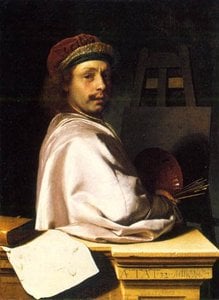
  • Autoritratto con una Cetra: Un autoritratto convincente che dimostra la sua abilità nel rappresentare abiti opulenti e catturare un senso della personalità.
  • Ritratto della Moglie dell'Artista, Cunera van der Cock: Un esempio straordinario di ritrattistica che evidenzia il realismo e il chiaroscuro.
  • Dipinti Allegorici: Van Mieris produsse anche opere allegoriche, come una raffigurante vizi come bere, fumare e giocare d'azzardo, dimostrando la sua versatilità.

Eredità e Significato Storico

  • Eredità Familiare: L’influenza di Frans van Mieris si estese alla sua famiglia; suo figlio Willem van Mieris (1662–1747) e suo nipote Frans van Mieris il Giovane (1689–1763) divennero anch'essi pittori di genere competenti, continuando la tradizione familiare.
  • Imitazioni: La popolarità dello stile di Van Mieris portò a numerose imitazioni, in particolare da parte di A. D. Snaphaan, che lavorava a Lipsia ed era protetto dalla corte di Anhalt-Dessau.
  • Contributo alla Pittura Olandese dell'Età dell'Oro: Frans van Mieris svolse un ruolo cruciale nel plasmare il movimento "fijnschilder" all'interno della pittura olandese dell'età dell'oro, contribuendo in modo significativo all'attenzione dell'epoca per i dettagli meticolosi e le rappresentazioni realistiche della vita quotidiana e della società di classe superiore. Le sue opere sono apprezzate per la loro abilità tecnica e la perspicace raffigurazione della cultura del XVII secolo.

Ultimi Anni e Riscoperta

  • Patronato: Van Mieris godette del patronato di figure importanti, tra cui l'Arciduca Leopoldo e Cosimo III de' Medici.
  • Opera d’Arte Rubata: Un autoritratto è stato rubato dalla Art Gallery of New South Wales a Sydney, in Australia, evidenziando il valore e l'appeal duraturi delle sue opere.
Frans van Mieris

Frans van Mieris

1635 - 1681 , Paesi Bassi

Dati rapidi

  • Artisti Influenti:
    • Gerrit Dou
    • Abraham van den Tempel
  • Artisti Influenzati:
    • Willem van Mieris
    • Frans van Mieris il Giovane
  • Data Di Nascita: 1635
  • Luogo Di Nascita: Leida, Paesi Bassi
  • Movimento Artistico: Fijnschilder
  • Nazionalità: Olandese
  • Nome Completo: Frans van Mieris il Vecchio
  • Opere Notevoli:
    • Visita del dottore
    • Autoritratto con cetra
    • Ritratto della moglie
    • Donna davanti allo specchio
Esplora le opere d'arte organizzate per temi, stili e caratteristiche.