Acquista un'immagine digitale ad alta risoluzione e ottimizzata, di qualità nettamente superiore all'anteprima online.
Ogni file è meticolosamente preparato dai nostri specialisti interni attraverso l'uso di strumenti avanzati e un sapiente ritocco manuale. Garantiamo che ogni immagine presenti una chiarezza eccezionale, una precisione cromatica impeccabile e dettagli raffinati.
Il file finale viene consegnato via e-mail entro 72 ore, ottimizzato per un uso immediato in contesti professionali, editoriali e di stampa. Si tratta della stessa qualità affidata ai più prestigiosi studi di design, editori e gallerie d'arte.
Scarica un file ad alta risoluzione per uso personale, per la stampa e per progetti creativi. ( Passa alle stampe
Ordina la riproduzione dipinta a mano)
Quando scegli WahooArt.com, non riceverai solo un'immagine: riceverai un'opera d'arte digitale professionalmente ottimizzata, realizzata con la massima precisione e accompagnata da una garanzia di soddisfazione. Ecco tutto ciò che include il tuo ordine, automaticamente:
Riceverai il file dell'immagine digitale ad alta risoluzione via email entro 72 ore dall'ordine, pronto per un uso immediato.
La tua opera d'arte viene ottimizzata professionalmente attraverso l'uso di strumenti avanzati di intelligenza artificiale e una revisione manuale, garantendo il massimo livello di dettaglio, nitidezza e accuratezza cromatica.
Hai eliminato o perso accidentalmente il tuo file? Non preoccuparti: te lo invieremo di nuovo in qualsiasi momento, gratuitamente.
Goditi la tua opera d'arte istantaneamente senza costi doganali, dazi o spese di spedizione: i download digitali sono sempre esenti da tasse.
Garantiamo che la tua immagine digitale rifletta i colori originali con la massima fedeltà, grazie all'uso di strumenti professionali e a una gestione accurata del colore.
Se non sei soddisfatto della tua immagine digitale, la revisioneremo o ti rimborseremo il 100% entro 100 giorni, senza domande.
Non sei soddisfatto? Ricevi un rimborso completo entro 100 giorni dal ricevimento del tuo file digitale, senza dover fornire spiegazioni.
Acquista 3 immagini, risparmia il 10% - Acquista 5, risparmia il 15% - Acquista 10+, risparmia il 20%. Ideale per progetti creativi, gallerie e agenzie.
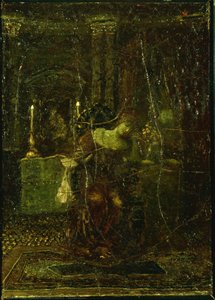
In the realm of early twentieth-century British art, few works capture the ethereal tension between innocence and temptation as vividly as Frank Barrington Craig’s Goblin Market. Completed in 1911, this masterpiece serves as a breathtaking visual bridge between the lush, symbolic traditions of the Pre-Raphaelite movement and the refined academic realism of the Edwardian era. The painting transports the viewer into a shadowy, woodland sanctuary where the boundaries between our world and the supernatural dissolve. At its heart, we encounter a young woman caught in a moment of profound hesitation, surrounded by a troupe of mischievous goblins or fairies. The scene is thick with atmosphere, pulling the observer into a narrative that feels both like a whispered fairy tale and a dramatic stage performance.
The technical mastery displayed in this work is nothing short of extraordinary, making it a centerpiece worthy of any sophisticated collection. Craig, heavily influenced by his mentor Edwin Austin Abbey, employs a meticulous approach to texture and light. One can almost feel the dampness of the forest floor and the velvety skin of the forbidden fruits held within the goblins' baskets. Through the skillful use of chiaroscuro, Craig orchestrates a dramatic interplay of light and shadow; brilliant highlights dance upon the central figure, while deep, mysterious recesses in the foliage suggest the lurking unknown. This contrast does more than create depth—it heightens the psychological stakes of the encounter, casting a spell of suspense over the entire composition.
Beyond its surface beauty, Goblin Market is a profound exploration of literary and cultural motifs. The painting draws direct inspiration from the fantastical realms found in Shakespearean drama and, most notably, provides a visual interpretation of Christina Rossetti’s iconic narrative poem of the same name. Every element within the frame carries a weight of meaning: the basket serves as a symbol of sustenance and spiritual nourishment, while the woman’s gaze—a delicate blend of curiosity and apprehension—mirrors the universal human struggle with desire and moral choice. For the discerning collector or interior designer, this piece offers more than mere decoration; it provides a conversational focal point that invites deep contemplation of themes such as temptation, protection, and the allure of the unknown.
For those looking to infuse a space with a sense of wonder and historical gravity, a high-quality reproduction of this work offers an unparalleled opportunity. Whether placed in a sunlit library or a moody, contemporary study, the painting’s rich tonal palette and evocative subject matter command attention. It brings with it the spirit of a bygone era—a time when art sought to capture the magic hidden within the shadows of the natural world. To possess such a piece is to hold a fragment of Victorian enchantment, a timeless window into a forest where legends still breathe.
Frank Barrington Craig, also known as barry craig, was born on march 2, 1902, in hampstead, north london. he descended from a family steeped in artistic tradition; his father, frank craig, himself a painter, instilled in him an early appreciation for visual arts.
Craig’s formative years were spent at rugby school, where he honed his intellectual curiosity alongside athletic pursuits. Subsequently, he pursued higher education at the slade school of art between 1919 and 1924, immersing himself in the burgeoning modernist movement and developing a distinctive artistic sensibility.
Craig embarked on an ambitious journey to south africa in 1926, accepting a professorship at the michaelis school of fine art in cape town. During his tenure there, he cultivated a reputation for fostering talent and promoting innovative approaches to painting. He returned to britain in 1933, continuing his teaching career at saint martin’s school of art until 1950, nurturing generations of aspiring artists.
The Second World War presented Craig with an unexpected opportunity – camouflage work for the british government. Recognizing his artistic skills and dedication, he was enlisted by the war artists advisory committee (waac), tasked with documenting the experiences of firefighters battling blazes in weston-super-mare. This commission yielded poignant portraits capturing the resilience and camaraderie of ordinary individuals amidst extraordinary circumstances.
Craig’s artistic vision found particular resonance in provence and brittany, where he frequently executed landscapes imbued with atmospheric subtlety and luminous color palettes. A notable example resides within the uk government art collection, showcasing his commitment to capturing the beauty of the natural world.
He maintained a consistent presence on the british art scene, participating regularly with the new english art club from 1946 onwards. His artworks graced the galleries of goupil and cooling, attracting critical acclaim and establishing him as a respected figure within the artistic community. Furthermore, Craig’s paintings were proudly displayed at the royal academy, cementing his legacy as one of britain's foremost landscape artists.
Craig passed away peacefully in chelsea on february 4, 1951. A retrospective exhibition honoring his oeuvre was organized in 1987 at the new art centre, reaffirming his enduring influence on british painting and ensuring that his artistic achievements would continue to inspire future generations.

1902 - 1951 , Regno Unito