Anteprima in scala reale Prova in AR Ordina la riproduzione dipinta a mano Passa all'immagine digitale Condividi
Dettagli Guida Aggiungi ai preferiti Scarica Articoli simili Radiografia Slideshow Statistiche

The men in the city

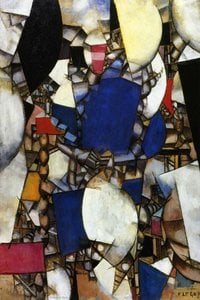
Experience Fernand Léger’s "The Men in the City," a vibrant modernist masterpiece showcasing geometric forms and urban life. This iconic Cubist painting captures social interaction with bold colors, perfect for your art collection.

Esplora l'arte di Fernand Léger (1881-1955), un pioniere del Cubismo e della 'Tubismo'. Scopri i suoi audaci dipinti figurativi che celebrano la vita moderna, le macchine e la forma umana. Un precursore del Pop Art!

Giclée / Stampe d'arte

Stampa giclée o su tela di qualità museale, con produzione rapida e diverse opzioni di finitura. ( Ordina la riproduzione dipinta a mano Passa all'immagine digitale)

P118B $10
P118H $10
P118W $10
P438Z $10
P508JH $12
P508YH $12
P805H $10
P805Z $10
P919BZ $10
P919G $10
P919XJ $10
P959ZH $10
P968JZ $12
W106C $8
W218G $10
W218JH $8
W218Y $10
W307PJ $10
W316G $10
W316PJ $8
W316Y $10
W398PJ $8
W4111J $10
W500HY $15
W500JH $15
W692G $12
W849H $8
W940BG $15
W953PJ $8

Standard
personalizzato
CM
INCH

Scegli tra le nostre dimensioni predefinite, che rispettano le proporzioni originali dell'opera d'arte.

larghezza
altezza

È possibile inserire dimensioni personalizzate per adattare l'opera a una cornice o a uno spazio specifico. Se la dimensione selezionata non corrisponde alle proporzioni dell'immagine originale, procederemo al ritaglio dell'opera o all'estensione dell'immagine con un bordo specchiato o a tinta unita. Un mockup digitale ti verrà inviato per approvazione prima dell'inizio della produzione.
Si prega di notare che l'anteprima a schermo non riflette il ritaglio o l'estensione effettivi. Solo il mockup mostrerà accuratamente la composizione finale.
Sebbene siano disponibili dimensioni personalizzate, si raccomanda di selezionare una dimensione dall'elenco predefinito per preservare le proporzioni originali.

Consegna in tutto il mondo () in 2 settimane invece delle normali 4/5 settimane. (22 Settembre)

why_choose_icon
Spedizione espressa gratuita in tutto il mondo
why_choose_icon
Tela in lino di alta qualità
why_choose_icon
Assicurazione completa sulla spedizione
why_choose_icon
Garanzia di rimborso dei dazi doganali
why_choose_icon
Garanzia di perfetta fedeltà cromatica
why_choose_icon
Politica di reso entro 100 giorni (solo per difetti di fabbricazione)
why_choose_icon
Garanzia di rimborso al 100%
why_choose_icon
Sconto per acquisti multipli

Prezzo totale

$ 68

reproduction

The men in the city

Giclée / Stampe d'arte

Dimensioni della riproduzione

-

Prezzo totale

$ 68

Dettagli rapidi

  • Artistic style: Abstract, Machine Age
  • Influences:
    • Cézanne
    • Picasso
  • Subject or theme: Urban life, social interaction
  • Artist: Fernand Léger
  • Notable elements: Geometric forms, bird
  • Medium: Oil on Canvas
  • Location: Private Collection

Fernand Léger’s “The Men in the City”: A Symphony of Form and Urban Life

Fernand Léger's "The Men in the City," painted around 1916, is more than just a depiction of two figures; it’s a vibrant declaration of modernity itself. Emerging from the fertile artistic landscape of early 20th-century Paris, Léger was a key figure in bridging the gap between representational art and the burgeoning abstract movements. This work exemplifies his unique approach – a bold synthesis of Cubist fragmentation with an undeniable fascination for industrial forms and the dynamism of urban life. The painting immediately draws the eye to its geometric composition: the figures are rendered as blocky, almost machine-like shapes, their bodies simplified into angular planes that echo the structures surrounding them. This deliberate distortion wasn’t a rejection of realism but rather a new way of perceiving and representing the world – one shaped by the rise of industry and the increasingly dominant role of technology.

A Cubist Vision Rooted in Rural Experience

Léger's artistic journey began with a profound connection to his rural upbringing near Argentan, Normandy. This early exposure to the physicality of agricultural labor – the rhythms of the land, the textures of wood and stone – profoundly influenced his later work. He initially studied architecture, a discipline that instilled in him an appreciation for structure and form. However, it was his encounter with Post-Impressionist painters like Cézanne and Gauguin, coupled with the revolutionary ideas circulating within the Cubist movement, that truly ignited his artistic vision. Cubism, championed by Picasso and Braque, offered a radical new way of seeing – breaking down objects into their constituent parts and reassembling them in abstract compositions. Léger adopted this technique but infused it with his own distinctive vocabulary, prioritizing the visual impact of geometric shapes over strict representational accuracy.

Symbolism Within the Geometric Landscape

Beyond its formal qualities, “The Men in the City” is rich in symbolic meaning. The two figures, rendered as almost identical blocks, could be interpreted as representing humanity itself – reduced to essential forms within the overwhelming context of the modern city. The umbrella held by one man becomes a poignant detail, suggesting protection and perhaps a yearning for refuge amidst the chaos of urban life. The inclusion of the bird adds an unexpected layer of symbolism; often associated with freedom and spirituality, it subtly contrasts with the rigid geometry of the scene, hinting at a desire for transcendence within a mechanized world. The overall atmosphere is one of quiet observation, inviting the viewer to contemplate their own place in this rapidly changing landscape.

Technique and Color: A Bold Palette

Léger’s technique involved applying paint in thick, layered strokes, creating a tactile surface that emphasizes the three-dimensional quality of his forms. His color palette is deliberately restrained – primarily consisting of earthy tones like ochre, brown, and gray, punctuated by occasional bursts of vibrant blue and red. These bold colors aren't used for decorative effect but rather to accentuate the geometric shapes and create visual impact. The artist’s meticulous attention to detail—the precise rendering of each plane and angle—demonstrates a remarkable command of his medium and a deep understanding of the principles of Cubist composition. The result is a powerfully expressive work that captures both the beauty and the alienation of modern urban life.


Biografia dell'artista

vitae e formazione

Fernand Léger, pittore, scultore e filmmaker francese, nacque il 4 febbraio 1881 ad Argentan, Orne, nella bassa Normandia. Suo padre allevava bovini e Léger iniziò la sua formazione come architetto nel 1897-1899. Successivamente si trasferì a Parigi nel 1900, sostenendosi con il lavoro di disegnatore architettonico.

sviluppo artistico

Le prime opere di Léger furono influenzate dall'impressionismo, come visto in Le jardin de ma mère (Il giardino di mia madre) (1905). Dopo aver frequentato la scuola d'arte decorativa e l'Académie Julian, iniziò a lavorare seriamente come pittore a 25 anni. Il suo stile si evolse in una forma personale di cubismo, che i critici definirono "tubismo" per la sua enfasi su forme cilindriche.

Cubismo e il gruppo dei Puteaux

Nel 1910, Léger espose al Salon d'automne insieme a Jean Metzinger e Henri Le Fauconnier. Entrò nel gruppo dei Puteaux, noto anche come la sezione d'or (la sezione aurea), insieme ad altri artisti come Francis Picabia e Marcel Duchamp.

Guerra e la sua influenza sull'opera di Léger

Le esperienze di Léger nella Prima Guerra Mondiale ebbero un impatto significativo sulla sua opera. Durante il suo tempo al fronte, produsse schizzi di pezzi d'artiglieria, aerei e soldati. Il suo dipinto Soldier with a Pipe (1916) riflette questo periodo.

Lavoro successivo e eredità

Il lavoro post-bellico di Léger, caratterizzato da forme meccaniche lisce, lo legò alla tradizione della pittura figurativa francese. I suoi paesaggi animati del 1921 mostrarono figure e animali in forme armoniose e razionalizzate. opere chiave: musei che espongono le opere di Léger:
Fernand Léger

Fernand Léger

1881 - 1955 , Francia

Informazioni rapide

  • Artisti Influenti:
    • Cézanne
    • Impressionismo
  • Artisti Influenzati: ['Pop Art']
  • Data Di Nascita: 4 febbraio 1881
  • Luogo Di Nascita: Argentan, Francia
  • Movimento Artistico: Cubismo, Tubismo
  • Nazionalità: Francese
  • Nome Completo: Fernand Léger
  • Opere Notevoli:
    • La Grande Parata
    • L'Elemento Macchina
    • Donna Seduta
    • The City
Esplora le opere d'arte organizzate per temi, stili e caratteristiche.