Vendi le tue opere
x
Anteprima in scala realeAnteprima in scala reale Anteprima in ARAnteprima in AR Ordina la riproduzione dipinta a mano Ordina la riproduzione dipinta a manoAcquista download Acquista download CondividiCondividi
DettagliDettagli Aggiungi ai preferiti Aggiungi ai preferiti Scarica immagineScarica immagine Articoli similiArticoli simili RadiografiaRadiografia SlideshowSlideshow

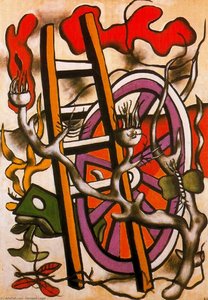
The green tree

Fernand Léger's 'The Green Tree,' painted in 1932, exemplifies Tubism—a revolutionary style characterized by simplified geometric forms and vibrant colors that capture the dynamism of the machine age. This iconic piece showcases Léger’s masterful blend of abstraction and observation.

Esplora l'arte di Fernand Léger (1881-1955), un pioniere del Cubismo e della 'Tubismo'. Scopri i suoi audaci dipinti figurativi che celebrano la vita moderna, le macchine e la forma umana. Un precursore del Pop Art!

Giclée / Stampe d'arte

Stampa giclée o su tela di qualità museale, con produzione rapida e diverse opzioni di finitura. (Ordina la riproduzione dipinta a mano Ordina la riproduzione dipinta a manoAcquista download Acquista download)

P118B $10
P118H $10
P118W $10
P438Z $10
P508JH $12
P508YH $12
P805H $10
P805Z $10
P919BZ $10
P919G $10
P919XJ $10
P959ZH $10
P968JZ $12
W106C $8
W218G $10
W218JH $8
W218Y $10
W307PJ $10
W316G $10
W316PJ $8
W316Y $10
W398PJ $8
W4111J $10
W500HY $15
W500JH $15
W692G $12
W849H $8
W940BG $15
W953PJ $8

Standard
custom
CM
INCH

Scegli tra le nostre dimensioni predefinite, che rispettano le proporzioni originali dell'opera d'arte.

larghezza
altezza

È possibile inserire dimensioni personalizzate per adattare l'opera a una cornice o a uno spazio specifico. Se la dimensione selezionata non corrisponde alle proporzioni dell'immagine originale, procederemo al ritaglio dell'opera o all'estensione dell'immagine con un bordo specchiato o a tinta unita. Un mockup digitale ti verrà inviato per approvazione prima dell'inizio della produzione.
Si prega di notare che l'anteprima a schermo non riflette il ritaglio o l'estensione effettivi. Solo il mockup mostrerà accuratamente la composizione finale.
Sebbene siano disponibili dimensioni personalizzate, si raccomanda di selezionare una dimensione dall'elenco predefinito per preservare le proporzioni originali.

Consegna in tutto il mondo () in 2 settimane invece delle normali 4/5 settimane. (13 Agosto)

why_choose_icon
Spedizione espressa gratuita in tutto il mondo

why_choose_icon
Tela in lino di alta qualità
why_choose_icon
Assicurazione completa sulla spedizione
why_choose_icon
Garanzia di rimborso dei dazi doganali
why_choose_icon
Garanzia di fedeltà cromatica dell'originale
why_choose_icon
Politica di reso entro 60 giorni (solo per difetti di fabbricazione)
why_choose_icon
Garanzia di rimborso al 100%
why_choose_icon
Sconto per acquisti multipli

Prezzo totale

$ 68

reproduction

The green tree

Giclée / Stampe d'arte

Dimensioni della riproduzione

-

Prezzo totale

$ 68

Dettagli rapidi

  • Artistic style: Cubist
  • Location: Kunstmuseum Den Haag
  • Artist: Fernand Léger
  • Notable elements or techniques: Geometric abstraction; Simplified forms
  • Year: 1932
  • Dimensions: 60 × 92 cm
  • Subject or theme: Nature; Tree

Quiz d'arte

Per ogni domanda è presente una sola risposta corretta.

Domanda 1:
What artistic movement is Fernand Léger associated with?
Domanda 2:
The painting prominently features geometric shapes and simplified forms. What does this reflect about Léger's artistic vision?
Domanda 3:
What color dominates the central element of “The Green Tree”?
Domanda 4:
In what year was "The Green Tree" created?
Domanda 5:
Fernand Léger is considered a forerunner to which later artistic movement?

Descrizione del pezzo

A Symphony of Geometry: Rediscovering Fernand Léger’s The Green Tree

In the vibrant landscape of early twentieth-century modernism, few works capture the rhythmic pulse of life quite like Fernand Léger’s “The Green Tree.” Painted in 1932, this masterpiece serves as a profound testament to the artist's unique ability to bridge the gap between the organic world and the industrial age. At first glance, the viewer is greeted by a striking arrangement of verdant hues and bold, geometric shapes that seem to vibrate against the canvas. This is not merely a depiction of nature; it is an exploration of Tubism, a radical stylistic evolution where Léger utilized cylindrical forms and overlapping planes to suggest the constant motion and structural logic of a world in transition.

The composition is anchored by a central, luminous yellow circle that acts as a sun-like focal point, injecting a sense of warmth and vitality into the cool, rhythmic greens of the foliage. This brilliant orb disrupts the geometric grid, much like a spark of light within a factory, reminding us of Léster's fascination with the incandescent glow of modernity. Interspersed throughout the scene are subtle blue circles that dance across the periphery, creating a sense of depth and atmospheric tension. The way these primary colors interact—the deep greens, the piercing yellows, and the tranquil blues—creates a visual melody that is both intellectually stimulating and emotionally uplifting.

The Machine Age Meets the Natural World

To understand the soul of “The Green Tree,” one must look toward the historical context of the 1930s, an era defined by rapid industrialization and the rise of the machine aesthetic. Léger, who famously sought to “paint like a machine,” did not see technology as a cold or dehumanizing force, but rather as a source of new beauty and structural precision. In this work, he achieves a breathtaking synthesis: he applies the rigid, disciplined language of industrial design to the fluid, unpredictable forms of a tree. The leaves are transformed into rhythmic, overlapping discs, and the branches become structured elements of a larger, mechanical architecture.

This technique creates an extraordinary emotional impact, offering a sense of stability and order that is deeply comforting yet visually exhilarating. For the collector or interior designer, this painting offers a sophisticated balance; it possesses the bold, avant-garde edge required for contemporary statement pieces, while its organic subject matter ensures a harmonious integration into a variety of living spaces. It is a piece that invites contemplation, encouraging the viewer to find the hidden geometry in the natural world and the inherent beauty in the precision of modern life.

A Timeless Vision for Modern Interiors

Choosing a reproduction of “The Green Tree” is more than an aesthetic decision; it is an invitation to bring a piece of art history into the home. The painting’s ability to evoke both the pastoral tranquility of Léger's youth in Normandy and the high-energy dynamism of Parisian modernism makes it a versatile cornerstone for any curated collection. Whether placed in a minimalist gallery-style room or as a vibrant accent in a classic study, the artwork commands attention through its masterful use of color and form.

For those seeking to inspire guests or find personal solace, this work provides a window into a time when art was redefining reality itself. The interplay of light, the rhythmic repetition of shapes, and the profound sense of movement ensure that “The Green Tree” remains as relevant and captivating today as it was nearly a century ago. It stands as a permanent celebration of life's enduring energy, captured through the lens of a master who saw the heartbeat of the machine within the very leaves of the forest.


Biografia dell'artista

vitae e formazione

Fernand Léger, pittore, scultore e filmmaker francese, nacque il 4 febbraio 1881 ad Argentan, Orne, nella bassa Normandia. Suo padre allevava bovini e Léger iniziò la sua formazione come architetto nel 1897-1899. Successivamente si trasferì a Parigi nel 1900, sostenendosi con il lavoro di disegnatore architettonico.

sviluppo artistico

Le prime opere di Léger furono influenzate dall'impressionismo, come visto in Le jardin de ma mère (Il giardino di mia madre) (1905). Dopo aver frequentato la scuola d'arte decorativa e l'Académie Julian, iniziò a lavorare seriamente come pittore a 25 anni. Il suo stile si evolse in una forma personale di cubismo, che i critici definirono "tubismo" per la sua enfasi su forme cilindriche.

Cubismo e il gruppo dei Puteaux

Nel 1910, Léger espose al Salon d'automne insieme a Jean Metzinger e Henri Le Fauconnier. Entrò nel gruppo dei Puteaux, noto anche come la sezione d'or (la sezione aurea), insieme ad altri artisti come Francis Picabia e Marcel Duchamp.

Guerra e la sua influenza sull'opera di Léger

Le esperienze di Léger nella Prima Guerra Mondiale ebbero un impatto significativo sulla sua opera. Durante il suo tempo al fronte, produsse schizzi di pezzi d'artiglieria, aerei e soldati. Il suo dipinto Soldier with a Pipe (1916) riflette questo periodo.

Lavoro successivo e eredità

Il lavoro post-bellico di Léger, caratterizzato da forme meccaniche lisce, lo legò alla tradizione della pittura figurativa francese. I suoi paesaggi animati del 1921 mostrarono figure e animali in forme armoniose e razionalizzate. opere chiave: musei che espongono le opere di Léger:
Fernand Léger

Fernand Léger

1881 - 1955 , Francia

Informazioni rapide

  • Artisti Influenti:
    • Cézanne
    • Impressionismo
  • Artisti Influenzati: ['Pop Art']
  • Data Di Nascita: 4 febbraio 1881
  • Luogo Di Nascita: Argentan, Francia
  • Movimento Artistico: Cubismo, Tubismo
  • Nazionalità: Francese
  • Nome Completo: Fernand Léger
  • Opere Notevoli:
    • La Grande Parata
    • L'Elemento Macchina
    • Donna Seduta
    • The City
Esplora le opere d'arte organizzate per temi, stili e caratteristiche.