x
Anteprima in scala realeAnteprima in scala reale Anteprima ARAnteprima AR Acquista stampa Acquista stampaAcquista immagine Acquista immagine InviaInvia
Dettagli operaDettagli opera Aggiungi ai preferiti Aggiungi ai preferiti Scarica immagineScarica immagine SimiliSimili RadiografiaRadiografia SlideshowSlideshow


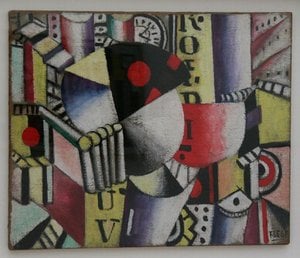
Still life with plaster mask

Explore Fernand Léger's 'Still Life with Plaster Mask,' a Cubist masterpiece capturing the machine age through striking forms and bold colors. A unique WahooArt reproduction.

Esplora l'arte di Fernand Léger (1881-1955), un pioniere del Cubismo e della 'Tubismo'. Scopri i suoi audaci dipinti figurativi che celebrano la vita moderna, le macchine e la forma umana. Un precursore del Pop Art!

Riproduzione a olio fatta a mano

Olio su tela dipinto a mano nelle tue dimensioni e con la tua cornice, realizzato su ordinazione dai nostri artisti. (Acquista stampa Acquista stampaAcquista immagine Acquista immagine)

P118B $10
P118H $10
P118W $10
P438Z $10
P508JH $12
P508YH $12
P805H $10
P805Z $10
P919BZ $10
P919G $10
P919XJ $10
P959ZH $10
P968JZ $12
W106C $8
W218G $10
W218JH $8
W218Y $10
W307PJ $10
W316G $10
W316PJ $8
W316Y $10
W398PJ $8
W4111J $10
W500HY $15
W500JH $15
W692G $12
W849H $8
W940BG $15
W953PJ $8

Formato standard
su misura
CM
INCH

Scegli tra le nostre dimensioni predefinite, che rispettano le proporzioni originali dell'opera d'arte.

larghezza
altezza

È possibile inserire dimensioni personalizzate per adattare l'opera a una cornice o a uno spazio specifico. Se la dimensione selezionata non corrisponde alle proporzioni dell'immagine originale, provvederemo a ritagliare l'opera o a estendere il dipinto con elementi aggiuntivi dipinti a mano. Un mockup digitale ti sarà inviato per approvazione prima dell'inizio della produzione.
Si prega di notare che l'anteprima a schermo non riflette il ritaglio o l'estensione effettivi. Solo il mockup mostrerà accuratamente la composizione finale.
Sebbene siano disponibili dimensioni personalizzate, consigliamo di selezionare una dimensione dall'elenco predefinito per preservare le proporzioni originali.

Esempi di ciò che può essere modificato: sostituire il volto con una foto del cliente; aggiungere un animale domestico (ad esempio, sostituire un gatto con un cane); inserire un messaggio nascosto nello sfondo; cambiare il paesaggio o gli elementi dello sfondo.
Dopo l'ordine, il team di WahooArt.com contatterà il cliente via e-mail per le istruzioni e fornirà un'anteprima del mockup

Consegna in tutto il mondo () in 3/4 settimane anziché nelle normali 5 settimane. (28 Agosto). Nessun compromesso sulla qualità.

why_choose_icon
Spedizione espressa gratuita in tutto il mondo
why_choose_icon
Tela in lino di alta qualità
why_choose_icon
Assicurazione completa sulla spedizione
why_choose_icon
Garanzia di rimborso dei dazi doganali
why_choose_icon
Garanzia di fedeltà cromatica
why_choose_icon
Politica di reso entro 60 giorni (solo per difetti di fabbricazione)
why_choose_icon
Garanzia di rimborso al 100%
why_choose_icon
Offerta per acquisti multipli

Prezzo totale

$ 272

reproduction

Still life with plaster mask

Tecnica di riproduzione

Dimensioni riproduzione

-

Prezzo totale calcolato

$ 272

Informazioni rapide

  • Subject or theme: Still life, mask
  • Notable elements or techniques: Tubist style, cylindrical forms
  • Artistic style: Abstract, Pop Art precursor
  • Artist: Fernand Léger
  • Influences:
    • Modernity
    • Machine age
  • Medium: Oil on canvas

Quiz d'arte

Per ogni domanda è presente una sola risposta corretta.

Domanda 1:
What is the primary subject of Fernand Léger’s ‘Still Life with a Plaster Mask’?
Domanda 2:
Which artistic movement is most closely associated with Fernand Léger’s style, as evidenced by this painting?
Domanda 3:
The presence of an umbrella in the composition suggests what about the artwork’s setting?
Domanda 4:
Considering the historical context of Fernand Léger’s work, what does the plaster mask likely symbolize?
Domanda 5:
Based on the description, what can be inferred about Léger’s approach to representing objects in this painting?

The Enigmatic Presence of the Mask

Fernand Léger’s “Still Life with Plaster Mask” is not merely a depiction of objects arranged on a surface; it's an invitation into a world where form, geometry, and the echoes of industrialization converge. Painted around 1914, during a pivotal period in Léger’s artistic evolution – a time when he moved away from the rigid constraints of Cubism towards a more expressive, almost populist style – this work embodies his fascination with the machine age while retaining a distinctly human sensibility. The central figure, a plaster mask, immediately commands attention. It's not a realistic representation but rather an abstracted form, hinting at anonymity and perhaps even a veiled identity. Léger’s deliberate simplification of shapes—the cylindrical forms reminiscent of pipes and gears, characteristic of his “Tubism”—suggests a world increasingly dominated by mechanical processes, yet the mask itself retains a certain theatricality, recalling ancient ritual objects and the power of disguise.

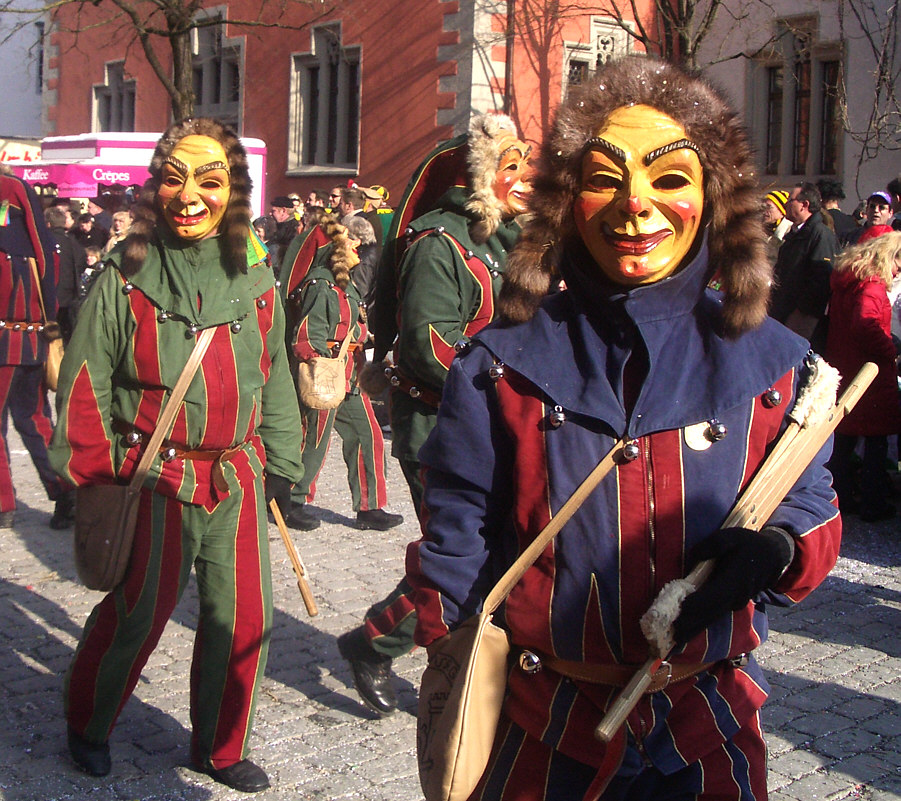
Mask Image

(Image: A traditional mask from Ravensburg Fasnet, illustrating the historical and ritual significance of masks)

A Dialogue with Cubism and Beyond

Léger’s artistic journey is inextricably linked to the development of Cubism. Initially influenced by Picasso and Braque, he developed his own distinctive approach – “Tubism” – which prioritized simplified geometric forms, particularly cylinders, cones, and cubes. This style was a direct response to the dynamism and fragmentation he observed in the burgeoning industrial landscape. However, unlike many of his contemporaries who retreated into pure abstraction, Léger sought to integrate modernity directly into his work. “Still Life with Plaster Mask” demonstrates this brilliantly; the mask itself becomes a visual embodiment of this integration – a fragmented, stylized representation that simultaneously evokes both ancient symbolism and contemporary mechanics. The surrounding objects—a cup, a bowl, an umbrella—are treated with similar geometric precision, contributing to the painting’s overall sense of ordered chaos.

The addition of the umbrella, positioned high in the composition, introduces an element of unexpected lightness and perhaps even vulnerability against the backdrop of industrial forms. It's a subtle detail that adds depth to the work, suggesting a human presence within this machine-dominated world. Interestingly, Léger’s exploration of masks during this period coincided with his own experiences in World War I, where he witnessed firsthand the dehumanizing effects of mechanized warfare. The mask, therefore, can be interpreted as a symbol of both anonymity and the loss of individual identity – themes that resonated deeply within him.

Technique and Materiality: A Celebration of Form

Executed in oil on canvas, “Still Life with Plaster Mask” showcases Léger’s masterful control of color and form. He employs a limited palette—primarily primary colors punctuated by black and white—to create a sense of clarity and visual impact. The brushstrokes are bold and decisive, emphasizing the geometric shapes and contributing to the painting's overall dynamism. The use of canvas itself is integral to the work’s aesthetic; Léger deliberately avoids illusionistic depth, instead focusing on the flat surface and the interplay of shapes and colors. This approach aligns with his desire to represent the world as it *appears* rather than as it *is*, reflecting a commitment to capturing the essence of modern experience.

Symbolism and Emotional Resonance

Beyond its formal qualities, “Still Life with Plaster Mask” carries a profound symbolic weight. The mask, as a recurring motif in Léger’s work, represents not just anonymity but also transformation, disguise, and the potential for rebirth. It speaks to our desire to conceal ourselves from the world, yet simultaneously invites us to explore hidden aspects of our own identities. The painting's overall mood is one of quiet contemplation—a subtle tension between the ordered precision of industrial forms and the inherent mystery of human existence. It’s a work that rewards repeated viewing, revealing new layers of meaning with each encounter. A high-quality reproduction allows us to appreciate Léger’s innovative approach to modern art and his enduring legacy as a pioneer of abstraction.


Biografia dell'artista

vitae e formazione

Fernand Léger, pittore, scultore e filmmaker francese, nacque il 4 febbraio 1881 ad Argentan, Orne, nella bassa Normandia. Suo padre allevava bovini e Léger iniziò la sua formazione come architetto nel 1897-1899. Successivamente si trasferì a Parigi nel 1900, sostenendosi con il lavoro di disegnatore architettonico.

sviluppo artistico

Le prime opere di Léger furono influenzate dall'impressionismo, come visto in Le jardin de ma mère (Il giardino di mia madre) (1905). Dopo aver frequentato la scuola d'arte decorativa e l'Académie Julian, iniziò a lavorare seriamente come pittore a 25 anni. Il suo stile si evolse in una forma personale di cubismo, che i critici definirono "tubismo" per la sua enfasi su forme cilindriche.

Cubismo e il gruppo dei Puteaux

Nel 1910, Léger espose al Salon d'automne insieme a Jean Metzinger e Henri Le Fauconnier. Entrò nel gruppo dei Puteaux, noto anche come la sezione d'or (la sezione aurea), insieme ad altri artisti come Francis Picabia e Marcel Duchamp.

Guerra e la sua influenza sull'opera di Léger

Le esperienze di Léger nella Prima Guerra Mondiale ebbero un impatto significativo sulla sua opera. Durante il suo tempo al fronte, produsse schizzi di pezzi d'artiglieria, aerei e soldati. Il suo dipinto Soldier with a Pipe (1916) riflette questo periodo.

Lavoro successivo e eredità

Il lavoro post-bellico di Léger, caratterizzato da forme meccaniche lisce, lo legò alla tradizione della pittura figurativa francese. I suoi paesaggi animati del 1921 mostrarono figure e animali in forme armoniose e razionalizzate. opere chiave: musei che espongono le opere di Léger:
Fernand Léger

Fernand Léger

1881 - 1955 , Francia

Dati rapidi

  • Artisti Influenti:
    • Cézanne
    • Impressionismo
  • Artisti Influenzati: ['Pop Art']
  • Data Di Nascita: 4 febbraio 1881
  • Luogo Di Nascita: Argentan, Francia
  • Movimento Artistico: Cubismo, Tubismo
  • Nazionalità: Francese
  • Nome Completo: Fernand Léger
  • Opere Notevoli:
    • La Grande Parata
    • L'Elemento Macchina
    • Donna Seduta
    • The City
Esplora le opere d'arte organizzate per temi, stili e caratteristiche.