Anteprima in scala reale Anteprima in AR Acquista il dipinto realizzato a mano Passa all'immagine digitale Invia
Dettagli opera Guida Aggiungi ai preferiti Scarica Simili Radiografia Slideshow Q&A Statistiche

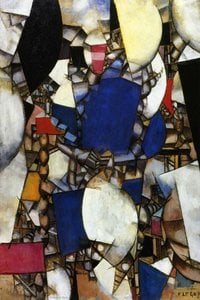
Gli acrobati al circo

Scopri "Gli acrobati al circo", un'opera cubista di Fernand Léger che cattura l'energia del circo attraverso forme frammentate e colori audaci, anticipatrice dell'arte pop.

Esplora l'arte di Fernand Léger (1881-1955), un pioniere del Cubismo e della 'Tubismo'. Scopri i suoi audaci dipinti figurativi che celebrano la vita moderna, le macchine e la forma umana. Un precursore del Pop Art!

Giclée / Stampe d'arte

Stampa giclée o su tela di qualità museale, con produzione rapida e diverse opzioni di finitura. ( Acquista il dipinto realizzato a mano Passa all'immagine digitale)

Corner sample of the P118B picture frame: polistirene stampato, 5 cm wide and 3 cm thick
P118B €10
Corner sample of the P118H picture frame: polistirene stampato, 5 cm wide and 3 cm thick
P118H €10
Corner sample of the P118W picture frame: polistirene stampato, 5 cm wide and 3 cm thick
P118W €10
Corner sample of the P438Z picture frame: polistirene stampato, 5.5 cm wide and 3.5 cm thick
P438Z €10
Corner sample of the P508JH picture frame: polistirene stampato, 7 cm wide and 3.5 cm thick
P508JH €12
Corner sample of the P508YH picture frame: polistirene stampato, 7 cm wide and 3.5 cm thick
P508YH €12
Corner sample of the P805H picture frame: polistirene stampato, 5 cm wide and 3.5 cm thick
P805H €10
Corner sample of the P805Z picture frame: polistirene stampato, 5 cm wide and 3.5 cm thick
P805Z €10
Corner sample of the P919BZ picture frame: polistirene stampato, 7 cm wide and 3.5 cm thick
P919BZ €10
Corner sample of the P919G picture frame: polistirene stampato, 7 cm wide and 3.5 cm thick
P919G €10
Corner sample of the P919XJ picture frame: polistirene stampato, 7 cm wide and 3.5 cm thick
P919XJ €10
Corner sample of the P959ZH picture frame: polistirene stampato, 5 cm wide and 3 cm thick
P959ZH €10
Corner sample of the P968JZ picture frame: polistirene stampato, 6 cm wide and 4 cm thick
P968JZ €12
Corner sample of the W106C picture frame: legno massello, 5 cm wide and 3 cm thick
W106C €8
Corner sample of the W218G picture frame: legno massello, 5 cm wide and 3 cm thick
W218G €10
Corner sample of the W218JH picture frame: legno massello, 5 cm wide and 3 cm thick
W218JH €8
Corner sample of the W218Y picture frame: legno massello, 5 cm wide and 3 cm thick
W218Y €10
Corner sample of the W307PJ picture frame: legno massello, 6 cm wide and 3 cm thick
W307PJ €10
Corner sample of the W316G picture frame: legno massello, 6 cm wide and 3 cm thick
W316G €10
Corner sample of the W316PJ picture frame: legno massello, 6 cm wide and 3 cm thick
W316PJ €8
Corner sample of the W316Y picture frame: legno massello, 6 cm wide and 3 cm thick
W316Y €10
Corner sample of the W398PJ picture frame: legno massello, 5 cm wide and 3 cm thick
W398PJ €8
Corner sample of the W4111J picture frame: legno massello, 6.5 cm wide and 3.5 cm thick
W4111J €10
Corner sample of the W500HY picture frame: legno massello, 7 cm wide and 5 cm thick
W500HY €15
Corner sample of the W500JH picture frame: legno massello, 7 cm wide and 5 cm thick
W500JH €15
Corner sample of the W692G picture frame: legno massello, 8 cm wide and 4 cm thick
W692G €12
Corner sample of the W849H picture frame: legno massello, 5 cm wide and 3 cm thick
W849H €8
Corner sample of the W940BG picture frame: legno massello, 7.5 cm wide and 4.5 cm thick
W940BG €15
Corner sample of the W953PJ picture frame: legno massello, 6 cm wide and 3.5 cm thick
W953PJ €8

Formato standard
su misura
CM
INCH

Scegli tra le nostre dimensioni predefinite, che rispettano le proporzioni originali dell'opera d'arte.

larghezza
altezza

Inserisci la larghezza e l'altezza desiderate, per adattarle alla tua cornice o alla tua parete. Una stampa può essere solo ritagliata, mai resa più grande dell'immagine originale; pertanto, un formato con una forma differente comporterà la perdita di una parte dell'opera. Ti invieremo un mockup digitale da approvare prima di procedere con la stampa. L'immagine mostrata in questa pagina non rappresenta il ritaglio reale — solo il mockup lo mostra.

Consegna in tutto il mondo () in 2 settimane invece delle normali 4/5 settimane. (2 Novembre)

Spedizione espressa gratuita in tutto il mondo
Tela in lino di alta qualità
Assicurazione completa sulla spedizione
Garanzia di rimborso dei dazi doganali
Garanzia di fedeltà cromatica assoluta
Politica di reso entro 100 giorni (solo per difetti di fabbricazione)
Garanzia di rimborso al 100%
Offerta per acquisti multipli

Prezzo totale

€ 60

Gli acrobati al circo

Giclée / Stampe d'arte

Dimensioni riproduzione

-

Prezzo finale calcolato

€ 60

Informazioni rapide

  • Year: 1918
  • Artist: Fernand Léger
  • Title: Acrobati al Circo
  • Influences:
    • Espressionismo
    • Surrealismo
  • Medium: Pittura
  • Dimensions: Inconosciute

Quiz d'arte

Per ogni domanda è presente una sola risposta corretta.

Domanda 1:
Qual è lo stile artistico predominante nella pittura "Acrobati al Circo"?
Domanda 2:
Il dipinto rappresenta principalmente...
Domanda 3:
Qual è l'elemento simbolico più evidente nella composizione della tela?
Domanda 4:
Fernand Léger è considerato un importante artista perché...
Domanda 5:
Nel dipinto è presente un oggetto che richiama elementi dell'arte futurista:

Acrobats at the Circus: A Symphony of Form and Movement

Fernand Léger’s “Acrobats at the Circus,” painted in 1918, transcends mere depiction; it embodies a pivotal moment in artistic history—the burgeoning embrace of Cubism alongside Expressionist influences. Born Joseph Fernand Henri Léger in Argentan, Normandy, in 1881, Léger's formative years amidst rural labor instilled a grounding appreciation for physicality that would later fuel his revolutionary approach to visual representation. Unlike many artists of his era who sought refuge in abstraction as an escape from realism, Léger actively wrestled with modernity—its relentless pace, its geometric precision, and the pervasive presence of machinery—transforming these elements into a vibrant new artistic language.
  • Style: Cubism – Léger’s masterpiece exemplifies the groundbreaking stylistic innovation championed by Picasso and Braque. Rejecting traditional perspective and illusionistic representation, he fragmented objects and figures into interlocking planes, creating a dynamic interplay of geometric shapes that captures the essence of movement and spatial ambiguity.
  • Technique: Léger employed a bold palette dominated by earthy tones punctuated by splashes of vibrant reds and yellows—a deliberate choice to convey both the gritty reality of circus life and the energetic spirit of the machine age. His technique involved meticulous layering of paint, achieved through multiple applications and blending strokes that contribute to the textured surface of the canvas.
  • Historical Context: Created during the tumultuous years following World War I, “Acrobats at the Circus” reflects the anxieties and aspirations of a society grappling with rapid industrialization and technological advancement. Léger’s depiction of acrobats—symbols of daring feats and human resilience—served as an emblem of optimism amidst the devastation of war.
Symbolism: The painting is rife with symbolic references. The clock, positioned prominently in the upper left corner, represents time – a relentless force shaping both individual experience and societal progress. Similarly, the bowl and vase symbolize domesticity and stability juxtaposed against the chaotic dynamism of the circus scene. Even the chairs contribute to the composition’s narrative, anchoring the figures within their environment while simultaneously hinting at contemplation and observation. Léger deliberately avoids sentimentalism, presenting a fragmented yet compelling vision of human activity within a technologically driven world. Emotional Impact: “Acrobats at the Circus” resonates with viewers on an emotional level through its masterful manipulation of form and color. The fractured planes convey a sense of disorientation and uncertainty—mirroring the psychological impact of wartime trauma—yet simultaneously pulsate with energy and vitality. Léger’s intention was not merely to record what he saw but to evoke feeling, prompting contemplation about humanity's relationship with progress and its capacity for both beauty and brutality.
  • Recommended Reproduction: For discerning collectors and interior designers seeking a stunning piece of modernist art, WahooArt offers exceptional high-quality reproductions of Léger’s “Acrobats at the Circus.” Experience the vibrancy of his palette and the dynamism of his composition in breathtaking detail.

Domande e risposte

Qual è il colore dominante di "Gli acrobati al circo" di Fernand Léger?

Il colore che risalta maggiormente in "Gli acrobati al circo" è Legno di deriva (#c0966b). Il colore dominante è utile per abbinare un'opera d'arte a un ambiente interno.

Come posso visualizzare un'anteprima di una riproduzione di "Gli acrobati al circo" di Fernand Léger?

La pagina di Anteprima in ambiente di "Gli acrobati al circo" ti permette di visualizzare un'anteprima dell'opera prima dell'ordine.

Da dove provengono i visitatori di "Gli acrobati al circo" di Fernand Léger?

Le statistiche relative a "Gli acrobati al circo" di Fernand Léger sono consultabili nella pagina Statistiche dell'opera: visite mensili dell'opera, visite alle opere dell'artista e ripartizione dei visitatori recenti per paese e lingua.


Biografia dell'artista

vitae e formazione

Fernand Léger, pittore, scultore e filmmaker francese, nacque il 4 febbraio 1881 ad Argentan, Orne, nella bassa Normandia. Suo padre allevava bovini e Léger iniziò la sua formazione come architetto nel 1897-1899. Successivamente si trasferì a Parigi nel 1900, sostenendosi con il lavoro di disegnatore architettonico.

sviluppo artistico

Le prime opere di Léger furono influenzate dall'impressionismo, come visto in Le jardin de ma mère (Il giardino di mia madre) (1905). Dopo aver frequentato la scuola d'arte decorativa e l'Académie Julian, iniziò a lavorare seriamente come pittore a 25 anni. Il suo stile si evolse in una forma personale di cubismo, che i critici definirono "tubismo" per la sua enfasi su forme cilindriche.

Cubismo e il gruppo dei Puteaux

Nel 1910, Léger espose al Salon d'automne insieme a Jean Metzinger e Henri Le Fauconnier. Entrò nel gruppo dei Puteaux, noto anche come la sezione d'or (la sezione aurea), insieme ad altri artisti come Francis Picabia e Marcel Duchamp.

Guerra e la sua influenza sull'opera di Léger

Le esperienze di Léger nella Prima Guerra Mondiale ebbero un impatto significativo sulla sua opera. Durante il suo tempo al fronte, produsse schizzi di pezzi d'artiglieria, aerei e soldati. Il suo dipinto Soldier with a Pipe (1916) riflette questo periodo.

Lavoro successivo e eredità

Il lavoro post-bellico di Léger, caratterizzato da forme meccaniche lisce, lo legò alla tradizione della pittura figurativa francese. I suoi paesaggi animati del 1921 mostrarono figure e animali in forme armoniose e razionalizzate. opere chiave: musei che espongono le opere di Léger:
Fernand Léger

Fernand Léger

1881 - 1955 , Francia

Dettagli rapidi

  • Artisti Influenti:
    • Cézanne
    • Impressionismo
  • Artisti Influenzati: ['Pop Art']
  • Data Di Nascita: 4 febbraio 1881
  • Luogo Di Nascita: Argentan, Francia
  • Movimento Artistico: Cubismo, Tubismo
  • Nazionalità: Francese
  • Nome Completo: Fernand Léger
  • Opere Notevoli:
    • La Grande Parata
    • L'Elemento Macchina
    • Donna Seduta
    • The City
Esplora le opere d'arte organizzate per temi, stili e caratteristiche.