Biografia dell'artista
Fanny Brate: Pioneer of Swedish Genre Painting and Inspiration for Carl Larsson
Fanny Ingeborg Matilda Brate (née Ekbom; 26 February 1861 – 22 April 1940) stands as a pivotal figure in Swedish art history, celebrated primarily for her contribution to genre painting—specifically depictions of idyllic family life and interiors—which profoundly impacted the artistic vision of Carl Larsson. Born in Stockholm’s Arvfurstens palats, daughter of Johan Frans Gustaf Oskar Ekbom, a clerk serving Prince Oscar II (later King), Brate's early life was marked by privilege and access to education, shaping her artistic trajectory. Her acceptance into the Royal Swedish Academy of Arts in 1887 solidified her commitment to pursuing painting professionally after graduating from Konstfack.
Early Life & Education
Brate’s formative years instilled a deep appreciation for observation and detail—skills that would prove invaluable throughout her artistic career. Studying at Konstfack provided her with foundational training in technique and composition, preparing her for the challenges of mastering the art form. This meticulous attention to realism, combined with an innate understanding of light and color, became hallmarks of her distinctive style. Her dedication to honing her craft foreshadowed the precision and sensitivity that would characterize her later masterpieces.
Marriage & Family Life
In 1887 she married runologist Erik Brate (1857–1924), establishing a home filled with four daughters—Astrid, Torun, Ragnhild and Ingegerd. Despite the considerable responsibilities of motherhood – a role she embraced wholeheartedly – Brate persevered in her artistic pursuits, demonstrating remarkable resilience and unwavering devotion to her craft. Her family life served as a constant source of inspiration for her artwork, reflecting the warmth and affection that permeated their daily existence.
Artistic Style & Technique
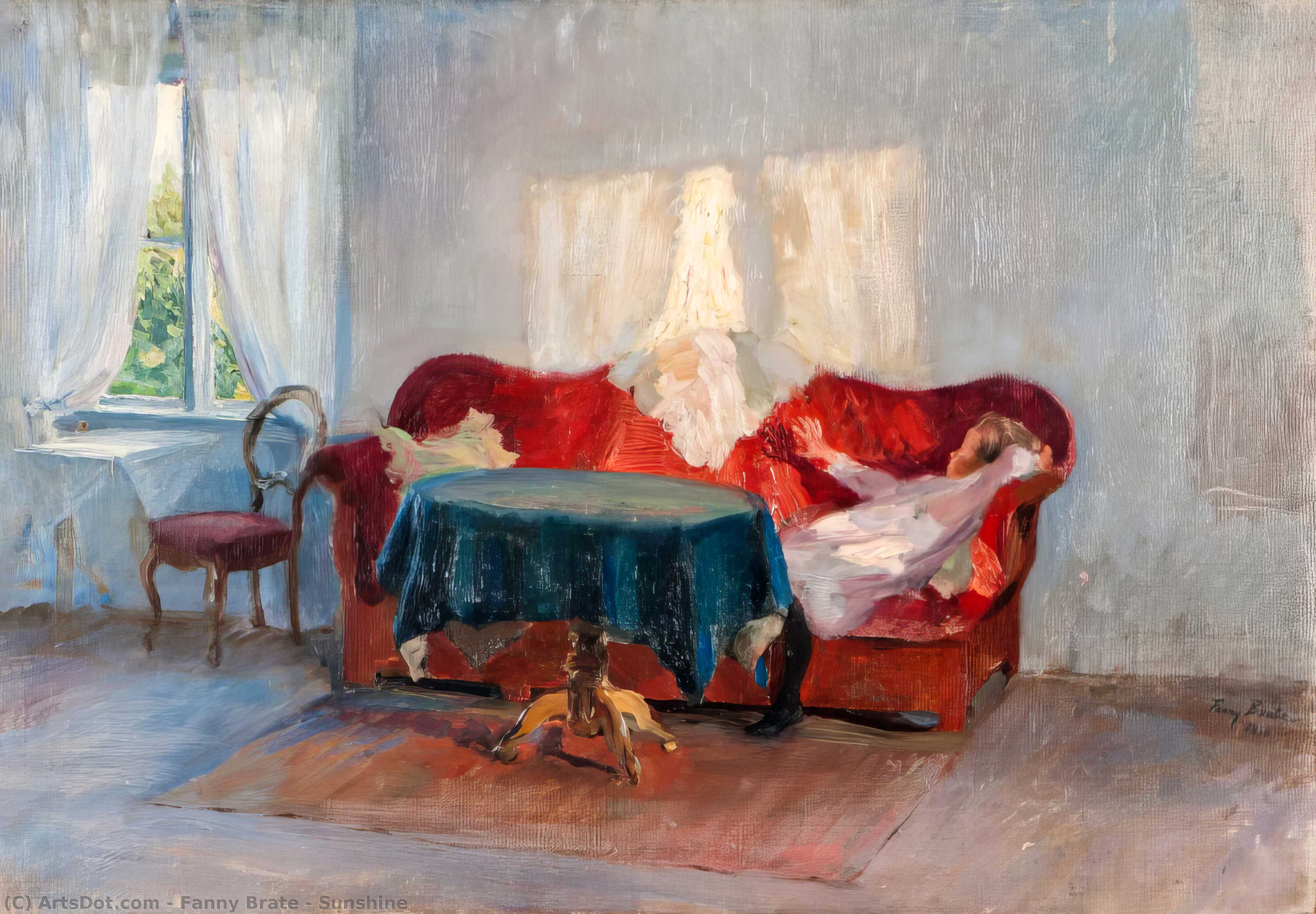
Brate’s artistic style evolved over time, favoring watercolor and oil paints, often blending delicate brushwork with meticulous realism. Her canvases frequently portrayed scenes of domestic tranquility—mothers tending to children, families enjoying meals together—capturing the essence of Swedish bourgeois life during the late nineteenth century. These images weren't merely representations; they were imbued with a palpable sense of warmth and affection, reflecting Brate’s own values as a wife and mother. Notably, her painting “Namnsdag” (1902), currently housed at the Swedish National Museum of Fine Arts, exemplifies this style—a luminous watercolor capturing a festive family gathering bathed in soft light. She skillfully utilized layering techniques to create depth and luminosity, achieving an ethereal quality that distinguished her work from many contemporaries.
Influence on Carl Larsson & Legacy
Brate’s work served as an undeniable inspiration for Carl Larsson, whose celebrated watercolors depicting familial harmony owe considerable debt to her pioneering approach. Larsson consciously adopted Brate's techniques and compositional sensibilities, resulting in a visual language that resonated deeply with the Swedish public. Her influence extended beyond Larsson’s artistic endeavors; she became synonymous with the ideal of domestic serenity—a symbol of artistic integrity and unwavering compassion for family life—a legacy that continues to inspire admiration and scholarly study today. A memorial exhibition held in 1943 commemorated Brate’s lifetime achievement, displaying 126 of her paintings—a testament to her enduring contribution to Swedish art heritage.



 Ordina la riproduzione
 Invia
Invia Condividi
 Dettagli opera

 Scarica
 Simili
 Radiografia
 Slideshow
 Scopri di più






































 L'opzione vetro è disponibile solo per dimensioni inferiori a 110 cm





