Vendi la tua arte
x
AnteprimaAnteprima Anteprima ARAnteprima AR Passa alla pittura fatta a mano Passa alla pittura fatta a manoPassa all'immagine Passa all'immagine CondividiCondividi
DettagliDettagli Aggiungi ai preferiti Aggiungi ai preferiti Scarica immagineScarica immagine Articoli similiArticoli simili RadiografiaRadiografia SlideshowSlideshow

Revue

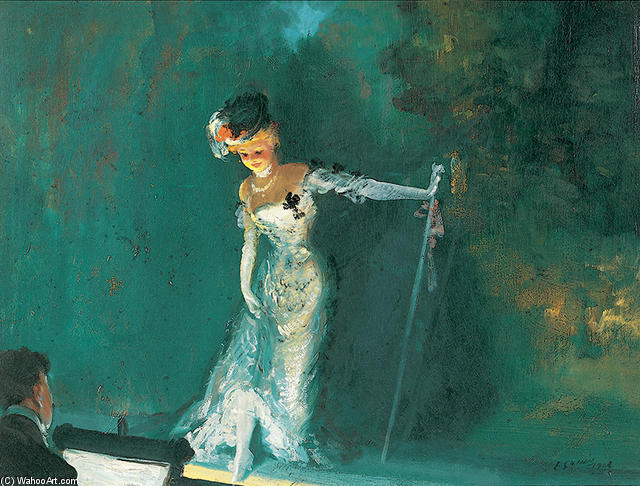
A captivating woman in a white dress dances through this vibrant 1908 oil painting by Ashcan School master Everett Shinn, capturing the energetic spirit of urban life and inviting you to bring this masterpiece home.

Scopri Everett Shinn (1876-1953), artista dell'Ashcan School! Realismo urbano, scene teatrali vibranti e l'energia di New York catturata in pastelli e dipinti.

Giclée / Stampe d'arte

Stampa giclée o su tela di qualità museale, con produzione rapida e diverse opzioni di finitura. (Passa alla pittura fatta a mano Passa alla pittura fatta a manoPassa all'immagine Passa all'immagine)

P118B $10
P118H $10
P118W $10
P438Z $10
P508JH $12
P508YH $12
P805H $10
P805Z $10
P919BZ $10
P919G $10
P919XJ $10
P959ZH $10
P968JZ $12
W106C $8
W218G $10
W218JH $8
W218Y $10
W307PJ $10
W316G $10
W316PJ $8
W316Y $10
W398PJ $8
W4111J $10
W500HY $15
W500JH $15
W692G $12
W849H $8
W940BG $15
W953PJ $8

Standard
custom
CM
INCH

Scegli tra le nostre dimensioni predefinite, che rispettano le proporzioni originali dell'opera d'arte.

larghezza
altezza

È possibile inserire dimensioni personalizzate per adattare l'opera a una cornice o a uno spazio specifico. Se la dimensione selezionata non corrisponde alle proporzioni dell'immagine originale, procederemo al ritaglio dell'opera o all'estensione dell'immagine con un bordo specchiato o a tinta unita. Un mockup digitale ti verrà inviato per approvazione prima dell'inizio della produzione.
Si prega di notare che l'anteprima a schermo non riflette il ritaglio o l'estensione effettivi. Solo il mockup mostrerà accuratamente la composizione finale.
Sebbene siano disponibili dimensioni personalizzate, si raccomanda di selezionare una dimensione dall'elenco predefinito per preservare le proporzioni originali.

Consegna in tutto il mondo () in 2 settimane invece delle normali 4/5 settimane. (30 Luglio)

why_choose_icon
Spedizione espressa gratuita in tutto il mondo

why_choose_icon
Tela in lino di alta qualità
why_choose_icon
Assicurazione completa sulla spedizione
why_choose_icon
Garanzia di rimborso dei dazi doganali
why_choose_icon
Garanzia di fedeltà cromatica dell'originale
why_choose_icon
Politica di reso entro 60 giorni (solo per difetti di fabbricazione)
why_choose_icon
Garanzia di rimborso al 100%
why_choose_icon
Offerta per acquisti multipli

Prezzo totale

$ 68

reproduction

Revue

Giclée / Stampe d'arte

Dimensioni della riproduzione

-

Prezzo totale

$ 68

Dettagli rapidi

  • Medium: Oil on canvas
  • Dimensions: 18 x 24 cm
  • Artist: Everett Shinn
  • Year: 1908
  • Location: Whitney Museum of American Art
  • Notable elements: Woman in white dress, red flower, piano
  • Artistic style: Urban Realism

Quiz d'arte

Per ogni domanda è presente una sola risposta corretta.

Domanda 1:
In which year was the painting 'Revue' created?
Domanda 2:
Which artistic movement is Everett Shinn associated with?
Domanda 3:
What is the primary medium used in 'Revue'?
Domanda 4:
Which instrument is visible in the background of the painting, adding to the scene's atmosphere?
Domanda 5:
Where is 'Revue' currently located?

Descrizione del pezzo da collezione

A Glimpse into the Glittering Night: The Allure of Everett Shinn’s Revue

In the heart of the early twentieth century, as the pulse of urban America began to beat with a new, frenetic energy, Everett Shinn captured a moment of theatrical enchantment in his 1908 masterpiece, Revue. This exquisite oil on canvas serves as more than just a depiction of a performance; it is a window into the soul of the Ashcan School’s fascination with the spectacle of city life. The painting centers on a captivating female figure, draped in a luminous white dress that seems to catch the stray light of a backstage or theater setting. A single red flower tucked into her hair provides a striking splash of color, acting as a focal point that draws the eye amidst the surrounding shadows. As she balances gracefully on one leg, leaning upon a cane with her gaze averted, there is an undeniable sense of poised movement—a fleeting second of rehearsal or repose captured forever in pigment.

Shinn, often celebrated as a visual poet of the metropolis, utilizes his background as a newspaper illustrator to imbue this piece with a remarkable sense of immediacy. The technique employed here is characteristic of his ability to translate the grit and glamour of New York life into something deeply evocative. Through the rich, layered application of oil, Shinn creates a texture that feels alive, allowing the light to dance across the folds of the woman's gown and the dark, resonant wood of the piano in the background. The composition is masterfully balanced; while the central figure commands attention, the presence of secondary figures tucked into the periphery adds layers of depth and narrative mystery, suggesting a larger, bustling world just beyond the frame of our vision.

The Spirit of the Ashcan School and Urban Realism

To understand Revue is to understand the movement that defined an era of American art. As a prominent member of the Ashcan School, Shinn rejected the polished, idealized subjects of traditional academic painting in favor of the raw, unvarnished reality of the streets, theaters, and nightlife. This painting embodies that rebellious spirit, finding profound beauty in the ephemeral moments of the stage and the everyday lives of urban dwellers. The inclusion of the piano serves as a symbolic anchor to the world of music and performance, grounding the ethereal movement of the dancer in a tangible, atmospheric setting. There is a palpable tension between the elegance of the subject and the underlying energy of the scene, a hallmark of Shinn’s ability to portray both the "dandy" and the "realist" simultaneously.

For the discerning collector or interior designer, Revue offers an unparalleled opportunity to introduce a sense of historical drama and sophisticated movement into a space. The painting does not merely sit upon a wall; it breathes life into a room, offering a conversation piece that bridges the gap between classical elegance and modern vitality. Whether placed in a contemporary gallery setting or a classic study, the work’s vibrant palette and emotive subject matter provide a timeless aesthetic appeal. Owning a high-quality reproduction of this work allows one to possess a fragment of the roaring dawn of American urbanism, bringing the captivating, rhythmic spirit of Shinn's 1908 vision into the modern home.


Biografia dell'artista

A Chronicler of Urban Life: The World of Everett Shinn

Everett Shinn, born in Woodstown, New Jersey, in 1876, wasn’t simply a painter; he was a visual poet of the burgeoning metropolis. He captured the raw energy, the vibrant spectacle, and often, the underlying grit of early 20th-century America with an immediacy that set him apart. From his beginnings as a newspaper illustrator in Philadelphia to his prominence within the Ashcan School, Shinn’s artistic journey reflects a commitment to portraying life as it was lived – unvarnished, compellingly real. Art historian Sam Hunter affectionately dubbed him “the dandy of the realists,” a moniker reflecting both his refined aesthetic and his embrace of the city’s pleasures. His early training at the Spring Garden Institute and later, the Pennsylvania Academy of the Fine Arts in Philadelphia, provided a solid foundation, but it was his work as an artist-reporter for Philadelphia newspapers – the *Press*, the *Inquirer*, and the *Ledger* – that truly honed his observational skills. This experience instilled in him a fascination with urban life and a knack for capturing fleeting moments before they vanished.
  • Early Life: Shinn was born to Isaiah Conklin Shinn and Josephine Ransley Shinn, agricultural farmers, in Woodstown, New Jersey, a Quaker-dominated community. His father’s fervent admiration for Edward Everett Hale—the author of “The Wonderful Wizard of Oz”—influenced his formative years. As Shinn himself recounted, “Shinn’s ability to draw was evident from very early childhood.” At age 15 he enrolled at the Spring Garden Institute in Philadelphia, where he studied mechanical drawing. The following year he took classes at the Pennsylvania Academy of the Fine Arts and by age 17 was working as a staff artist for the Philadelphia Press.
  • The Newspaper Years: Moving to New York City in 1897, Shinn swiftly established himself as an illustrator for publications like *Harper’s Weekly*, demonstrating remarkable skill in depicting animated movement—a talent that would soon be eclipsed by photography. He collaborated closely with fellow newspaper artists William J. Glackens and George Luks, forming a core group within the Ashcan School, led by Robert Henri. This association profoundly shaped Shinn’s artistic vision, challenging academic conventions and rejecting idealized representations in favor of honest portrayals of urban existence—its poverty, its vibrancy, its struggles, and its joys.

From Philadelphia Streets to New York Stages

The Ashcan School's ethos demanded a radical departure from traditional art circles, prioritizing robust images of real life over polished aesthetics. Shinn’s participation in the landmark exhibition “The Eight” in 1908 solidified his position within this movement, though he maintained a slightly more refined artistic sensibility than some of his peers. He wasn’t merely documenting what he saw; he was interpreting it through a lens of dramatic flair and psychological insight. His fascination with theater stemmed from its ability to convey complex emotions and explore social dynamics—a passion that would permeate much of his subsequent work. Shinn’s canvases frequently depicted scenes of urban life, capturing the energy and dynamism of New York City during its formative years. He excelled at portraying moments of crisis or dramatic confrontation, reflecting a deep engagement with the human condition.
  • Notable Collaborations: Shinn worked alongside influential artists like Henri Glackens and Sloan, fostering a collaborative spirit that enriched their artistic endeavors.
  • The Theater as Inspiration: His depictions of theater performances—particularly those staged in New York City—were marked by meticulous detail and psychological depth. He saw the stage as a microcosm of human experience, capturing both its grandeur and its vulnerability.

A Master of Pastel

Shinn distinguished himself from many of his contemporaries through his preference for pastel as a medium. Unlike oil paints, which required extensive layering and blending techniques, pastels offered Shinn unparalleled freedom to achieve luminous effects and capture subtle nuances of color—a stylistic choice that reflected his artistic sensibilities and contributed significantly to the distinctive character of his paintings. His ability to render light and shadow with remarkable precision elevated pastel painting to new heights, establishing him as a pioneer in this expressive medium.
  • Technique: Shinn’s masterful use of pastel allowed for spontaneous blending and layering, resulting in vibrant colors and textural surfaces that conveyed emotion and immediacy.
  • Signature Style: His distinctive pastel technique became synonymous with his artistic vision—a testament to his unwavering commitment to capturing the essence of urban life through a medium that prioritized directness and luminosity.
## Major Achievements & Legacy Shinn’s prolific output spanned decades, encompassing murals for prominent buildings, theater productions, and countless portraits—demonstrating his versatility as an artist and cementing his place in American art history. He received numerous awards recognizing his artistic excellence and participated in exhibitions that showcased his groundbreaking work to audiences worldwide. Despite facing financial difficulties during the Great Depression, Shinn persevered with unwavering determination, continuing to paint and exhibit until his death in 1953. His enduring legacy resides not only in his impressive body of paintings but also in his pioneering use of pastel—a medium he elevated to new artistic heights—and in his profound contribution to the Ashcan School’s ethos of honest representation and dramatic engagement with the human experience. Shinn remains a vital figure for understanding the complexities of urban life and the transformative power of artistic observation, inspiring generations of artists to embrace realism and explore the expressive potential of unconventional mediums. Shinn's unwavering dedication to capturing the spirit of his time—the energy of New York City, the drama of theater, and the raw beauty of everyday life—continues to resonate with viewers today.
Everett Shinn

Everett Shinn

1876 - 1953 , Stati Uniti d'America

Informazioni rapide

  • Artisti Influenti:
    • Robert Henri
    • John Sloan
  • Data Di Nascita: 6 novembre 1876
  • Influenze Artistiche: ['Ashcan School']
  • Luogo Di Nascita: Woodstown, Stati Uniti
  • Movimento Artistico: Realismo americano
  • Nazionalità: Americana
  • Nome Completo: Everett Shinn
  • Opere Notevoli: ["Studio to 'Song of Songs IV'"]