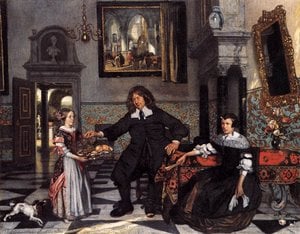
Acrylic On CanvasWallArtDutch Golden Age Landscape
 33.0 x 41.0 cm
 Rijksmuseum
Acquista un'immagine digitale ad alta risoluzione e ottimizzata, di qualità nettamente superiore all'anteprima online.
Ogni file è meticolosamente preparato dai nostri specialisti interni attraverso l'uso di strumenti avanzati e un sapiente ritocco manuale. Garantiamo che ogni immagine presenti una chiarezza eccezionale, una precisione cromatica impeccabile e dettagli raffinati.
Il file finale viene consegnato via e-mail entro 72 ore, ottimizzato per un uso immediato in contesti professionali, editoriali e di stampa. Si tratta della stessa qualità affidata ai più prestigiosi studi di design, editori e gallerie d'arte.
Scarica un file ad alta risoluzione per uso personale, per la stampa e per progetti creativi. ( Acquista stampa Acquista il dipinto realizzato a mano)
Quando scegli WahooArt.com, non riceverai solo un'immagine: riceverai un'opera d'arte digitale professionalmente ottimizzata, realizzata con la massima precisione e accompagnata da una garanzia di soddisfazione. Ecco tutto ciò che include il tuo ordine, automaticamente:

Riceverai il file dell'immagine digitale ad alta risoluzione via email entro 72 ore dall'ordine, pronto per un uso immediato.

La tua opera d'arte viene ottimizzata professionalmente attraverso l'uso di strumenti avanzati di intelligenza artificiale e una revisione manuale, garantendo il massimo livello di dettaglio, nitidezza e accuratezza cromatica.

Hai eliminato o perso accidentalmente il tuo file? Non preoccuparti: te lo invieremo di nuovo in qualsiasi momento, gratuitamente.

Goditi la tua opera d'arte istantaneamente senza costi doganali, dazi o spese di spedizione: i download digitali sono sempre esenti da tasse.

Garantiamo che la tua immagine digitale rifletta i colori originali con la massima fedeltà, grazie all'uso di strumenti professionali e a una gestione accurata del colore.

Se non sei soddisfatto della tua immagine digitale, la revisioneremo o ti rimborseremo il 100% entro 100 giorni, senza domande.

Non sei soddisfatto? Ricevi un rimborso completo entro 100 giorni dal ricevimento del tuo file digitale, senza dover fornire spiegazioni.

Acquista 3 immagini, risparmia il 10% - Acquista 5, risparmia il 15% - Acquista 10+, risparmia il 20%. Ideale per progetti creativi, gallerie e agenzie.
Emanuel Murant's "Dilapidated Farm," painted circa 1670, isn’t merely a depiction of a crumbling structure; it’s a poignant meditation on time, resilience, and the enduring spirit of rural life. This evocative landscape, rendered in a meticulously realistic style characteristic of the Dutch Golden Age, invites us to contemplate the passage of years and the quiet dignity found within decay. The painting immediately draws the eye to the central focus: a brick farmhouse, its once-proud facade now bearing the unmistakable marks of neglect – missing tiles revealing glimpses of weathered roof timbers, peeling plaster clinging precariously to the walls, and a thatched extension hinting at a past prosperity.
Murant’s technique is remarkably detailed. He doesn't shy away from portraying the ravages of time; instead, he embraces them, capturing every imperfection with an almost obsessive precision. The texture of the brickwork, the roughness of the timber, and the delicate layering of the thatch are rendered with a sensitivity that speaks to Murant’s profound observation skills. Notice how light plays across the scene – not in dramatic bursts, but rather in subtle gradations, illuminating the details while simultaneously suggesting the melancholy atmosphere. The overcast sky contributes to this sense of quiet contemplation, casting a soft, diffused light over the landscape.
To fully appreciate “Dilapidated Farm,” it’s crucial to understand its historical context. The late 17th century in the Netherlands was a period of significant social and economic change. While Amsterdam flourished as a center of trade and finance, rural areas faced challenges – declining agricultural yields, population shifts, and the gradual erosion of traditional ways of life. Paintings like Murant’s weren't simply documenting decay; they were reflecting a broader cultural awareness of these transformations. The depiction of ruined farmhouses served as a visual reminder of the fragility of human endeavors and the inevitable return to nature.
Interestingly, Murant’s work anticipates the later innovations of Jan van der Heyden, a master of urban panoramas who would revolutionize the representation of cityscapes. Van der Heyden's focus on capturing the dynamism and complexity of urban life owes a debt to Murant’s earlier explorations of rural decay – both artists shared a fascination with documenting the changing face of their homeland.
Beyond its technical merits, “Dilapidated Farm” is rich in symbolic meaning. The ruined farmhouse represents not just physical deterioration but also the loss of social status, economic stability, and perhaps even familial heritage. The figures – a man tending to chickens near the thatched extension and a boy engaged in manual labor – embody the enduring connection between humans and the land. Their presence suggests a continuity of tradition, a quiet determination to maintain a way of life despite adversity.
The painting evokes a complex range of emotions: melancholy, nostalgia, and perhaps even a sense of hope. It’s not a celebration of beauty in its pristine form but rather an appreciation for the dignity found within imperfection. The scene whispers of stories untold – of generations who lived and worked on this land, of joys and sorrows experienced within these weathered walls.
WahooArt’s high-quality reproduction of “Dilapidated Farm” captures the essence of Murant's original masterpiece. Printed on archival-grade canvas using a giclée printing process, this artwork offers exceptional color accuracy and detail, faithfully reproducing the nuances of light and texture that define Murant’s style. Available in various sizes to suit your space and budget, it serves as a beautiful reminder of the enduring power of art to connect us with the past and inspire contemplation about the present.
Consider framing this piece within a rustic wooden frame to further enhance its connection to the subject matter – or opt for a sleek, minimalist design to create a striking contrast. “Dilapidated Farm” is more than just a painting; it’s an invitation to slow down, reflect, and appreciate the beauty of imperfection.


1622 - 1700 , Paesi Bassi

 Anteprima in scala reale
 Invia
Invia Condividi
 Dettagli opera

 Scarica immagine
 Simili
 Radiografia
 Slideshow
 Espandi i dettagli