Stampa giclée o su tela di qualità museale, con produzione rapida e diverse opzioni di finitura. ( Acquista il dipinto realizzato a mano Passa all'immagine digitale)





























Scegli tra le nostre dimensioni predefinite, che rispettano le proporzioni originali dell'opera d'arte.

Inserisci la larghezza e l'altezza desiderate, per adattarle alla tua cornice o alla tua parete. Una stampa può essere solo ritagliata, mai resa più grande dell'immagine originale; pertanto, un formato con una forma differente comporterà la perdita di una parte dell'opera. Ti invieremo un mockup digitale da approvare prima di procedere con la stampa. L'immagine mostrata in questa pagina non rappresenta il ritaglio reale — solo il mockup lo mostra.
Consegna in tutto il mondo () in 2 settimane invece delle normali 4/5 settimane. (8 Novembre)
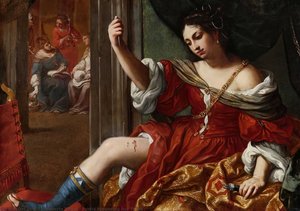
Self-Portrait
Dimensioni riproduzione
The charcoal whispers from Elisabetta Sirani's 1664 “Self-Portrait” are more than mere lines on paper; they’re a poignant invitation into the heart and mind of a remarkably talented, yet tragically short-lived, artist. This intimate study, housed within an ornate gilded frame, transcends its humble dimensions – measuring just 21 x 17 centimeters – to reveal a profound depth of emotion and technical mastery that speaks volumes about the burgeoning artistic landscape of 17th-century Bologna. It’s a work not simply *of* a woman, but *by* a woman, boldly asserting her presence within a world largely dominated by male figures.
Sirani's story is inextricably linked to the vibrant and fiercely competitive art scene of her time. Born into an artistic family – her father, Giovanni Andrea Sirani, was himself a respected painter and teacher – she inherited not only technical skill but also a pioneering spirit. Bologna, then a hub for artistic innovation, offered a relative openness to female artists, a circumstance that allowed Sirani to establish herself as one of the era’s most celebrated figures. The portrait itself feels like a deliberate act of self-definition, a conscious assertion of her identity and talent in an environment where women were often relegated to secondary roles.
The immediate impression is one of meticulous detail, achieved through a masterful deployment of hatching and cross-hatching – techniques borrowed from the Renaissance masters but imbued with Sirani’s unique sensibility. The artist doesn't simply *draw* her face; she builds it up layer by layer, creating a remarkable sense of volume and texture. Notice how the subtle variations in tone suggest the play of light on skin, the delicate curve of a cheekbone, or the shadowed recesses beneath an eye. This isn’t merely a likeness; it's a carefully constructed illusion of reality.
The choice of red chalk – a favored medium for portraiture at the time – contributes to the work’s subdued palette and velvety texture. The muted browns and beiges create a sense of intimacy, drawing the viewer into the subject’s gaze. Sirani's use of light is particularly noteworthy; it’s not dramatic or theatrical but rather soft and diffused, illuminating the face with a gentle warmth that emphasizes her features and invites contemplation. The composition itself – centered within the frame, with the head occupying most of the vertical space – reinforces this sense of intimacy and directness.
Beyond its technical brilliance, “Self-Portrait” is rich in symbolic meaning. The direct gaze of the subject—a deliberate choice—conveys a remarkable confidence and perhaps even a touch of introspection. She isn’t passively presenting herself; she's engaging with the viewer, inviting them to share in her thoughts and feelings. The slightly off-center placement of her eyes adds to this sense of immediacy and connection.
The frame itself – an ornate gilded border – serves as a powerful reminder of the formality and status associated with portraiture during the Renaissance. It elevates the subject, transforming her into a figure worthy of admiration and respect. However, within this formal setting, Sirani subtly challenges conventions by presenting herself not as a demure model but as an active participant in the act of creation – a painter at work, surrounded by her tools and materials.
Elisabetta Sirani’s life was tragically cut short at the age of 27, adding a poignant layer to this already compelling portrait. The circumstances surrounding her death – rumored poisoning—have fueled speculation and intrigue for centuries. Regardless of the truth behind her demise, her legacy as one of the most accomplished female artists of the Baroque period endures. Her story is not just about artistic talent; it’s about resilience, determination, and a pioneering spirit that paved the way for future generations of women in the arts.
Today, “Self-Portrait” stands as a testament to Sirani's genius – a captivating glimpse into the mind and soul of an extraordinary artist. Its intimate scale belies its profound emotional depth, offering viewers a rare opportunity to connect with a remarkable woman who defied societal expectations and left an indelible mark on the history of art.
"Self-Portrait" di Elisabetta Sirani unisce la tecnica Acrylic On Paper allo stile Baroque. La tecnica e il movimento definiscono la realizzazione e l'estetica dell'opera.
L'uso suggerito per "Self-Portrait" di Elisabetta Sirani è Statement. Può essere impiegato anche per altri scopi.
"Self-Portrait" di Elisabetta Sirani è una composizione in Portrait che misura 21 x 17 cm nell'originale.

Elisabetta Sirani fu un’eccezionale pittrice e incisore italiana del periodo barocco che raggiunse una notevole fama all'inizio dell'era moderna a Bologna. La sua vita, sebbene tragicamente breve, fu segnata dall'innovazione artistica, dallo spirito imprenditoriale e dalla fondazione di un'accademia per artiste – una testimonianza della sua visione progressista. Nata in una famiglia d’arte, sfidò le aspettative sociali per diventare una delle artiste più celebrate del suo tempo.

1638 - 1665 , Italia

Scopri i segreti del Barocco tra luce e dramma con un'analisi esperta di Caravaggio e Barocci. Immergiti nella storia dell'arte ora.
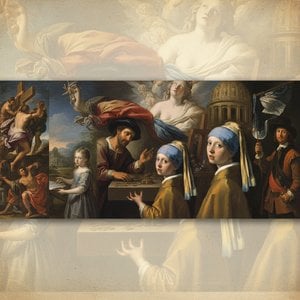
Esplora i 10 capolavori barocchi di Caravaggio, Bernini e Rembrandt che hanno rivoluzionato l'arte. Scopri storie, tecniche e colori iconici. Trova riproduzioni d'arte di alta qualità per la tua casa su !

Explore the dramatic world of Baroque art! Discover iconic artists like Caravaggio & Rubens, defining techniques, and its lasting impact on art history. Expert insights for collectors & enthusiasts at WahooArt.
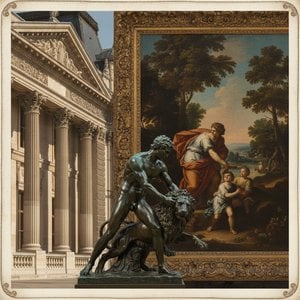
Explore the profound elegance of Baroque Classicism. Discover how 17th-century masters synthesized dramatic emotion with classical order through the lens of the Counter-Reformation and the works of legends like Carlo Maratta and Andrea Sacchi.

Explore the captivating world of Baroque Classicism! Discover its history, key artists like Caravaggio & Rubens, and defining characteristics. Expert insights & high-quality reproductions at WahooArt.
 Anteprima in scala reale
 Invia
Invia Condividi
 Dettagli opera
 Guida
Guida

 Scarica
 Simili
 Radiografia
 Slideshow
 Domande e risposte
 Statistiche


 Espandi i dettagli









 L'opzione vetro è disponibile solo per dimensioni inferiori a 110 cm