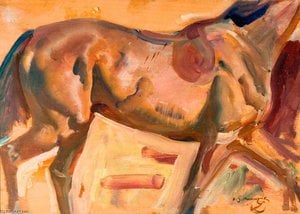
The Undefeated Asteroid (1864) di Edward Troye, riproduzione di un dipinto a olio realizzato a mano da un maestro d'arte
Anteprima in scala reale Anteprima in AR Passa alle stampe Passa all'immagine digitale Invia
Dettagli opera Guida Aggiungi ai preferiti Scarica Simili Radiografia Slideshow Domande e risposte Presentation Statistiche

The Undefeated Asteroid Riproduzione di un dipinto a olio dipinto a mano

Edward Troye’s "The Undefeated Asteroid" (1864) showcases astonishing anatomical detail of a bay horse meticulously groomed by enslaved men in antebellum Virginia, revealing a poignant social commentary through masterful realism and scientific observation – discover this significant equine artwork.

Edward Troye (1808-1874): artista svizzero celebre per i suoi accurati dipinti di cavalli – razze americane del Great Plains e thoroughbred. Autore de 'Cavalli da corsa d'America'.

Riproduzione a olio fatta a mano

Olio su tela dipinto a mano nelle tue dimensioni e con la tua cornice, realizzato su ordinazione dai nostri artisti. ( Passa alle stampe Passa all'immagine digitale)

Corner sample of the P118B picture frame: polistirene stampato, 5 cm wide and 3 cm thick
P118B €10
Corner sample of the P118H picture frame: polistirene stampato, 5 cm wide and 3 cm thick
P118H €10
Corner sample of the P118W picture frame: polistirene stampato, 5 cm wide and 3 cm thick
P118W €10
Corner sample of the P438Z picture frame: polistirene stampato, 5.5 cm wide and 3.5 cm thick
P438Z €10
Corner sample of the P508JH picture frame: polistirene stampato, 7 cm wide and 3.5 cm thick
P508JH €12
Corner sample of the P508YH picture frame: polistirene stampato, 7 cm wide and 3.5 cm thick
P508YH €12
Corner sample of the P805H picture frame: polistirene stampato, 5 cm wide and 3.5 cm thick
P805H €10
Corner sample of the P805Z picture frame: polistirene stampato, 5 cm wide and 3.5 cm thick
P805Z €10
Corner sample of the P919BZ picture frame: polistirene stampato, 7 cm wide and 3.5 cm thick
P919BZ €10
Corner sample of the P919G picture frame: polistirene stampato, 7 cm wide and 3.5 cm thick
P919G €10
Corner sample of the P919XJ picture frame: polistirene stampato, 7 cm wide and 3.5 cm thick
P919XJ €10
Corner sample of the P959ZH picture frame: polistirene stampato, 5 cm wide and 3 cm thick
P959ZH €10
Corner sample of the P968JZ picture frame: polistirene stampato, 6 cm wide and 4 cm thick
P968JZ €12
Corner sample of the W106C picture frame: legno massello, 5 cm wide and 3 cm thick
W106C €8
Corner sample of the W218G picture frame: legno massello, 5 cm wide and 3 cm thick
W218G €10
Corner sample of the W218JH picture frame: legno massello, 5 cm wide and 3 cm thick
W218JH €8
Corner sample of the W218Y picture frame: legno massello, 5 cm wide and 3 cm thick
W218Y €10
Corner sample of the W307PJ picture frame: legno massello, 6 cm wide and 3 cm thick
W307PJ €10
Corner sample of the W316G picture frame: legno massello, 6 cm wide and 3 cm thick
W316G €10
Corner sample of the W316PJ picture frame: legno massello, 6 cm wide and 3 cm thick
W316PJ €8
Corner sample of the W316Y picture frame: legno massello, 6 cm wide and 3 cm thick
W316Y €10
Corner sample of the W398PJ picture frame: legno massello, 5 cm wide and 3 cm thick
W398PJ €8
Corner sample of the W4111J picture frame: legno massello, 6.5 cm wide and 3.5 cm thick
W4111J €10
Corner sample of the W500HY picture frame: legno massello, 7 cm wide and 5 cm thick
W500HY €15
Corner sample of the W500JH picture frame: legno massello, 7 cm wide and 5 cm thick
W500JH €15
Corner sample of the W692G picture frame: legno massello, 8 cm wide and 4 cm thick
W692G €12
Corner sample of the W849H picture frame: legno massello, 5 cm wide and 3 cm thick
W849H €8
Corner sample of the W940BG picture frame: legno massello, 7.5 cm wide and 4.5 cm thick
W940BG €15
Corner sample of the W953PJ picture frame: legno massello, 6 cm wide and 3.5 cm thick
W953PJ €8

Formato standard
su misura
CM
INCH

Scegli tra le nostre dimensioni predefinite, che rispettano le proporzioni originali dell'opera d'arte.

larghezza
altezza

Inserisci la larghezza e l'altezza desiderate, per adattarle alla tua cornice o alla tua parete. Trattandosi di un'opera dipinta a mano, in caso di dimensioni con un formato differente, l'artista può estendere leggermente il dipinto oltre i bordi dell'immagine o ritagliare una piccola parte — la scelta spetta a te. Ti invieremo un mockup digitale da approvare prima che la realizzazione abbia inizio. L'immagine mostrata in questa pagina non rappresenta il risultato finale — solo il mockup lo fa.

Esempi di ciò che può essere modificato: sostituire il volto con una foto del cliente; aggiungere un animale domestico (ad esempio, sostituire un gatto con un cane); inserire un messaggio nascosto nello sfondo; cambiare il paesaggio o gli elementi dello sfondo.
Dopo l'ordine, il team di WahooArt.com contatterà il cliente via e-mail per ricevere le istruzioni e fornirà un'anteprima del mockup

Consegna in tutto il mondo () in 3/4 settimane anziché nelle normali 5 settimane. (4 Novembre). Nessun compromesso sulla qualità.

Spedizione espressa gratuita in tutto il mondo
Tela in lino di alta qualità
Assicurazione completa sulla spedizione
Garanzia di rimborso dei dazi doganali
Garanzia di fedeltà cromatica assoluta
Politica di reso entro 100 giorni (solo per difetti di fabbricazione)
Garanzia di rimborso al 100%
Offerta per acquisti multipli

Prezzo totale

€ 242

The Undefeated Asteroid

Tecnica di riproduzione

Dimensioni riproduzione

-

Prezzo finale calcolato

€ 242

Informazioni rapide

  • Subject or theme: Horse Portraiture
  • Medium: Oil on Canvas
  • Influences: Genre Painting
  • Title: The Undefeated Asteroid
  • Artist: Edward Troye

The Undefeated Asteroid – A Portrait of Equestrian Dignity

Edward Troye’s “The Undefeated Asteroid,” painted in 1864, transcends mere equine representation; it embodies the spirit of a bygone era and speaks volumes about social dynamics within the American South during the antebellum period. This monumental canvas captures a pivotal moment – the meticulous grooming of a magnificent bay horse by two enslaved men—a scene meticulously rendered with unparalleled realism that continues to fascinate art historians and collectors alike.

A Masterclass in Anatomical Detail

Troye’s artistic prowess lies not just in capturing the beauty of the horse but in achieving an astonishing level of anatomical accuracy. Unlike many artists of his time who prioritized idealized forms, Troye relentlessly pursued truthfulness. He painstakingly dissected musculature, meticulously documented bone structure, and rendered every subtle nuance of equine anatomy with breathtaking precision. This dedication to scientific observation—a hallmark of animalier art—elevates “The Undefeated Asteroid” beyond a simple depiction of animals; it becomes a testament to Troye’s mastery of technique and his unwavering commitment to portraying subjects faithfully. The artist skillfully employed oil paints on canvas, layering thin glazes to build up tonal depth and creating textures that convincingly mimic the feel of horsehair and muscle fibers.

Historical Context: Racehorses and Slavery in Antebellum Virginia

The painting's significance extends far beyond its artistic merits. It exists within a complex sociohistorical framework—the burgeoning popularity of Thoroughbred racing in Virginia during the 1860s, coupled with the pervasive institution of slavery. The horse depicted is owned by John Minor Botts III, a wealthy planter and prominent figure in Richmond society. His stables employed enslaved men who cared for his horses, highlighting the intertwined roles of labor and leisure within the Southern economy. Troye’s portrayal isn't merely aesthetically pleasing; it serves as a visual record of this era—a poignant reminder of the human cost associated with economic prosperity. The inclusion of African American jockeys underscores the racial inequalities prevalent at the time, presenting them not as mere accessories to the horse but as integral participants in its care and success.

Symbolism: Resilience Amidst Oppression

“The Undefeated Asteroid” carries profound symbolic weight. The horse itself represents strength, nobility, and perseverance—qualities mirrored in the dignified postures of Botts’ attendants. Despite their subjugation under oppressive conditions, these men exhibit unwavering dedication to their craft and a palpable respect for their animal companion. Troye's deliberate framing—the stark contrast between the lush foliage surrounding the horse and the barren tree trunks—further amplifies this symbolism. It suggests that beauty and vitality can endure even in environments marked by hardship and deprivation. The gaze of Botts’ men, turned outward with thoughtful contemplation, speaks to a quiet dignity—a refusal to succumb to despair amidst adversity.

Emotional Impact: A Moment Frozen in Time

Ultimately, Troye's masterpiece evokes a powerful emotional response. It compels viewers to confront the uncomfortable realities of slavery while simultaneously appreciating the artistry and skill involved in its creation. The painting’s meticulous detail invites contemplation—encouraging us to consider not only the visual beauty but also the broader narrative it conveys about human dignity and resilience. “The Undefeated Asteroid” remains a hauntingly beautiful reminder of a specific historical moment, forever enshrined in oil paint on canvas as an enduring symbol of artistic excellence and social commentary.

Domande e risposte

In che modo lo stile e l'epoca si incontrano in "The Undefeated Asteroid" di Edward Troye?

In "The Undefeated Asteroid" di Edward Troye, il movimento Contemporary Realism incontra l'epoca XIX secolo.

"The Undefeated Asteroid" di Edward Troye è un ritratto, un paesaggio o una composizione quadrata?

"The Undefeated Asteroid" di Edward Troye ha un formato Landscape. Il formato descrive le proporzioni della composizione.

È possibile visualizzare un'anteprima di "The Undefeated Asteroid" di Edward Troye prima dell'ordine?

La pagina di Anteprima in ambiente di "The Undefeated Asteroid" ti permette di visualizzare un'anteprima dell'opera prima dell'ordine.


Biografia dell'artista

Edward Troye: Una Vita Dedicata all'Arte Equestre

Edward Troye (1808-1874) era un artista nato in Svizzera che divenne celebre per le sue rappresentazioni straordinariamente accurate e dettagliate dei cavalli americani, in particolare quelli delle Grandi Pianure e dei thoroughbred del Sud. Il suo lavoro fornisce preziose informazioni sulla storia equina durante un periodo precedente alla fotografia diffusa.

Primi Anni di Vita e Origini

Nato a Lannes, in Svizzera, nel 1808, i dettagli relativi alla formazione artistica iniziale di Troye rimangono scarsi. Alla fine emigrò negli Stati Uniti, stabilendosi come artista specializzato in cavalli – un soggetto che avrebbe definito la sua carriera.

Sviluppo Artistico e Stile

Lo stile di Troye è caratterizzato dal suo meticoloso realismo e dall'attenzione ai dettagli anatomici. Non si preoccupava di romanticizzare o idealizzare i suoi soggetti; piuttosto, si concentrava sulla cattura dell'essenza vera di ogni cavallo – la loro muscolatura, la conformazione e il carattere individuale. I suoi dipinti servivano sia come rappresentazioni artistiche che come preziosi documenti sulle linee di allevamento e sui tratti fisici.

Soggetti e Temi

  • Thoroughbred: Troye dipingeva frequentemente i thoroughbred del Sud degli Stati Uniti prima della Guerra Civile Americana, documentando i cavalli da corsa più importanti e le loro genealogie.
  • Cavalli delle Grandi Pianure: È altrettanto noto per le sue rappresentazioni dei cavalli nativi delle Grandi Pianure americane, catturando il loro spirito selvaggio e la loro bellezza rustica.
  • Ritratti: Pur essendo principalmente un pittore di cavalli, Troye creava anche ritratti, spesso incorporando i cavalli nella composizione.

Realizzazioni Principali e Riscoperta

La realizzazione più significativa di Troye risiede nella creazione di un registro visivo della storia equina americana durante un periodo cruciale. Ha scritto Race Horses of America (1867), consolidando ulteriormente il suo impegno nel documentare questi magnifici animali.

È interessante notare che l'opera di Troye è rimasta in gran parte sconosciuta al di fuori di un piccolo cerchio fino al 1912. Da allora, oltre 300 dei suoi dipinti sono stati riscoperti e fotografati, rivelando la vastità e la profondità della sua produzione artistica.

Influenze

Le informazioni relative alle specifiche influenze artistiche su Troye sono limitate. Tuttavia, la sua dedizione al realismo suggerisce un apprezzamento per i maestri precedenti che hanno dato priorità alla rappresentazione accurata. Il suo lavoro riflette anche un crescente interesse per l'osservazione scientifica durante il XIX secolo.

Significato Storico

I dipinti di Edward Troye sono documenti storici inestimabili. Forniscono ai ricercatori e agli appassionati informazioni visive dettagliate sui ceppi di cavalli, sulla conformazione e sulle pratiche di allevamento del XIX secolo. Il suo lavoro offre uno sguardo unico su un'epoca passata, preservando l'eredità di questi magnifici animali per le generazioni future.

Vita Successiva e Eredità

Troye trascorse i suoi ultimi anni a vivere in Kentucky, vicino al suo amico Keen Richards. Morì per polmonite il 25 luglio 1874 ed è sepolto nel cimitero di Georgetown con sua moglie e nipote. Oggi, i suoi dipinti sono molto ricercati da collezionisti e musei, assicurando che la sua eredità artistica continui a prosperare.

Edward Troye

Edward Troye

1808 - 1874 , Svizzera

Dettagli rapidi

  • Artistic Movement Or Style: Arte Equestre
  • Date Of Birth: 1808
  • Full Name: Edward Troye
  • Nationality: Svizzero
  • Notable Artworks:
    • Cavalli da corsa d'America
    • Ritratto di John Hartwell Cocke II
  • Place Of Birth: Lannes, Svizzera