Anteprima in scala realeAnteprima in scala reale Anteprima ARAnteprima AR Passa a Stampe Passa a StampePassa all'immagine digitale Passa all'immagine digitale InviaInvia
Dettagli operaDettagli opera Aggiungi ai preferiti Aggiungi ai preferiti Scarica immagineScarica immagine SimiliSimili RadiografiaRadiografia SlideshowSlideshow StatisticheStatistiche

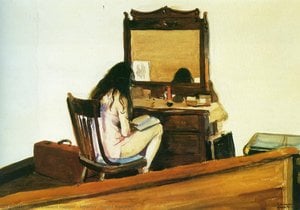
Sunlights in Cafeteria

Edward Hopper's 'Sunlight in a Cafeteria' (1958) captures urban solitude and quiet tension with masterful light & shadow. Explore American Realism’s evocative depiction of modern life – perfect for art lovers.

Esplora i dipinti realistici americani iconici di Edward Hopper (1882-1967). Conosciuto per le sue evocative scene urbane e rurali, l'uso magistrale della luce e i temi dell'isolamento e della vita moderna. Scopri 'House by the Railroad' e molto altro su WahooArt.

Riproduzione a olio fatta a mano

Olio su tela dipinto a mano nelle tue dimensioni e con la tua cornice, realizzato su ordinazione dai nostri artisti. (Passa a Stampe Passa a StampePassa all'immagine digitale Passa all'immagine digitale)

P118B $10
P118H $10
P118W $10
P438Z $10
P508JH $12
P508YH $12
P805H $10
P805Z $10
P919BZ $10
P919G $10
P919XJ $10
P959ZH $10
P968JZ $12
W106C $8
W218G $10
W218JH $8
W218Y $10
W307PJ $10
W316G $10
W316PJ $8
W316Y $10
W398PJ $8
W4111J $10
W500HY $15
W500JH $15
W692G $12
W849H $8
W940BG $15
W953PJ $8

Formato standard
su misura
CM
INCH

Scegli tra le nostre dimensioni predefinite, che rispettano le proporzioni originali dell'opera d'arte.

larghezza
altezza

È possibile inserire dimensioni personalizzate per adattare l'opera a una cornice o a uno spazio specifico. Se la dimensione selezionata non corrisponde alle proporzioni dell'immagine originale, provvederemo a ritagliare l'opera o a estendere il dipinto con elementi aggiuntivi dipinti a mano. Un mockup digitale ti sarà inviato per approvazione prima dell'inizio della produzione.
Si prega di notare che l'anteprima a schermo non riflette il ritaglio o l'estensione effettivi. Solo il mockup mostrerà accuratamente la composizione finale.
Sebbene siano disponibili dimensioni personalizzate, consigliamo di selezionare una dimensione dall'elenco predefinito per preservare le proporzioni originali.

Esempi di ciò che può essere modificato: sostituire il volto con una foto del cliente; aggiungere un animale domestico (ad esempio, sostituire un gatto con un cane); inserire un messaggio nascosto nello sfondo; cambiare il paesaggio o gli elementi dello sfondo.
Dopo l'ordine, il team di WahooArt.com contatterà il cliente via e-mail per le istruzioni e fornirà un'anteprima del mockup

Consegna in tutto il mondo () in 3/4 settimane anziché nelle normali 5 settimane. (10 Settembre). Nessun compromesso sulla qualità.

why_choose_icon
Spedizione espressa gratuita in tutto il mondo
why_choose_icon
Tela in lino di alta qualità
why_choose_icon
Assicurazione completa sulla spedizione
why_choose_icon
Garanzia di rimborso dei dazi doganali
why_choose_icon
Garanzia di fedeltà cromatica
why_choose_icon
Politica di reso entro 100 giorni (solo per difetti)
why_choose_icon
Garanzia di rimborso al 100%
why_choose_icon
Offerta per acquisti multipli

Prezzo totale

$ 272

reproduction

Sunlights in Cafeteria

Tecnica di riproduzione

Dimensioni riproduzione

-

Prezzo totale calcolato

$ 272

Informazioni rapide

  • Subject or theme: Cafeteria scene
  • Artistic style: Realist, Melancholy
  • Year: 1958
  • Influences: Hemingway
  • Medium: Oil on canvas
  • Movement: American Realism
  • Title: Sunlight in a Cafeteria

Quiz d'arte

Per ogni domanda è presente una sola risposta corretta.

Domanda 1:
What is the primary subject of Edward Hopper’s ‘Sunlight in a Cafeteria’?
Domanda 2:
The painting ‘Sunlight in a Cafeteria’ is primarily associated with which art movement?
Domanda 3:
What does the lighting in ‘Sunlight in a Cafeteria’ primarily suggest?
Domanda 4:
Edward Hopper was born in which city?
Domanda 5:
The painting ‘Sunlight in a Cafeteria’ was created in which year?

A Moment Frozen: The Poignant Realism of *Sunlight in a Cafeteria*

Edward Hopper's 1958 painting, *Sunlight in a Cafeteria*, isn’t merely a depiction of a diner scene; it’s a distilled essence of modern American loneliness. Captured with his signature mastery of light and shadow, the work transports us to a quiet corner of urban life, where unspoken anxieties and the subtle dance between strangers hang heavy in the air. The painting immediately draws the eye – not towards grand spectacle or dramatic action, but toward the carefully constructed stillness of the interior, bathed in the warm, diffused glow of afternoon sunlight streaming through the large window. Hopper’s deliberate choice to frame the scene through this glass creates a sense of voyeurism, inviting us into a private moment that we are both observers and, perhaps, subtly implicated within.

The composition itself is deceptively simple yet profoundly effective. A man and a woman occupy separate tables, their postures suggesting an awareness of each other’s presence without any overt interaction. The man, clad in a dark suit and holding a cigarette, gazes out the window – a gesture that simultaneously conveys contemplation and detachment. His back is turned to the woman, who sits quietly, her attention focused on a sandwich, her hands folded neatly in her lap. This arrangement immediately establishes a palpable tension—a feeling of potential connection thwarted by an unspoken barrier. Hopper’s use of color further amplifies this mood; the warm yellows and browns of the diner contrast sharply with the cooler tones of the street outside, reinforcing the sense of isolation within the brightly lit space.

The Language of Light and Shadow: Hopper's Technique

Hopper’s technical skill is paramount to the painting’s impact. He was a master of capturing the subtle nuances of light, using it not just to illuminate form but also to evoke mood and atmosphere. Notice how he renders the sunlight – not as a harsh, direct beam, but as a diffused glow that softens edges and casts long shadows. This technique creates a sense of depth and realism while simultaneously contributing to the painting’s melancholic tone. The meticulous detail with which Hopper depicts the diner's interior—the chrome accents, the checkered floor, the worn wood of the tables—adds to the feeling of authenticity and invites us to linger in this carefully constructed world.

Furthermore, Hopper’s use of perspective is particularly noteworthy. The slightly skewed angles of the furniture and the placement of the figures create a sense of unease and disorientation, mirroring the emotional state of the subjects themselves. He employed a technique known as “atmospheric perspective,” subtly blurring details in the distance to suggest depth and recession, further enhancing the painting’s realism and drawing the viewer into the scene.

Echoes of Isolation: Context and Symbolism

*Sunlight in a Cafeteria* is deeply rooted in Hopper's broader exploration of American loneliness and urban alienation. Born in 1882, Hopper witnessed significant social and cultural shifts during his lifetime – the rise of industrialization, urbanization, and the increasing sense of anonymity in modern life. His paintings often reflect these anxieties, portraying individuals adrift in vast cities, struggling to connect with one another. This painting is part of a larger body of work that examines the quiet desperation of the American experience.

The diner itself becomes a potent symbol—a temporary refuge from the outside world, yet also a space of isolation and detachment. It’s a place where strangers briefly encounter one another, but rarely forge lasting connections. The painting's title, *Sunlight in a Cafeteria*, is particularly evocative, suggesting both warmth and an underlying sense of melancholy—a reminder that even in the brightest light, loneliness can persist.

A Timeless Masterpiece: Reproduction and Beyond

WahooArt offers meticulously crafted hand-painted reproductions of *Sunlight in a Cafeteria*, allowing you to bring this iconic work into your home or office. Our artists replicate Hopper’s masterful use of light, shadow, and composition with exceptional detail, ensuring that the painting's emotional impact is fully preserved. Whether you are an art collector, an interior designer seeking to create a sophisticated atmosphere, or simply someone who appreciates the beauty of American realism, a WahooArt reproduction of *Sunlight in a Cafeteria* is a timeless addition to any collection. Explore our gallery today and discover the perfect way to experience this poignant masterpiece.


Biografia dell'artista

**primi anni di vita e influenze**

Edward Hopper, un illustre pittore e incisore realista americano, nacque il 22 luglio 1882 a Upper Nyack, New York. La sua famiglia, di origine prevalentemente olandese, gli offrì una crescita confortevole che permise di coltivare le sue inclinazioni artistiche fin da giovane. - **Ispirazioni:** L'opera di Hopper fu influenzata dalle opere di Ralph Waldo Emerson e dai maestri impressionisti francesi Édouard Manet ed Edgar Degas. - **Formazione iniziale:** Iniziò gli studi artistici con un corso per corrispondenza nel 1899, per poi trasferirsi alla New York School of Art and Design.

**Stile artistico e temi**

Edward Hopper's rappresentazioni spare e accuratamente calcolate riflettevano la sua visione personale della vita americana moderna. La sua opera può essere caratterizzata da: - **Scenari urbani e rurali:** Entrambi gli ambienti venivano raffigurati con un mix unico di realismo ed emozione profonda. - **Luce:** Una maestria nella luce, spesso usata per evocare sentimenti di isolamento o contemplazione. - **Figure:** Spesso senza volto o sullo sfondo, enfatizzando l'ambiente rispetto alle figure.

**Opere notevoli e il loro significato**

- House by the Railroad (Museum of Modern Art, New York, United States), un esempio della capacità di Hopper di evocare un senso di malinconia attraverso una composizione semplice ma potente. - Reclining Nude (50 x 35 cm, New Realism, Watercolour), che dimostra la sua versatilità nel catturare la figura umana.

**Eredità e influenza**

- **Influenza su artisti futuri:** Lo stile unico di Hopper ha influenzato numerosi artisti, tra cui Pierre Sanford Ross, noto per i suoi scenari urbani e rurali. - **Popolarità duratura:** Le sue opere continuano a catturare il pubblico con i loro temi senza tempo della solitudine e dell'essere umano.

**Esplora di più su WahooArt**

- [https://WahooArt.com/@/edward-hopper](Edward Hopper's artworks) - /it/art/show/art-8xyffg-it/Buy art inspired by the masters)
  • Esplora il mondo dell'arte con la vasta collezione di WahooArt.
  • Scopri come l'eredità di Edward Hopper continua a ispirare artisti e amanti dell'arte.

**Riferimenti**

- [https://WahooArt.com/@/edward-hopper](Wikipedia: Edward Hopper) - [https://en.wikipedia.org/wiki/edward_hopper](Wikipedia: Edward Hopper's biography)
Edward Hopper

Edward Hopper

1931 - 1967 , Stati Uniti d'America

Dati rapidi

  • Artisti Influenti:
    • Ralph Waldo Emerson
    • Édouard Manet
    • Edgar Degas
  • Artisti Influenzati: ['Pierre Sanford Ross']
  • Data Di Nascita: 22 luglio 1882
  • Luogo Di Nascita: Upper Nyack, Stati Uniti
  • Movimento Artistico: Realismo americano
  • Nazionalità: Americana
  • Nome Completo: Edward Hopper
  • Opere Notevoli:
    • House by the Railroad
    • Nighthawks
    • Gas
    • Chop Suey
    • Summertime
Esplora le opere d'arte organizzate per temi, stili e caratteristiche.