Anteprima in scala reale Prova in AR Ordina la riproduzione dipinta a mano Passa all'immagine digitale Condividi
Dettagli Aggiungi ai preferiti Scarica Articoli simili Radiografia Slideshow Statistiche

Hotel Window

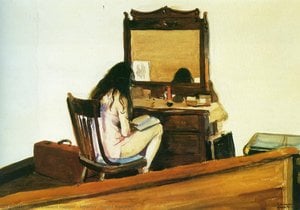
Edward Hopper’s "Hotel Window" captures a poignant moment of solitude and contemplation with its iconic black-and-white style, reflecting the artist's masterful depiction of modern isolation in the 1950s. Discover this timeless masterpiece and bring it into your collection.

Esplora i dipinti realistici americani iconici di Edward Hopper (1882-1967). Conosciuto per le sue evocative scene urbane e rurali, l'uso magistrale della luce e i temi dell'isolamento e della vita moderna. Scopri 'House by the Railroad' e molto altro su WahooArt.

Giclée / Stampe d'arte

Stampa giclée o su tela di qualità museale, con produzione rapida e diverse opzioni di finitura. ( Ordina la riproduzione dipinta a mano Passa all'immagine digitale)

P118B $10
P118H $10
P118W $10
P438Z $10
P508JH $12
P508YH $12
P805H $10
P805Z $10
P919BZ $10
P919G $10
P919XJ $10
P959ZH $10
P968JZ $12
W106C $8
W218G $10
W218JH $8
W218Y $10
W307PJ $10
W316G $10
W316PJ $8
W316Y $10
W398PJ $8
W4111J $10
W500HY $15
W500JH $15
W692G $12
W849H $8
W940BG $15
W953PJ $8

Standard
personalizzato
CM
INCH

Scegli tra le nostre dimensioni predefinite, che rispettano le proporzioni originali dell'opera d'arte.

larghezza
altezza

È possibile inserire dimensioni personalizzate per adattare l'opera a una cornice o a uno spazio specifico. Se la dimensione selezionata non corrisponde alle proporzioni dell'immagine originale, procederemo al ritaglio dell'opera o all'estensione dell'immagine con un bordo specchiato o a tinta unita. Un mockup digitale ti verrà inviato per approvazione prima dell'inizio della produzione.
Si prega di notare che l'anteprima a schermo non riflette il ritaglio o l'estensione effettivi. Solo il mockup mostrerà accuratamente la composizione finale.
Sebbene siano disponibili dimensioni personalizzate, si raccomanda di selezionare una dimensione dall'elenco predefinito per preservare le proporzioni originali.

Consegna in tutto il mondo () in 2 settimane invece delle normali 4/5 settimane. (17 Settembre)

why_choose_icon
Spedizione espressa gratuita in tutto il mondo
why_choose_icon
Tela in lino di alta qualità
why_choose_icon
Assicurazione completa sulla spedizione
why_choose_icon
Garanzia di rimborso dei dazi doganali
why_choose_icon
Garanzia di perfetta fedeltà cromatica
why_choose_icon
Politica di reso entro 100 giorni (solo per difetti di fabbricazione)
why_choose_icon
Garanzia di rimborso al 100%
why_choose_icon
Sconto per acquisti multipli

Prezzo totale

$ 68

reproduction

Hotel Window

Giclée / Stampe d'arte

Dimensioni della riproduzione

-

Prezzo totale

$ 68

Dettagli rapidi

  • Notable elements: Solitude, contemplation
  • Movement: Realism
  • Subject or theme: Urban isolation
  • Location: Private Collection
  • Year: 1956
  • Artistic style: American Realism
  • Influences:
    • Hopper
    • Chase

Edward Hopper's "Hotel Window": A Portrait of Modern Solitude

Edward Hopper’s “Hotel Window,” painted in 1956, is more than just a depiction of a room; it’s a profound meditation on the human condition – specifically, the quiet loneliness that can permeate modern life. This iconic black and white oil on canvas captures a moment of poignant stillness, inviting viewers to contemplate the woman seated before the window, lost in her own thoughts. Hopper, a master of capturing atmosphere and psychological depth, expertly utilizes light and shadow to create an intensely evocative scene, solidifying his place as one of America’s most significant 20th-century artists.

Subject Matter and Composition

The painting centers around a solitary woman in a hotel room. She occupies the foreground, positioned near a window with drawn curtains that partially obscure the view outside. The composition is meticulously balanced; the two couches – one directly behind her, the other further back – create a sense of spatial depth while simultaneously reinforcing her isolation. Hopper’s deliberate framing draws attention to her posture and expression, suggesting a deep introspection. The inclusion of a book in her hands subtly hints at intellectual pursuits or perhaps an attempt to distract herself from the silence.

Technique and Style: Hopper's Signature

Hopper’s distinctive style is immediately recognizable through his precise rendering of form and light. He employed a meticulous technique, building up layers of oil paint to achieve a remarkable level of detail in the textures of the furniture and the woman’s clothing. The stark contrast between light and shadow – a hallmark of Hopper's work – dramatically shapes the scene, emphasizing the room’s dimensions and creating an almost theatrical effect. His use of black and white further amplifies this dramatic impact, stripping away any potential distraction from color and focusing solely on form and mood. This approach aligns with the broader Realist movement, but Hopper infused it with a uniquely modern sensibility.

Symbolism and Historical Context

"Hotel Window" was created during a period of significant social change in America – the post-war era saw an increase in urban migration and a growing sense of alienation. Hopper’s work reflects this shift, portraying individuals adrift in anonymous spaces, grappling with questions of identity and purpose. The window itself is a potent symbol: it represents both a barrier between the viewer and the outside world and a portal to contemplation. The woman's posture – absorbed in her book, gazing out at an unseen vista – speaks to the universal human desire for connection and understanding, yet simultaneously highlights the difficulty of finding it in a rapidly changing society. Painted in 1956, this work exemplifies Hopper’s ongoing exploration of themes relevant to the anxieties and uncertainties of the mid-20th century.

Emotional Impact and Artistic Legacy

“Hotel Window” continues to resonate with viewers because of its ability to evoke a powerful sense of melancholy and quiet contemplation. It's a painting that invites us to confront our own feelings of isolation and to consider the complexities of human experience. Hopper’s masterful use of light, shadow, and composition creates an atmosphere of profound stillness, prompting reflection on themes of solitude, identity, and the search for meaning in a modern world. This piece remains a cornerstone of American art history, demonstrating Hopper's unparalleled ability to capture the essence of the human spirit.


Biografia dell'artista

**primi anni di vita e influenze**

Edward Hopper, un illustre pittore e incisore realista americano, nacque il 22 luglio 1882 a Upper Nyack, New York. La sua famiglia, di origine prevalentemente olandese, gli offrì una crescita confortevole che permise di coltivare le sue inclinazioni artistiche fin da giovane. - **Ispirazioni:** L'opera di Hopper fu influenzata dalle opere di Ralph Waldo Emerson e dai maestri impressionisti francesi Édouard Manet ed Edgar Degas. - **Formazione iniziale:** Iniziò gli studi artistici con un corso per corrispondenza nel 1899, per poi trasferirsi alla New York School of Art and Design.

**Stile artistico e temi**

Edward Hopper's rappresentazioni spare e accuratamente calcolate riflettevano la sua visione personale della vita americana moderna. La sua opera può essere caratterizzata da: - **Scenari urbani e rurali:** Entrambi gli ambienti venivano raffigurati con un mix unico di realismo ed emozione profonda. - **Luce:** Una maestria nella luce, spesso usata per evocare sentimenti di isolamento o contemplazione. - **Figure:** Spesso senza volto o sullo sfondo, enfatizzando l'ambiente rispetto alle figure.

**Opere notevoli e il loro significato**

- House by the Railroad (Museum of Modern Art, New York, United States), un esempio della capacità di Hopper di evocare un senso di malinconia attraverso una composizione semplice ma potente. - Reclining Nude (50 x 35 cm, New Realism, Watercolour), che dimostra la sua versatilità nel catturare la figura umana.

**Eredità e influenza**

- **Influenza su artisti futuri:** Lo stile unico di Hopper ha influenzato numerosi artisti, tra cui Pierre Sanford Ross, noto per i suoi scenari urbani e rurali. - **Popolarità duratura:** Le sue opere continuano a catturare il pubblico con i loro temi senza tempo della solitudine e dell'essere umano.

**Esplora di più su WahooArt**

- [https://WahooArt.com/@/edward-hopper](Edward Hopper's artworks) - /it/art/show/art-8xyffg-it/Buy art inspired by the masters)
  • Esplora il mondo dell'arte con la vasta collezione di WahooArt.
  • Scopri come l'eredità di Edward Hopper continua a ispirare artisti e amanti dell'arte.

**Riferimenti**

- [https://WahooArt.com/@/edward-hopper](Wikipedia: Edward Hopper) - [https://en.wikipedia.org/wiki/edward_hopper](Wikipedia: Edward Hopper's biography)
Edward Hopper

Edward Hopper

1931 - 1967 , Stati Uniti d'America

Informazioni rapide

  • Artisti Influenti:
    • Ralph Waldo Emerson
    • Édouard Manet
    • Edgar Degas
  • Artisti Influenzati: ['Pierre Sanford Ross']
  • Data Di Nascita: 22 luglio 1882
  • Luogo Di Nascita: Upper Nyack, Stati Uniti
  • Movimento Artistico: Realismo americano
  • Nazionalità: Americana
  • Nome Completo: Edward Hopper
  • Opere Notevoli:
    • House by the Railroad
    • Nighthawks
    • Gas
    • Chop Suey
    • Summertime
Esplora le opere d'arte organizzate per temi, stili e caratteristiche.