Anteprima in scala reale Prova in AR Ordina la riproduzione dipinta a mano Passa all'immagine digitale Condividi
Dettagli Guida Aggiungi ai preferiti Scarica Articoli simili Radiografia Slideshow Statistiche

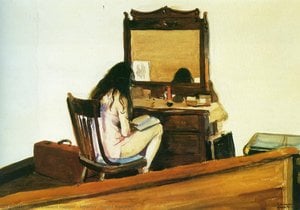
American Village

Edward Hopper's "American Village" (1912) captures a poignant moment of urban isolation and everyday life in early 20th-century America. Explore the quiet beauty & subtle melancholy through this iconic painting.

Esplora i dipinti realistici americani iconici di Edward Hopper (1882-1967). Conosciuto per le sue evocative scene urbane e rurali, l'uso magistrale della luce e i temi dell'isolamento e della vita moderna. Scopri 'House by the Railroad' e molto altro su WahooArt.

Giclée / Stampe d'arte

Stampa giclée o su tela di qualità museale, con produzione rapida e diverse opzioni di finitura. ( Ordina la riproduzione dipinta a mano Passa all'immagine digitale)

P118B $10
P118H $10
P118W $10
P438Z $10
P508JH $12
P508YH $12
P805H $10
P805Z $10
P919BZ $10
P919G $10
P919XJ $10
P959ZH $10
P968JZ $12
W106C $8
W218G $10
W218JH $8
W218Y $10
W307PJ $10
W316G $10
W316PJ $8
W316Y $10
W398PJ $8
W4111J $10
W500HY $15
W500JH $15
W692G $12
W849H $8
W940BG $15
W953PJ $8

Standard
personalizzato
CM
INCH

Scegli tra le nostre dimensioni predefinite, che rispettano le proporzioni originali dell'opera d'arte.

larghezza
altezza

È possibile inserire dimensioni personalizzate per adattare l'opera a una cornice o a uno spazio specifico. Se la dimensione selezionata non corrisponde alle proporzioni dell'immagine originale, procederemo al ritaglio dell'opera o all'estensione dell'immagine con un bordo specchiato o a tinta unita. Un mockup digitale ti verrà inviato per approvazione prima dell'inizio della produzione.
Si prega di notare che l'anteprima a schermo non riflette il ritaglio o l'estensione effettivi. Solo il mockup mostrerà accuratamente la composizione finale.
Sebbene siano disponibili dimensioni personalizzate, si raccomanda di selezionare una dimensione dall'elenco predefinito per preservare le proporzioni originali.

Consegna in tutto il mondo () in 2 settimane invece delle normali 4/5 settimane. (21 Settembre)

why_choose_icon
Spedizione espressa gratuita in tutto il mondo
why_choose_icon
Tela in lino di alta qualità
why_choose_icon
Assicurazione completa sulla spedizione
why_choose_icon
Garanzia di rimborso dei dazi doganali
why_choose_icon
Garanzia di perfetta fedeltà cromatica
why_choose_icon
Politica di reso entro 100 giorni (solo per difetti di fabbricazione)
why_choose_icon
Garanzia di rimborso al 100%
why_choose_icon
Sconto per acquisti multipli

Prezzo totale

$ 68

reproduction

American Village

Giclée / Stampe d'arte

Dimensioni della riproduzione

-

Prezzo totale

$ 68

Dettagli rapidi

  • Title: American Village
  • Notable elements: Street scene, awnings
  • Artist: Edward Hopper
  • Medium: Oil on canvas
  • Year: 1912
  • Movement: New Realism
  • Dimensions: 66 x 96 cm

Quiz d'arte

Per ogni domanda è presente una sola risposta corretta.

Domanda 1:
What is the primary subject matter depicted in Edward Hopper’s ‘American Village’?
Domanda 2:
The painting ‘American Village’ is primarily associated with which art movement?
Domanda 3:
What element in the painting suggests a coming storm?

The Silent Stage of Everyday Life

Edward Hopper's 1912 painting, “American Village,” isn’t a vibrant celebration of community; rather, it’s a carefully constructed tableau of quiet solitude and the subtle anxieties inherent in modern American life. Captured with his signature mastery of light and shadow, the scene unfolds from an elevated perspective – perhaps a passing automobile or overpass – offering a detached yet deeply observant view of a small town street. The composition immediately draws the eye down the gently curving road, leading us into a world that feels both familiar and subtly unsettling. It’s a snapshot of routine, but one imbued with a poignant sense of isolation.

Hopper's deliberate use of muted tones – predominantly grays, browns, and yellows – creates an atmosphere of subdued evening light. The buildings lining the street are rendered in realistic detail, yet they possess a slightly melancholic quality, their stone facades hinting at stories untold. The absence of bright colors contributes significantly to the painting’s overall mood; it's not a joyous depiction of small-town America, but one that quietly acknowledges its inherent loneliness.

Realism and the New Aesthetic

“American Village” firmly places Hopper within the context of the New Realism movement, which emerged in the early 20th century. Rejecting the romanticized depictions of rural life prevalent in earlier American art, New Realists sought to portray everyday subjects with unflinching honesty and a focus on the psychological realities of modern experience. Hopper’s work aligns perfectly with this ethos; he doesn't offer easy answers or sentimental narratives but instead presents a slice of life stripped bare of embellishment.

The painting’s technique is characterized by Hopper’s precise observation and his ability to capture the subtle nuances of light and shadow. He employs a limited palette and carefully considered brushstrokes, creating a sense of depth and atmosphere that draws the viewer into the scene. Note the strategic use of paint dabs – small, suggestive marks – to indicate movement and activity without resorting to detailed rendering. This technique subtly suggests the bustle of daily life while simultaneously reinforcing the painting’s overall feeling of detachment.

Symbolism in the Details

Beyond its straightforward depiction of a street scene, “American Village” is rich with symbolic elements. The parked cars and passing bus represent the encroachment of modernity onto rural America, hinting at the disruption of traditional ways of life. The solitary figures walking along the road – some alone, others in small groups – embody the theme of isolation that runs throughout Hopper’s oeuvre. Even the white frame house and yellow trolley car, rendered with a slight emphasis, feel almost like stage props within this carefully constructed scene.

The implied rainstorm overhead adds another layer of complexity to the painting's mood. It suggests an impending change, perhaps a shift in fortune or a disruption of the established order. It’s a subtle but powerful reminder that even in the most seemingly ordinary settings, there is always the potential for uncertainty and transformation.

A Legacy of Quiet Observation

“American Village” stands as a quintessential example of Edward Hopper's unique artistic vision. It’s a painting that invites contemplation, prompting us to consider the complexities of modern life and the enduring human need for connection – even in the face of isolation. Reproductions of this iconic work offer a remarkable opportunity to bring this evocative scene into your home or office, allowing you to experience firsthand the quiet power of Hopper's masterful observation and his profound understanding of the American psyche.


Biografia dell'artista

**primi anni di vita e influenze**

Edward Hopper, un illustre pittore e incisore realista americano, nacque il 22 luglio 1882 a Upper Nyack, New York. La sua famiglia, di origine prevalentemente olandese, gli offrì una crescita confortevole che permise di coltivare le sue inclinazioni artistiche fin da giovane. - **Ispirazioni:** L'opera di Hopper fu influenzata dalle opere di Ralph Waldo Emerson e dai maestri impressionisti francesi Édouard Manet ed Edgar Degas. - **Formazione iniziale:** Iniziò gli studi artistici con un corso per corrispondenza nel 1899, per poi trasferirsi alla New York School of Art and Design.

**Stile artistico e temi**

Edward Hopper's rappresentazioni spare e accuratamente calcolate riflettevano la sua visione personale della vita americana moderna. La sua opera può essere caratterizzata da: - **Scenari urbani e rurali:** Entrambi gli ambienti venivano raffigurati con un mix unico di realismo ed emozione profonda. - **Luce:** Una maestria nella luce, spesso usata per evocare sentimenti di isolamento o contemplazione. - **Figure:** Spesso senza volto o sullo sfondo, enfatizzando l'ambiente rispetto alle figure.

**Opere notevoli e il loro significato**

- House by the Railroad (Museum of Modern Art, New York, United States), un esempio della capacità di Hopper di evocare un senso di malinconia attraverso una composizione semplice ma potente. - Reclining Nude (50 x 35 cm, New Realism, Watercolour), che dimostra la sua versatilità nel catturare la figura umana.

**Eredità e influenza**

- **Influenza su artisti futuri:** Lo stile unico di Hopper ha influenzato numerosi artisti, tra cui Pierre Sanford Ross, noto per i suoi scenari urbani e rurali. - **Popolarità duratura:** Le sue opere continuano a catturare il pubblico con i loro temi senza tempo della solitudine e dell'essere umano.

**Esplora di più su WahooArt**

- [https://WahooArt.com/@/edward-hopper](Edward Hopper's artworks) - /it/art/show/art-8xyffg-it/Buy art inspired by the masters)
  • Esplora il mondo dell'arte con la vasta collezione di WahooArt.
  • Scopri come l'eredità di Edward Hopper continua a ispirare artisti e amanti dell'arte.

**Riferimenti**

- [https://WahooArt.com/@/edward-hopper](Wikipedia: Edward Hopper) - [https://en.wikipedia.org/wiki/edward_hopper](Wikipedia: Edward Hopper's biography)
Edward Hopper

Edward Hopper

1931 - 1967 , Stati Uniti d'America

Informazioni rapide

  • Artisti Influenti:
    • Ralph Waldo Emerson
    • Édouard Manet
    • Edgar Degas
  • Artisti Influenzati: ['Pierre Sanford Ross']
  • Data Di Nascita: 22 luglio 1882
  • Luogo Di Nascita: Upper Nyack, Stati Uniti
  • Movimento Artistico: Realismo americano
  • Nazionalità: Americana
  • Nome Completo: Edward Hopper
  • Opere Notevoli:
    • House by the Railroad
    • Nighthawks
    • Gas
    • Chop Suey
    • Summertime
Esplora le opere d'arte organizzate per temi, stili e caratteristiche.