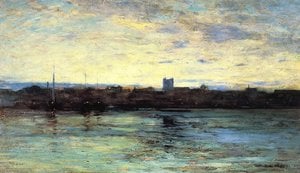
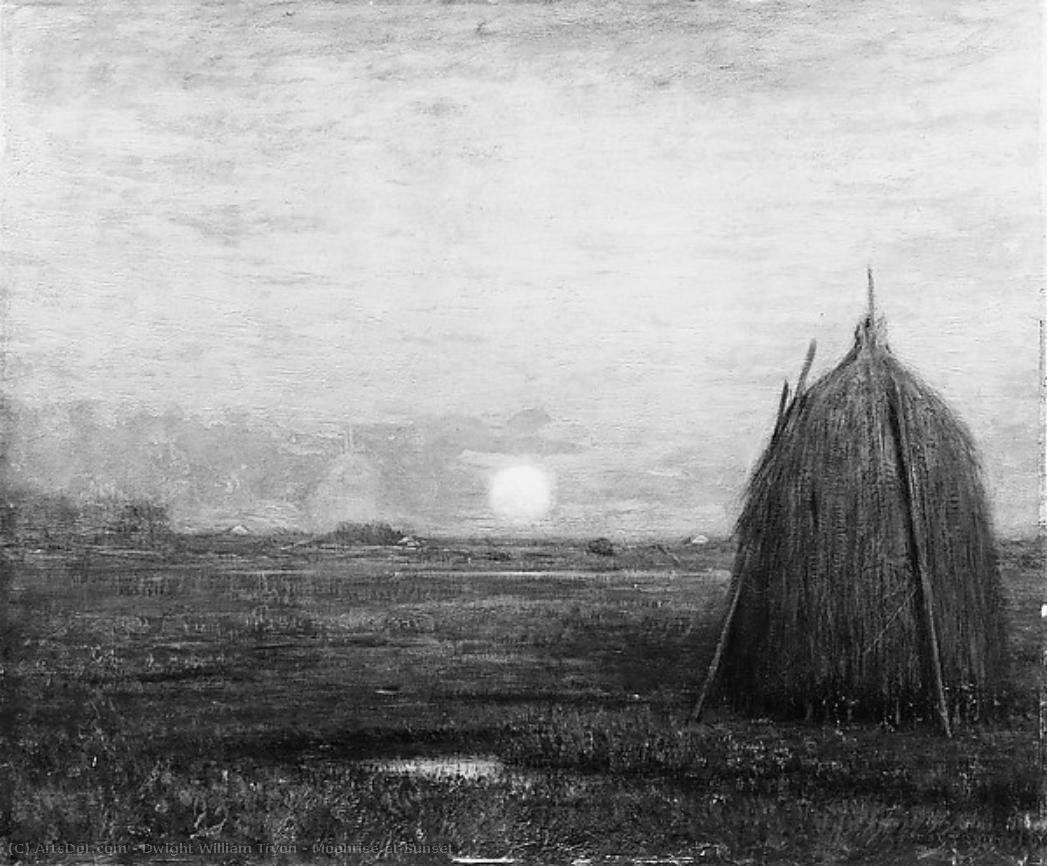
Moonrise at Sunset (1890) di Dwight William Tryon, riproduzione di un dipinto a olio realizzato a mano da un maestro d'arte
Anteprima in scala reale Anteprima in AR Passa alle stampe Passa all'immagine digitale Invia
Dettagli opera Guida Aggiungi ai preferiti Scarica Simili Radiografia Slideshow Domande e risposte Scarica presentazione Statistiche

Moonrise at Sunset Riproduzione di un dipinto a olio dipinto a mano

Dimensioni
61.0 x 59.0 cm

This ethereal grayscale landscape captures the profound tranquility of Dwight William Tryon’s Tonalist masterpiece Moonrise at Sunset, inviting you to explore and own this serene piece of art history.

Scopri "La spiaggia di Selsey Bill" di Whistler – un sereno paesaggio tonalista di colori tenui e bellezza atmosferica. Esplora questo iconico dipinto del XIX secolo online.

Riproduzione a olio fatta a mano

Olio su tela dipinto a mano nelle tue dimensioni e con la tua cornice, realizzato su ordinazione dai nostri artisti. ( Passa alle stampe Passa all'immagine digitale)

Formato standard
su misura
CM
INCH

Scegli tra le nostre dimensioni predefinite, che rispettano le proporzioni originali dell'opera d'arte.

larghezza
altezza

Inserisci la larghezza e l'altezza desiderate, per adattarle alla tua cornice o alla tua parete. Trattandosi di un'opera dipinta a mano, in caso di dimensioni con un formato differente, l'artista può estendere leggermente il dipinto oltre i bordi dell'immagine o ritagliare una piccola parte — la scelta spetta a te. Ti invieremo un mockup digitale da approvare prima che la realizzazione abbia inizio. L'immagine mostrata in questa pagina non rappresenta il risultato finale — solo il mockup lo fa.

Esempi di ciò che può essere modificato: sostituire il volto con una foto del cliente; aggiungere un animale domestico (ad esempio, sostituire un gatto con un cane); inserire un messaggio nascosto nello sfondo; cambiare il paesaggio o gli elementi dello sfondo.
Dopo l'ordine, il team di WahooArt.com contatterà il cliente via e-mail per ricevere le istruzioni e fornirà un'anteprima del mockup

Consegna in tutto il mondo () in 3/4 settimane anziché nelle normali 5 settimane. (8 Novembre). Nessun compromesso sulla qualità.

Spedizione espressa gratuita in tutto il mondo
Tela in lino di alta qualità
Assicurazione completa sulla spedizione
Garanzia di rimborso dei dazi doganali
Garanzia di fedeltà cromatica assoluta
Politica di reso entro 100 giorni (solo per difetti di fabbricazione)
Garanzia di rimborso al 100%
Offerta per acquisti multipli

Prezzo totale

€ 243

Moonrise at Sunset

Tecnica di riproduzione

Dimensioni riproduzione

-

Prezzo finale calcolato

€ 243

Informazioni rapide

  • Subject or theme: Rural landscape
  • Medium: Oil on wood
  • Title: Moonrise at Sunset
  • Influences: Whistler
  • Artistic style: Dreamlike quality
  • Artist: Dwight William Tryon

Quiz d'arte

Per ogni domanda è presente una sola risposta corretta.

Domanda 1:
What artistic movement is Dwight William Tryon’s ‘Moonrise at Sunset’ associated with?
Domanda 2:
The painting predominantly utilizes what color palette?
Domanda 3:
What technique is Tryon employing to achieve the hazy atmospheric perspective in ‘Moonrise at Sunset’?
Domanda 4:
What symbolic element is represented by the haystack in the foreground?
Domanda 5:
Where was Dwight William Tryon born?

Dwight William Tryon’s Moonrise at Sunset: A Symphony of Tranquility

The artwork “Moonrise at Sunset” by Dwight William Tryon stands as a testament to the Tonalist movement's enduring fascination with capturing atmospheric mood and subtle tonal variations. Executed in 1890, this oil on wood painting transports viewers to a serene rural landscape bathed in the ethereal glow of twilight—a scene meticulously rendered with delicate brushstrokes and muted colors that evoke profound peace and contemplation.
  • Subject Matter: Tryon’s composition centers around a sprawling field dominated by a prominent haystack, positioned on the right side of the canvas. A distant horizon is punctuated by a luminous moon or sun rising above hazy hills—a motif frequently explored in Tonalist art to symbolize transition and cyclical renewal.
  • Style & Technique: Tryon’s approach aligns perfectly with the tenets of Tonalism, prioritizing tonal harmony over vibrant color palettes. He achieves this effect through painstaking layering of thin glazes – a technique that allows for gradual blending and subtle gradations of tone—creating an immersive experience for the viewer. Soft brushwork contributes to the painting's dreamlike quality, blurring edges and diffusing light to mimic the hazy atmosphere characteristic of dusk.
  • Composition: The horizontal format emphasizes stability while guiding the eye across the expansive field towards the horizon line. The haystack serves as a vertical anchor, grounding the scene and providing textural contrast against the smooth expanse of grass. Careful attention to perspective reinforces this sense of spatial recession, drawing the viewer into the tranquil landscape.
  • Color Palette: Employing a predominantly grayscale palette—ranging from deep blacks to pale whites—Tryon eschews bold hues in favor of tonal nuances that convey emotion and atmosphere. This restrained color scheme amplifies the painting’s contemplative mood, focusing on form and texture rather than visual spectacle.
  • Historical Context: Born in Hartford, Connecticut, in 1849, Tryon's artistic vision was deeply influenced by Whistler’s pioneering explorations of tonalism—a movement that sought to elevate landscape painting beyond mere representation, aiming instead for an emotional response from the audience. “Moonrise at Sunset” embodies this spirit, reflecting a broader cultural preoccupation with capturing the sublime beauty of nature and conveying feelings of serenity and introspection during the late Victorian era.

Detailed Analysis: Texture & Lighting

Tryon’s masterful manipulation of texture is particularly noteworthy in the depiction of the haystack—rendered with visible brushstrokes that convey its rough, layered surface. These textured strokes aren't merely decorative; they actively contribute to the painting's overall impression of materiality and depth. Simultaneously, Tryon skillfully utilizes diffused lighting to illuminate the landscape, creating a gentle glow around the moon/sun and softening the contours of distant hills. This subtle illumination enhances the atmospheric effect, fostering a sense of tranquility and inviting contemplation.

Symbolism & Emotional Impact

Beyond its aesthetic qualities, “Moonrise at Sunset” carries symbolic weight—the haystack representing harvest or abundance, while the moonrise/sunset symbolizing transition and renewal. Tryon’s artwork transcends mere visual representation, prompting viewers to consider themes of cyclical change and the profound beauty inherent in quiet contemplation. It's a piece designed to evoke feelings of peace, solitude, and connection with the natural world—a timeless reminder of the power of art to inspire emotion and elevate our understanding of the sublime.

Further Research & Artistic Inspiration

For those interested in delving deeper into Tryon’s artistic legacy, The Metropolitan Museum of Art houses a remarkable collection of his works, offering invaluable insight into his stylistic evolution and thematic preoccupations. Examining “Moonrise at Sunset” alongside other Tonalist landscapes provides a compelling framework for appreciating the movement's enduring influence on American art history—a testament to Tryon’s ability to capture not just what he saw but also what he felt.

Domande e risposte

Per quale motivo lo stato del copyright di "Moonrise at Sunset" è questo?

"Moonrise at Sunset" di Dwight William Tryon è di di pubblico dominio - il copyright è scaduto. I termini del copyright si calcolano a partire dalla morte dell'artista, e Dwight William Tryon è deceduto nel 1925.

Che dimensione dovrei scegliere per la stampa di "Moonrise at Sunset" in base alla mia stanza?

Per un Living Room, si consiglia di stampare "Moonrise at Sunset" con una dimensione di Medium.

In che modo "Moonrise at Sunset" di Dwight William Tryon lega Tonalist Landscape al paese d'origine dell'artista?

"Moonrise at Sunset" connette il movimento Tonalist Landscape con Stati Uniti d'America attraverso il luogo di nascita del suo autore.

Biografia dell'artista

Primi Anni e Formazione

  • Dwight William Tryon nacque il 13 agosto 1849 a Hartford, nel Connecticut, da Anson Tryon e Delia O. Roberts.
  • La prematura morte del padre lo lasciò affidato alla cura della madre e dei nonni nella loro fattoria di East Hartford.
  • Sviluppò un interesse per l'arte in modo naturale, studiando manuali d'istruzione artistica acquistati in una libreria dove lavorava.
  • Tryon iniziò a disegnare la campagna circostante durante il suo tempo libero.
  • Vendette il suo primo dipinto nel 1870 ed espose opere localmente prima di ottenere riconoscimento all'Accademia Nazionale del Design nel 1873.

Sviluppo Artistico e Influenze

  • Nel 1876, studiò formalmente arte in Francia sotto Jacquesson de la Chevreuse e all'École des Beaux-Arts. Ricevette anche istruzioni da Charles-François Daubigny, Henri Harpignies e Jean Baptiste-Antoine Guillemet.
  • Inizialmente, il suo stile tendeva al Luminismo prima di spostarsi alla Scuola Barbizon, influenzato da artisti come George Inness e Alexander Helwig Wyant.
  • Nonostante l'esposizione all'Impressionismo in Francia, Tryon rimase fedele all'estetica della Scuola Barbizon.
  • Il suo lavoro fu significativamente influenzato da James McNeill Whistler, evidente nel suo stile tonalista.

Stile Maturo e Opere Notabili

  • Alla fine degli anni '80, Tryon sviluppò il suo stile iconico, caratterizzato da un gruppo o una fila spezzata di alberi in secondo piano, spesso con tonalità autunnali, che separano un cielo luminoso sopra e un primo piano di palude o pascolo.
  • Dipingeva frequentemente paesaggi marini usando pastelli per raffigurare ampie acque, cieli e spiagge in varie condizioni meteorologiche.
  • Opere notevoli includono *Salt-Marsh, December*, che vinse il primo premio all'Esposizione Centennale del Tennessee nel 1897.
  • I suoi dipinti furono esposti a livello nazionale, con una preferenza per la Pennsylvania Academy of Fine Arts e la Montross Gallery.

Patronato e Riconoscimenti

  • Charles Lang Freer divenne il suo più importante mecenate, acquisendo decine delle sue opere e collaborando al design degli interni della sua casa a Detroit. Molti di questi dipinti si trovano ora alla Freer Gallery of Art.
  • Tryon ricevette il Premio Carnegie all'Esposizione Carnegie nel 1908.
  • Fu membro di diverse prestigiose organizzazioni artistiche, tra cui la Society of American Artists, l'American Watercolor Society e il National Institute of Arts and Letters (ora l'American Academy of Arts and Letters).

Ultimi Anni ed Eredità

  • Nel 1887, costruì una casa estiva a South Dartmouth, Massachusetts, che divenne la sua abitazione.
  • Insegnò al Smith College dal 1886 al 1923, istituendo la Tryon Gallery of Art.
  • Dwight William Tryon morì il 1° luglio 1925 a causa del cancro.
  • La sua eredità risiede nel suo contributo al Tonalismo americano e nella sua capacità di catturare paesaggi atmosferici e marine con colori delicati e sentimento raffinato. Le sue opere sono conservate in importanti collezioni come il Smithsonian American Art Museum e la Freer Gallery of Art.
Dwight William Tryon

Dwight William Tryon

1849 - 1925 , Stati Uniti d'America

Dettagli rapidi

  • Artistic Movement Or Style: Tonalismo, Scuola Barbizon
  • Artists Who Influenced This Artist:
    • James McNeill Whistler
    • George Inness
    • Alexander Wyant
  • Date Of Birth: 13 agosto 1849
  • Date Of Death: 1 luglio 1925
  • Full Name: Dwight William Tryon
  • Nationality: Americano
  • Notable Artworks: ['Salt-Marsh, December']
  • Place Of Birth: Hartford, USA
Esplora le opere d'arte organizzate per temi, stili e caratteristiche.