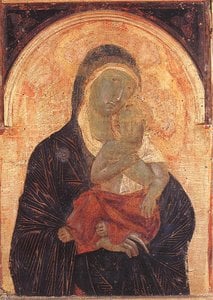
rottura dello stile italo-bizantino
Cimabue, nato intorno al 1240 e morto nel 1302, fu un influente pittore e progettista di mosaici italiano da Firenze, noto anche come
Cenni di Pepo. Pioniere nella rottura dello stile italo-bizantino, Cimabue è celebrato per aver introdotto proporzioni e sfumature più realistiche nel suo lavoro, segnando un significativo passaggio verso il realismo nell'arte medievale.
vita giovanile e formazione
Si sa poco della vita giovanile di Cimabue. Una fonte che racconta la sua carriera è Giorgio Vasari’s
Le Vite dei più eccellenti pittori, scultori e architetti, ma la sua accuratezza è incerta. Nacque a Firenze e morì a Pisa. Secondo lo storico dell'arte Pietro Tosca, il primo lavoro attribuito a Cimabue, la crocifissione nella chiesa di
San Domenico in Arezzo, risale intorno al 1270 e mostra un'uscita dallo stile bizantino.
opere notevoli
* Maestà (originariamente esposta nella chiesa di
San Francesco a Pisa, ora al Louvre): quest'opera stabilì uno stile seguito successivamente da numerosi artisti, tra cui
Duccio di Buoninsegna nella sua
Rucellai Madonna (erroneamente attribuita in passato a Cimabue). * Flagellazione (
Frick Collection): un dipinto di bottega che forse è attribuibile a un periodo leggermente successivo. * Mosaici per il
Battistero di Firenze (ora in gran parte restaurato): ora in cattivo stato a causa dell'ossidazione dei colori più brillanti.
influenza e eredità
L'arte di Cimabue ha svolto un ruolo cruciale nella transizione dal bizantino a rappresentazioni più realistiche nella pittura italiana, e la sua influenza su artisti successivi è stata profonda. Le sue opere, caratterizzate da un mix di tecniche tradizionali e innovative, segnano un importante capitolo nella storia dell'arte, colmando il divario tra gli stili medievale e rinascimentale.
Scopri il mondo dell'arte con WahooArt.com, dove puoi trovare una vasta collezione di opere d'arte, tra cui quelle di Cimabue e altri artisti rinomati.



 Anteprima in scala reale
 Acquista il dipinto realizzato a mano
 Invia
Invia Condividi
 Dettagli opera

 Scarica immagine
 Simili
 Radiografia
 Slideshow
 Stats
Stats

 Espandi i dettagli






































 L'opzione vetro è disponibile solo per dimensioni inferiori a 110 cm