Anteprima in scala reale Prova in AR Ordina la riproduzione dipinta a mano Passa all'immagine digitale Condividi
Dettagli Guida Aggiungi ai preferiti Scarica Articoli simili Radiografia Slideshow Statistiche

Swnage

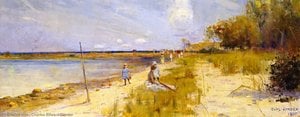
Charles Conder's 'Swnage' captures a vibrant beach scene with figures enjoying the coastal landscape. A stunning example of Heidelberg School art, showcasing warm hues and relaxed atmosphere.

Scopri Charles Edward Conder (1868-1909), figura chiave della Heidelberg School australiana! Ammira i suoi vibranti paesaggi, porti e scene balneari su WahooArt.

Giclée / Stampe d'arte

Stampa giclée o su tela di qualità museale, con produzione rapida e diverse opzioni di finitura. ( Ordina la riproduzione dipinta a mano Passa all'immagine digitale)

P118B $10
P118H $10
P118W $10
P438Z $10
P508JH $12
P508YH $12
P805H $10
P805Z $10
P919BZ $10
P919G $10
P919XJ $10
P959ZH $10
P968JZ $12
W106C $8
W218G $10
W218JH $8
W218Y $10
W307PJ $10
W316G $10
W316PJ $8
W316Y $10
W398PJ $8
W4111J $10
W500HY $15
W500JH $15
W692G $12
W849H $8
W940BG $15
W953PJ $8

Standard
personalizzato
CM
INCH

Scegli tra le nostre dimensioni predefinite, che rispettano le proporzioni originali dell'opera d'arte.

larghezza
altezza

È possibile inserire dimensioni personalizzate per adattare l'opera a una cornice o a uno spazio specifico. Se la dimensione selezionata non corrisponde alle proporzioni dell'immagine originale, procederemo al ritaglio dell'opera o all'estensione dell'immagine con un bordo specchiato o a tinta unita. Un mockup digitale ti verrà inviato per approvazione prima dell'inizio della produzione.
Si prega di notare che l'anteprima a schermo non riflette il ritaglio o l'estensione effettivi. Solo il mockup mostrerà accuratamente la composizione finale.
Sebbene siano disponibili dimensioni personalizzate, si raccomanda di selezionare una dimensione dall'elenco predefinito per preservare le proporzioni originali.

Consegna in tutto il mondo () in 2 settimane invece delle normali 4/5 settimane. (22 Settembre)

why_choose_icon
Spedizione espressa gratuita in tutto il mondo
why_choose_icon
Tela in lino di alta qualità
why_choose_icon
Assicurazione completa sulla spedizione
why_choose_icon
Garanzia di rimborso dei dazi doganali
why_choose_icon
Garanzia di perfetta fedeltà cromatica
why_choose_icon
Politica di reso entro 100 giorni (solo per difetti di fabbricazione)
why_choose_icon
Garanzia di rimborso al 100%
why_choose_icon
Sconto per acquisti multipli

Prezzo totale

$ 68

reproduction

Swnage

Giclée / Stampe d'arte

Dimensioni della riproduzione

-

Prezzo totale

$ 68

Dettagli rapidi

  • Notable elements: Beach scene, figures
  • Title: Swnage
  • Location: Tate Britain
  • Artist: Charles Conder
  • Medium: Oil on canvas
  • Subject or theme: Coastal landscape
  • Influences:
    • Roberts
    • Streeton

Quiz d'arte

Per ogni domanda è presente una sola risposta corretta.

Domanda 1:
What is the primary subject depicted in Charles Edward Conder’s ‘Swnage’?
Domanda 2:
In what artistic movement is Charles Edward Conder primarily associated?
Domanda 3:
Approximately when was ‘Swnage’ painted by Charles Edward Conder?
Domanda 4:
Which of the following best describes Charles Edward Conder’s artistic style?
Domanda 5:
What is the significance of the figures in ‘Swnage’?

Charles Edward Conder’s “Swnage”: A Coastal Symphony of Light and Leisure

“Swnage,” painted by Charles Edward Conder in approximately 1901, isn't merely a depiction of a beach scene; it’s an immersive experience of the Australian coastline captured with Impressionistic fervor. This captivating work, now housed within the Tate Britain collection, transports the viewer to a moment of serene leisure amidst the rugged beauty of South Wales – specifically, Swnage Bay. Conder, a pivotal figure in Australia's Heidelberg School movement, masterfully employed light and color to evoke not just a visual representation but also a palpable sense of atmosphere and emotion.

Conder’s artistic journey began in England, yet it was his relocation to Sydney in 1884 that truly ignited his creative spirit. He quickly abandoned surveying for the more immediate allure of landscape painting, finding inspiration in the vibrant hues and dramatic light of the Australian bush. “Swnage” reflects this newfound passion, showcasing a deliberate shift away from rigid realism towards a looser, more expressive style. The brushstrokes are visible, creating a textured surface that seems to shimmer with reflected sunlight. Notice how Conder doesn’t meticulously render every detail; instead, he focuses on capturing the essence of the scene – the play of light on water and sand, the suggestion of figures enjoying the day.

Impressionistic Techniques and Color Palette

The painting's strength lies in its masterful use of Impressionistic techniques. Conder’s approach mirrors that of his contemporaries like Monet and Renoir, prioritizing the fleeting effects of light and atmosphere over precise detail. He employed broken color – applying small dabs of paint side-by-side rather than blending them seamlessly – to create a vibrant, luminous quality. The dominant colors are warm ochres, yellows, and blues, reflecting the intense sunlight bathing the beach. These hues aren’t applied uniformly; Conder strategically uses darker tones in the shadows to heighten the sense of depth and volume, particularly in the foreground dunes. The subtle gradations of color create a dynamic visual experience, as if the scene is constantly shifting with the movement of light.

Furthermore, Conder’s use of atmospheric perspective—a technique where distant objects appear paler and less distinct—effectively conveys the vastness of the coastline. The figures in the painting are small and indistinct, emphasizing their insignificance against the grandeur of nature. This compositional choice invites the viewer to become part of the scene, sharing in the feeling of peaceful contemplation.

Symbolism and Context

“Swnage” is more than just a pretty beach scene; it’s imbued with symbolic meaning rooted in Conder's personal experiences and artistic philosophy. As an expatriate Englishman living in Australia, Conder often explored themes of displacement and the search for belonging. The painting can be interpreted as a yearning for a simpler life, a retreat from the complexities of urban existence. The figures on the beach represent leisure, friendship, and connection with nature – values that were particularly appealing to artists of the Heidelberg School.

Considering Conder’s background, it's also important to note the painting’s context within the broader artistic landscape. The Heidelberg School, which emerged in Melbourne during the late 19th century, challenged traditional academic art by embracing a more informal and subjective approach. Conder’s work exemplifies this shift, prioritizing personal observation and emotional expression over strict adherence to classical conventions. The influence of Impressionism is undeniable, but Conder infused it with his own unique Australian sensibility.

A Legacy of Light and Landscape

“Swnage” remains a powerful testament to Charles Edward Conder’s artistic vision. It's a painting that invites viewers to slow down, breathe deeply, and appreciate the beauty of the natural world. Reproductions of this evocative work capture not only its visual splendor but also the spirit of leisure and connection with nature that defined the Heidelberg School. Whether displayed in a contemporary home or a prestigious gallery, “Swnage” continues to resonate with audiences today, reminding us of the enduring power of art to transport us to another time and place.


Biografia dell'artista

vita iniziale e percorso artistico

Charles Edward Conder, pittore, litografo e designer di origine britannica, ha lasciato un segno indelebile nel mondo dell'arte. Nato a Tottenham, Middlesex, il 24 ottobre 1868, la giovinezza di Conder fu segnata dalla scomparsa di sua madre in India quando aveva appena quattro anni.

carriera artistica in australia

Nel 1884, all'età di 16 anni, Conder si trasferì a Sydney, in Australia, dove lavorò per suo zio come rilevatore di terreni. Tuttavia, presto scoprì che la sua vera passione risiedeva nel dipingere il paesaggio piuttosto che nella misurazione del terreno. Entro il 1886, era diventato artista per l'Illustrated Sydney News, al fianco di artisti illustri come Albert Henry Fullwood e Frank Mahony.

la scuola di heidelberg e opere significative

Il capolavoro di Conder, Departure of the Orient – Circular Quay (1888), ne dimostrò la ritrovata padronanza di forma e pennellata. Questa scena portuale, che ritrae il vivace porto di Sydney Cove, fu rapidamente acquistata dalla Art Gallery of New South Wales, rendendola il primo lavoro di Conder ad entrare in una collezione pubblica.
  • A Holiday at Mentone (1888), un dipinto pieno di vita che mostra uomini e donne rilassati sulla spiaggia, è un altro esempio notevole dell'opera di Conder.
  • L'associazione di Conder con G. P. Nerli, un pittore italiano itinerante, ne influenzò profondamente lo sviluppo come artista.
  • I suoi contributi alla 9 by 5 Impression Exhibition a Melbourne, insieme a Tom Roberts e Arthur Streeton, consolidarono la sua posizione all'interno del movimento della Heidelberg School.

eredità e anni successivi

Gli ultimi anni di Conder furono segnati da problemi di salute, inclusa la paralisi e un episodio di delirium tremens. Nonostante ciò, continuò a dipingere, lasciando dietro di sé l'eredità di una figura chiave della Heidelberg School. La sua arte fu accolta meglio in Inghilterra che a Parigi, con il ritratto dipinto da Henri de Toulouse-Lautrec nel 1892. Visualizza le opere di Conder presso la Art Gallery of New South Wales o esplora di più sulla Heidelberg School sulla pagina Charles Edward Conder di WahooArt.

conclusione

L'impatto di Charles Edward Conder sull'impressionismo australiano è innegabile. La sua eredità, segnata dai suoi dipinti affascinanti e dall'associazione con la Heidelberg School, continua a ispirare appassionati d'arte in tutto il mondo.

Charles Edward Conder

Charles Edward Conder

1868 - 1909 , Regno Unito

Informazioni rapide

  • Artistic Movement Or Style: Impressionismo australiano
  • Artists Who Influenced This Artist: ['G. P. Nerli']
  • Date Of Birth: 24 ottobre 1868
  • Date Of Death: 1909
  • Full Name: Charles Edward Conder
  • Nationality: Britannico
  • Notable Artworks:
    • Departure of the Orient
    • A Holiday at Mentone
  • Place Of Birth (City And Country): Tottenham, Regno Unito
Esplora le opere d'arte organizzate per temi, stili e caratteristiche.