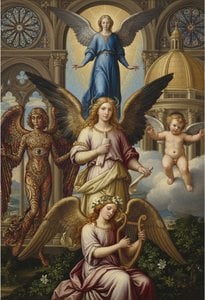
Angels Pity (1470) di Carlo Crivelli, riproduzione di un dipinto a olio realizzato a mano da un maestro d'arte
Anteprima in scala reale Anteprima in AR Passa alle stampe Passa all'immagine digitale Invia
Dettagli opera Guida Aggiungi ai preferiti Scarica Simili Radiografia Slideshow Domande e risposte Statistiche

Angels Pity Riproduzione di un dipinto a olio dipinto a mano

Dimensioni
72.0 x 55.0 cm

Discover Carlo Crivelli’s ‘Angels Pity’ (1470), a stunning Early Renaissance oil painting. Admire its devotional beauty, intricate details & serene composition – a timeless masterpiece.

Scopri Carlo Crivelli (1435-1495), pittore rinascimentale veneziano noto per il suo stile gotico tardivo, l'attenzione al dettaglio e opere devozionali come le Madonne. Esplora la sua arte!

Riproduzione a olio fatta a mano

Olio su tela dipinto a mano nelle tue dimensioni e con la tua cornice, realizzato su ordinazione dai nostri artisti. ( Passa alle stampe Passa all'immagine digitale)

Corner sample of the P118B picture frame: polistirene stampato, 5 cm wide and 3 cm thick
P118B €10
Corner sample of the P118H picture frame: polistirene stampato, 5 cm wide and 3 cm thick
P118H €10
Corner sample of the P118W picture frame: polistirene stampato, 5 cm wide and 3 cm thick
P118W €10
Corner sample of the P438Z picture frame: polistirene stampato, 5.5 cm wide and 3.5 cm thick
P438Z €10
Corner sample of the P508JH picture frame: polistirene stampato, 7 cm wide and 3.5 cm thick
P508JH €12
Corner sample of the P508YH picture frame: polistirene stampato, 7 cm wide and 3.5 cm thick
P508YH €12
Corner sample of the P805H picture frame: polistirene stampato, 5 cm wide and 3.5 cm thick
P805H €10
Corner sample of the P805Z picture frame: polistirene stampato, 5 cm wide and 3.5 cm thick
P805Z €10
Corner sample of the P919BZ picture frame: polistirene stampato, 7 cm wide and 3.5 cm thick
P919BZ €10
Corner sample of the P919G picture frame: polistirene stampato, 7 cm wide and 3.5 cm thick
P919G €10
Corner sample of the P919XJ picture frame: polistirene stampato, 7 cm wide and 3.5 cm thick
P919XJ €10
Corner sample of the P959ZH picture frame: polistirene stampato, 5 cm wide and 3 cm thick
P959ZH €10
Corner sample of the P968JZ picture frame: polistirene stampato, 6 cm wide and 4 cm thick
P968JZ €12
Corner sample of the W106C picture frame: legno massello, 5 cm wide and 3 cm thick
W106C €8
Corner sample of the W218G picture frame: legno massello, 5 cm wide and 3 cm thick
W218G €10
Corner sample of the W218JH picture frame: legno massello, 5 cm wide and 3 cm thick
W218JH €8
Corner sample of the W218Y picture frame: legno massello, 5 cm wide and 3 cm thick
W218Y €10
Corner sample of the W307PJ picture frame: legno massello, 6 cm wide and 3 cm thick
W307PJ €10
Corner sample of the W316G picture frame: legno massello, 6 cm wide and 3 cm thick
W316G €10
Corner sample of the W316PJ picture frame: legno massello, 6 cm wide and 3 cm thick
W316PJ €8
Corner sample of the W316Y picture frame: legno massello, 6 cm wide and 3 cm thick
W316Y €10
Corner sample of the W398PJ picture frame: legno massello, 5 cm wide and 3 cm thick
W398PJ €8
Corner sample of the W4111J picture frame: legno massello, 6.5 cm wide and 3.5 cm thick
W4111J €10
Corner sample of the W500HY picture frame: legno massello, 7 cm wide and 5 cm thick
W500HY €15
Corner sample of the W500JH picture frame: legno massello, 7 cm wide and 5 cm thick
W500JH €15
Corner sample of the W692G picture frame: legno massello, 8 cm wide and 4 cm thick
W692G €12
Corner sample of the W849H picture frame: legno massello, 5 cm wide and 3 cm thick
W849H €8
Corner sample of the W940BG picture frame: legno massello, 7.5 cm wide and 4.5 cm thick
W940BG €15
Corner sample of the W953PJ picture frame: legno massello, 6 cm wide and 3.5 cm thick
W953PJ €8

Formato standard
su misura
CM
INCH

Scegli tra le nostre dimensioni predefinite, che rispettano le proporzioni originali dell'opera d'arte.

larghezza
altezza

Inserisci la larghezza e l'altezza desiderate, per adattarle alla tua cornice o alla tua parete. Trattandosi di un'opera dipinta a mano, in caso di dimensioni con un formato differente, l'artista può estendere leggermente il dipinto oltre i bordi dell'immagine o ritagliare una piccola parte — la scelta spetta a te. Ti invieremo un mockup digitale da approvare prima che la realizzazione abbia inizio. L'immagine mostrata in questa pagina non rappresenta il risultato finale — solo il mockup lo fa.

Esempi di ciò che può essere modificato: sostituire il volto con una foto del cliente; aggiungere un animale domestico (ad esempio, sostituire un gatto con un cane); inserire un messaggio nascosto nello sfondo; cambiare il paesaggio o gli elementi dello sfondo.
Dopo l'ordine, il team di WahooArt.com contatterà il cliente via e-mail per ricevere le istruzioni e fornirà un'anteprima del mockup

Consegna in tutto il mondo () in 3/4 settimane anziché nelle normali 5 settimane. (3 Novembre). Nessun compromesso sulla qualità.

Spedizione espressa gratuita in tutto il mondo
Tela in lino di alta qualità
Assicurazione completa sulla spedizione
Garanzia di rimborso dei dazi doganali
Garanzia di fedeltà cromatica assoluta
Politica di reso entro 100 giorni (solo per difetti di fabbricazione)
Garanzia di rimborso al 100%
Offerta per acquisti multipli

Prezzo totale

€ 265

Angels Pity

Tecnica di riproduzione

Dimensioni riproduzione

-

Prezzo finale calcolato

€ 265

Informazioni rapide

  • Subject or theme: Jesus with children, angels, and piety
  • Medium: Oil on wood panel
  • Notable elements or techniques: Glazing, trompe l'oeil, linear quality
  • Movement: Early Renaissance
  • Artistic style: Late Gothic decorative sensibility

A Vision of Divine Compassion

In the quiet, hallowed atmosphere of the Early Renaissance, few works capture the intersection of human sorrow and divine grace as poignantly as Carlo Crivelli’s "Angels Pity." Painted in 1470, this masterpiece serves as a profound meditation on tenderness and spiritual devotion. The scene unfolds with an intimate warmth, presenting Jesus cradling two children within his arms—a gesture that transcends mere historical depiction to become a universal symbol of protection and innocence. Surrounded by a celestial assembly of angels and watchful figures, the composition draws the viewer into a sacred circle of empathy. Even the subtle presence of a solitary bird in the upper corner acts as a silent witness, lending an air of tranquility to a moment heavy with emotional significance.

The artistry of Crivelli is on full display through his masterful command of color and light. Utilizing soft, luminous hues and delicate brushstrokes, the artist creates a sense of palpable intimacy that makes the divine feel reachable. The painting is a triumph of the Early Renaissance style, where every detail is rendered with an almost obsessive realism. Crivelli’s technique involves the meticulous application of oil glazes on wood panel, building layers of color to achieve a radiant depth. This method allows light to appear as if it is emanating from within the figures themselves, highlighting the soft textures of skin and the intricate folds of drapery, thereby inviting the observer to linger on the subtle nuances of the composition.

Symbolism and the Language of Devotion

Beyond its visual splendor, "Angels Pity" is a rich tapestry of Christian iconography designed to provoke deep reflection. The arrangement of the figures within an arched niche creates a sense of sacred enclosure, separating the holy event from the mundane world. Every element serves a symbolic purpose: the tender way Jesus holds the children reflects the theological concept of divine mercy, while the surrounding angels represent the bridge between heaven and earth. Crivelli’s use of trompe l'oeil—a technique intended to trick the eye into perceiving three-dimensional reality—adds a layer of tactile presence to the work, making the spiritual themes feel grounded in a tangible, physical reality.

For the discerning collector or interior designer, this painting offers more than mere decoration; it provides an emotional anchor for any space. The somber yet serene mood makes it an ideal centerpiece for rooms dedicated to contemplation, study, or quiet luxury. Whether one is drawn to its historical significance as a product of the Venetian-influenced March of Ancona or moved by its profound expression of compassion, "Angels Pity" remains a timeless testament to the power of art to evoke the sublime. Owning a high-quality reproduction of this work allows for the preservation of this Renaissance spirit, bringing a sense of historical weight and aesthetic harmony into the modern home.

Domande e risposte

Posso vedere "Angels Pity" di Carlo Crivelli sulla mia parete prima dell'acquisto?

Puoi visualizzare "Angels Pity" di Carlo Crivelli sulla tua parete grazie alla pagina Anteprima in AR dell'opera, utilizzando la realtà aumentata su un dispositivo compatibile.

Come posso scoprire opere d'arte simili a "Angels Pity" di Carlo Crivelli?

Le opere simili a "Angels Pity" sono elencate nella pagina Opere simili dell'opera.

A quale periodo storico appartiene "Angels Pity" di Carlo Crivelli?

"Angels Pity" di Carlo Crivelli risale al periodo Renaissance, epoca che ne definisce il contesto storico.


Biografia dell'artista

La Vita e la Formazione di Carlo Crivelli

Carlo Crivelli, pittore rinascimentale italiano, nacque intorno al 1430-35 a Venezia. Proveniente da una famiglia di pittori, ricevette la sua formazione artistica sia a Venezia che a Padova. La sua prima formazione è attribuita a Jacobello del Fiore, attivo ancora nel 1436. Studiò anche presso la scuola dei Vivarini a Venezia.

Il Periodo Veneziano e le Prime Influenze

I primi anni di Crivelli furono trascorsi nel Veneto, dove assorbì influenze da Vivarini, Squarcione e Mantegna. Questi maestri contribuirono a plasmare il suo stile iniziale, ma fu la sua successiva permanenza nell'Ancona a definire la sua unicità artistica. Si nota una forte influenza gotica decorativa nei suoi primi lavori, sebbene già si intravedano elementi che anticipano l’avvento del Rinascimento.

L'Ancona e lo Sviluppo di uno Stile Personale

Nel 1458, Crivelli lasciò il Veneto e trascorse la maggior parte della sua carriera nel Marchio d'Ancona. Qui sviluppò un suo stile distintivo che si contrapponeva a quello del contemporaneo veneziano Giovanni Bellini. Il suo lavoro è caratterizzato da una sensibilità decorativa gotica tardiva, segnata da una qualità lineare, attenzione ai dettagli e l’uso di tecniche "trompe-l'oeil". Questa fase rappresenta il culmine della sua originalità artistica.

Opere Principali e Collaborazioni

* La pittura "Madonna e Bambino in trono" (106 x 55 cm, Museo di Belle Arti, Budapest, Ungheria) è un esempio emblematico del suo stile. * Crivelli collaborò con il fratello minore, Vittorio Crivelli, su diversi progetti artistici, dimostrando una forte coesione familiare nel campo dell'arte. * Pietro Alemanno, pittore immigrato dal Germania/Austria nel Marchio d’Ancona, fu allievo e collaboratore di Crivelli, beneficiando del suo insegnamento e contribuendo alla diffusione del suo stile.

Eredità e Significato Storico

Carlo Crivelli morì intorno al 1495. La sua eredità artistica risiede nella capacità di aver saputo coniugare elementi gotici con influenze rinascimentali, creando uno stile unico e inconfondibile. Sebbene non sia stato un innovatore radicale come altri artisti del suo tempo, la sua attenzione al dettaglio, l'uso magistrale delle tecniche decorative e la profonda spiritualità che permea le sue opere lo rendono una figura importante nella storia dell’arte italiana. Le sue opere sono oggi conservate in importanti musei e collezioni:
  • Pinacoteca di Brera a Milano, Italia, che espone diverse opere di Crivelli, tra cui la "Pietà" (128 x 241 cm).
  • Museo San Giovanni in Bragora a Venezia, Italia, che possiede una collezione di opere d'arte di vari periodi e stili, tra cui alcune attribuite a Crivelli.
L'eredità di Crivelli continua a ispirare appassionati d'arte e studiosi, con le sue opere che rimangono una testimonianza del potere duraturo della sensibilità gotica tardiva.
Carlo Crivelli

Carlo Crivelli

1435 - 1495 , Italia

Dettagli rapidi

  • Artisti Influenti:
    • Jacobello del Fiore
    • Vivarini
    • Squarcione
    • Mantegna
  • Collaboratori:
    • Vittorio Crivelli
    • Pietro Alemanno
  • Data Di Nascita: 1435
  • Luogo Di Nascita: Venezia, Italia
  • Movimento Artistico: Rinascimento, Gotico tardo
  • Nazionalità: Italiana
  • Nome Completo: Carlo Crivelli
  • Opere Notevoli: ['Madonna e Bambino in trono']
Esplora le opere d'arte organizzate per temi, stili e caratteristiche.