


 Acrylic On CanvasWallArtBaroque
 105.0 x 77.0 cm
 Museo dell'Ermitage
Acquista un'immagine digitale ad alta risoluzione e ottimizzata, di qualità nettamente superiore all'anteprima online.
Ogni file è meticolosamente preparato dai nostri specialisti interni attraverso l'uso di strumenti avanzati e un sapiente ritocco manuale. Garantiamo che ogni immagine presenti una chiarezza eccezionale, una precisione cromatica impeccabile e dettagli raffinati.
Il file finale viene consegnato via e-mail entro 72 ore, ottimizzato per un uso immediato in contesti professionali, editoriali e di stampa. Si tratta della stessa qualità affidata ai più prestigiosi studi di design, editori e gallerie d'arte.
Scarica un file ad alta risoluzione per uso personale, per la stampa e per progetti creativi. ( Acquista stampa Acquista il dipinto realizzato a mano)
Quando scegli WahooArt.com, non riceverai solo un'immagine: riceverai un'opera d'arte digitale professionalmente ottimizzata, realizzata con la massima precisione e accompagnata da una garanzia di soddisfazione. Ecco tutto ciò che include il tuo ordine, automaticamente:

Riceverai il file dell'immagine digitale ad alta risoluzione via email entro 72 ore dall'ordine, pronto per un uso immediato.

La tua opera d'arte viene ottimizzata professionalmente attraverso l'uso di strumenti avanzati di intelligenza artificiale e una revisione manuale, garantendo il massimo livello di dettaglio, nitidezza e accuratezza cromatica.

Hai eliminato o perso accidentalmente il tuo file? Non preoccuparti: te lo invieremo di nuovo in qualsiasi momento, gratuitamente.

Goditi la tua opera d'arte istantaneamente senza costi doganali, dazi o spese di spedizione: i download digitali sono sempre esenti da tasse.

Garantiamo che la tua immagine digitale rifletta i colori originali con la massima fedeltà, grazie all'uso di strumenti professionali e a una gestione accurata del colore.

Se non sei soddisfatto della tua immagine digitale, la revisioneremo o ti rimborseremo il 100% entro 100 giorni, senza domande.

Non sei soddisfatto? Ricevi un rimborso completo entro 100 giorni dal ricevimento del tuo file digitale, senza alcuna complicazione.

Acquista 3 immagini, risparmia il 10% - Acquista 5, risparmia il 15% - Acquista 10+, risparmia il 20%. Ideale per progetti creativi, gallerie e agenzie.
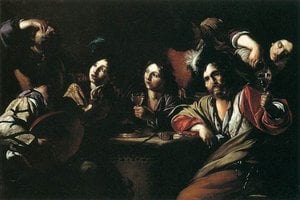
Bartolomeo Manfredi's "Lute Playing Young Man," painted circa 1603-1622, is not merely a portrait; it’s a carefully constructed tableau of contemplative beauty and subtle drama. Attributed to the artist during his formative years under the immense influence of Michelangelo Merisi da Caravaggio, this work embodies the Baroque fascination with light, shadow, and psychological depth – elements that would become hallmarks of Manfredi's distinctive style. The painting captures a young man, likely a gentleman of means, lost in the quiet intensity of playing a lute, an instrument associated with courtly entertainment and intellectual pursuits during the Renaissance.
The composition is remarkably restrained, yet profoundly effective. Manfredi masterfully employs chiaroscuro – Caravaggio’s signature technique – to sculpt the figure from darkness. The young man's face, partially obscured by shadow, draws immediate attention, his brow furrowed in concentration, suggesting a deep engagement with the music he produces. The stark contrast between light and dark isn’t merely an aesthetic choice; it serves to heighten the sense of mystery surrounding him, inviting the viewer to speculate on his thoughts and emotions. The muted palette – primarily browns, ochres, and subtle blues – further contributes to the painting's somber yet alluring atmosphere.
Manfredi’s connection to Caravaggio is a subject of ongoing scholarly debate, though compelling evidence strongly suggests a significant mentorship. Caravaggio’s revolutionary approach to depicting human emotion and his dramatic use of light profoundly impacted Manfredi's artistic development. While Manfredi never signed his works, the stylistic similarities—particularly in the rendering of flesh tones, the expressive faces, and the masterful manipulation of shadow – are undeniable. This painting exemplifies this influence; observe how Manfredi captures a similar sense of psychological realism and dramatic tension as seen in Caravaggio’s portraits, albeit with a slightly more refined and controlled execution.
The choice of subject matter itself reflects the artistic currents of the time. The lute, a symbol of refinement and intellectualism, was frequently depicted in Renaissance art, often associated with noblemen and scholars. However, Manfredi elevates this commonplace scene by imbuing it with an air of profound introspection. It’s not simply a depiction of musical performance; it's a portrait of a soul lost in thought, a moment suspended in time.
“Lute Playing Young Man” is executed in oil on canvas, a medium that allowed Manfredi to achieve the rich textures and subtle gradations of tone characteristic of Baroque painting. The artist’s meticulous attention to detail is evident in the rendering of the lute's intricate construction – the delicate curves of the body, the strings, and the wood grain are all rendered with remarkable precision. The fabric of the young man’s doublet is also meticulously depicted, showcasing Manfredi’s skill in capturing the textures and folds of clothing.
Interestingly, historical records indicate that the painting underwent a partial restoration in the 19th century, where the lower portion was trimmed away. This alteration has subtly altered the composition, but it doesn't detract from the overall impact of the work. The Hermitage Museum in St. Petersburg currently houses this captivating piece, offering visitors a rare opportunity to witness Manfredi’s masterful artistry firsthand.
Beyond its technical brilliance, “Lute Playing Young Man” resonates with profound symbolic meaning. The young man's solitary contemplation speaks to the complexities of human experience – the yearning for beauty, the pursuit of knowledge, and the quiet moments of introspection that define our lives. The lute itself can be interpreted as a metaphor for the soul, its music representing the inner world of emotions and thoughts.
The painting’s subdued lighting and melancholic atmosphere evoke a sense of wistful beauty, inviting viewers to contemplate the mysteries of human existence. It's a work that transcends mere representation, offering a glimpse into the heart and mind of its subject – a shadowed reverie captured with exquisite skill and profound insight by one of Italy’s most enigmatic Baroque masters.

1582 - 1622 , Italia

 Anteprima in scala reale
 Invia
Invia Condividi
 Dettagli opera

 Scarica immagine
 Simili
 Radiografia
 Slideshow
 Espandi i dettagli


