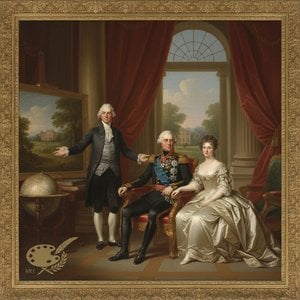
Pike, Tench and Chub (1772) by Arthur Devis, hand-painted oil painting reproduction by a master artist
Anteprima in scala reale Anteprima in AR Passa alle stampe Passa all'immagine digitale Invia
Dettagli opera Guida Aggiungi ai preferiti Scarica Simili Radiografia Slideshow Q&A Statistiche

Pike, Tench and Chub Hand-painted oil painting reproduction

Dimensioni
54.0 x 54.0 cm

Arthur William Devis’s ‘Pike, Tench and Chub,’ painted circa 1772, showcases a serene scene of aquatic life—three fish—executed in oil on canvas. This intimate portrait exemplifies Devis's signature style as a Georgian painter, particularly his focus on capturing the nuances of domestic interiors and familial relationships.

Arthur William Devis (1762-1822): Maestro della ritrattistica e della storia pittorica inglese. Scopri il suo stile delicato e le opere iconiche come il Ritratto di Nelson presso la British Library!

Riproduzione a olio fatta a mano

Olio su tela dipinto a mano nelle tue dimensioni e con la tua cornice, realizzato su ordinazione dai nostri artisti. ( Passa alle stampe Passa all'immagine digitale)

Corner sample of the P118B picture frame: polistirene stampato, 5 cm wide and 3 cm thick
P118B €10
Corner sample of the P118H picture frame: polistirene stampato, 5 cm wide and 3 cm thick
P118H €10
Corner sample of the P118W picture frame: polistirene stampato, 5 cm wide and 3 cm thick
P118W €10
Corner sample of the P438Z picture frame: polistirene stampato, 5.5 cm wide and 3.5 cm thick
P438Z €10
Corner sample of the P508JH picture frame: polistirene stampato, 7 cm wide and 3.5 cm thick
P508JH €12
Corner sample of the P508YH picture frame: polistirene stampato, 7 cm wide and 3.5 cm thick
P508YH €12
Corner sample of the P805H picture frame: polistirene stampato, 5 cm wide and 3.5 cm thick
P805H €10
Corner sample of the P805Z picture frame: polistirene stampato, 5 cm wide and 3.5 cm thick
P805Z €10
Corner sample of the P919BZ picture frame: polistirene stampato, 7 cm wide and 3.5 cm thick
P919BZ €10
Corner sample of the P919G picture frame: polistirene stampato, 7 cm wide and 3.5 cm thick
P919G €10
Corner sample of the P919XJ picture frame: polistirene stampato, 7 cm wide and 3.5 cm thick
P919XJ €10
Corner sample of the P959ZH picture frame: polistirene stampato, 5 cm wide and 3 cm thick
P959ZH €10
Corner sample of the P968JZ picture frame: polistirene stampato, 6 cm wide and 4 cm thick
P968JZ €12
Corner sample of the W106C picture frame: legno massello, 5 cm wide and 3 cm thick
W106C €8
Corner sample of the W218G picture frame: legno massello, 5 cm wide and 3 cm thick
W218G €10
Corner sample of the W218JH picture frame: legno massello, 5 cm wide and 3 cm thick
W218JH €8
Corner sample of the W218Y picture frame: legno massello, 5 cm wide and 3 cm thick
W218Y €10
Corner sample of the W307PJ picture frame: legno massello, 6 cm wide and 3 cm thick
W307PJ €10
Corner sample of the W316G picture frame: legno massello, 6 cm wide and 3 cm thick
W316G €10
Corner sample of the W316PJ picture frame: legno massello, 6 cm wide and 3 cm thick
W316PJ €8
Corner sample of the W316Y picture frame: legno massello, 6 cm wide and 3 cm thick
W316Y €10
Corner sample of the W398PJ picture frame: legno massello, 5 cm wide and 3 cm thick
W398PJ €8
Corner sample of the W4111J picture frame: legno massello, 6.5 cm wide and 3.5 cm thick
W4111J €10
Corner sample of the W500HY picture frame: legno massello, 7 cm wide and 5 cm thick
W500HY €15
Corner sample of the W500JH picture frame: legno massello, 7 cm wide and 5 cm thick
W500JH €15
Corner sample of the W692G picture frame: legno massello, 8 cm wide and 4 cm thick
W692G €12
Corner sample of the W849H picture frame: legno massello, 5 cm wide and 3 cm thick
W849H €8
Corner sample of the W940BG picture frame: legno massello, 7.5 cm wide and 4.5 cm thick
W940BG €15
Corner sample of the W953PJ picture frame: legno massello, 6 cm wide and 3.5 cm thick
W953PJ €8

Formato standard
su misura
CM
INCH

Scegli tra le nostre dimensioni predefinite, che rispettano le proporzioni originali dell'opera d'arte.

larghezza
altezza

Inserisci la larghezza e l'altezza desiderate, per adattarle alla tua cornice o alla tua parete. Trattandosi di un'opera dipinta a mano, in caso di dimensioni con un formato differente, l'artista può estendere leggermente il dipinto oltre i bordi dell'immagine o ritagliare una piccola parte — la scelta spetta a te. Ti invieremo un mockup digitale da approvare prima che la realizzazione abbia inizio. L'immagine mostrata in questa pagina non rappresenta il risultato finale — solo il mockup lo fa.

Esempi di ciò che può essere modificato: sostituire il volto con una foto del cliente; aggiungere un animale domestico (ad esempio, sostituire un gatto con un cane); inserire un messaggio nascosto nello sfondo; cambiare il paesaggio o gli elementi dello sfondo.
Dopo l'ordine, il team di WahooArt.com contatterà il cliente via e-mail per ricevere le istruzioni e fornirà un'anteprima del mockup

Consegna in tutto il mondo () in 3/4 settimane anziché nelle normali 5 settimane. (31 Ottobre). Nessun compromesso sulla qualità.

Spedizione espressa gratuita in tutto il mondo
Tela in lino di alta qualità
Assicurazione completa sulla spedizione
Garanzia di rimborso dei dazi doganali
Garanzia di fedeltà cromatica assoluta
Politica di reso entro 100 giorni (solo per difetti di fabbricazione)
Garanzia di rimborso al 100%
Offerta per acquisti multipli

Prezzo totale

€ 242

Pike, Tench and Chub

Tecnica di riproduzione

Dimensioni riproduzione

-

Prezzo finale calcolato

€ 242

Informazioni rapide

  • Artist: Arthur William Devis
  • Artistic style: Realistic
  • Medium: Oil on canvas
  • Year: 1772
  • Subject or theme: Fishing Scene
  • Title: Pike, Tench and Chub

Quiz d'arte

Per ogni domanda è presente una sola risposta corretta.

Domanda 1:
What is the primary subject matter depicted in ‘Pike, Tench and Chub’?
Domanda 2:
When was this painting created?
Domanda 3:
Who is the artist responsible for creating ‘Pike, Tench and Chub’?
Domanda 4:
What artistic style is characteristic of Arthur William Devis's work?
Domanda 5:
Where can you find this artwork currently displayed?

Arthur William Devis’s “Pike, Tench and Chub”: A Window Into Georgian Portraiture and Naval Sentiment

Arthur William Devis (1762–1822) stands as a pivotal figure in the landscape of Georgian portraiture, recognized primarily for his masterful execution of ‘conversation pieces,’ intimate depictions that captured not merely likeness but also social milieu. While overshadowed by later artistic trends—particularly Romanticism’s emphasis on dramatic emotion and sublime landscapes—Devis's work retains an enduring appeal due to its quiet elegance and meticulous attention to detail, offering a valuable glimpse into the sensibilities of his era.

Born in London in 1762, Devis descended from a lineage dedicated to artistic pursuits. Following closely in the footsteps of his elder brother Thomas Anthony Devis—also a painter—he embarked on an apprenticeship under the tutelage of Nicolas Antoine Jegouët, a Flemish topographical artist who instilled in him a foundational understanding of perspective and compositional balance. This formative experience decisively shaped Devis’s artistic trajectory, steering him away from grand narratives toward the nuanced portrayal of individuals within domestic settings.

“Pike, Tench and Chub,” painted circa 1772, exemplifies Devis's signature style—characterized by a restrained palette dominated by muted browns, creams, and ochres. The canvas showcases three fish specimens arranged on a richly textured surface, meticulously rendered with oil paint using glazing techniques that achieved remarkable luminosity and depth. These subtle tonal variations contribute to the painting’s overall atmosphere of serene contemplation.

Beyond its technical prowess, “Pike, Tench and Chub” resonates deeply with the intellectual currents of the Enlightenment. The inclusion of fish—particularly pike, tench, and chub—was a deliberate symbolic gesture reflecting the burgeoning interest in natural history and scientific observation prevalent during Devis’s lifetime. These aquatic creatures represented not merely beauty but also resilience and adaptability – qualities valued by thinkers grappling with questions of morality and human understanding.

Furthermore, the painting's placement within Kedleston Hall—a stately mansion owned by William Cavendish, 7th Duke of Devonshire—underscores its significance as a product of aristocratic patronage. The Duke’s fascination with natural history fueled his commissioning of Devis, demonstrating the role of wealthy patrons in fostering artistic innovation and disseminating knowledge.

“Pike, Tench and Chub” remains a testament to Devis's ability to distill complex ideas into visually arresting compositions. Its understated beauty—coupled with its intellectual underpinning—continues to captivate viewers today, cementing Devis’s place as one of the most accomplished portraitists of his generation.

Domande e risposte

"Pike, Tench and Chub" è rimasta nel paese d'origine dell'artista?

Sì - l'opera è conservata nel paese d'origine dell'artista. Arthur Devis è nato/a in Regno Unito, e l'originale "Pike, Tench and Chub" è conservato in un museo in Regno Unito.

Posso esaminare "Pike, Tench and Chub" più nel dettaglio?

"Pike, Tench and Chub" può essere esaminata strato dopo strato nella pagina Raggi X dell'opera, un visualizzatore ispirato al banco luminoso di un restauratore che offre undici letture ottiche dell'immagine.

Quanto è celebre "Pike, Tench and Chub" all'interno di Georgian Portraiture?

"Pike, Tench and Chub" di Arthur Devis è classificata come Recognized e appartiene al movimento Georgian Portraiture.


Biografia dell'artista

Arthur Devis (1762–1822): The Gentle Painter of Conversation Pieces

Arthur William Devis (19 February 1762 – 25 July 1787) was an English painter whose father, Anthony, was progenitor of what became a family dynasty of painters and writers. The place of Arthur Devis in art history is generally as painter of the type of portrait now called a conversation piece—a genre that flourished in Britain during the mid-eighteenth century. Unlike the grand historical canvases championed by artists like Joshua Reynolds or Johann Zoffany, Devis’s paintings focused on intimate scenes depicting individuals engaged in quiet contemplation within domestic interiors or landscapes. This stylistic choice distinguished him from his contemporaries and contributed to his relative obscurity after his death until a revival of interest in the conversation piece occurred in the twentieth century.
  • Early Life and Training: Arthur Devis was born in Preston, Lancashire, the eldest son of Anthony Devis, carpenter and town councillor, who ultimately became a freeman of the town and a member of the town council. His father instilled in him an appreciation for artistic craftsmanship and introduced him to Peter Tillemans, a Flemish painter whose studio in London served as his formative environment. Tillemans’s influence shaped Devis's technique and fostered his fascination with Italianate landscapes—a stylistic trend that would define much of his oeuvre.
  • The Royal Academy Years: Devis enrolled at the Royal Academy Schools in 1774, where he honed his skills alongside fellow artists like Thomas Gainsborough and George Romney. His membership at the Academy provided him with access to influential patrons and fostered connections within London’s artistic circles. He exhibited regularly at the Academy from 1779 until his death in 1787, showcasing a prolific output of portraits and landscapes.
  • Conversation Piece Technique: Devis perfected the conversation piece style—characterized by carefully staged scenes featuring figures posed in relaxed postures amidst richly decorated interiors or tranquil outdoor settings. He skillfully employed layered glazes and meticulous brushwork to achieve a luminous finish that captured subtle nuances of emotion and atmosphere. His canvases often depicted familial gatherings, conveying an idealized vision of domestic life.
  • Notable Works: Among Devis’s most celebrated paintings are ‘Hoghton Tower from Duxon Hill,’ Lancashire (1735), a breathtaking panoramic view that exemplifies the Hudson River School aesthetic; portraits of Sir William Jones and King George III, demonstrating his ability to capture regal dignity and composure; and numerous depictions of admirals and generals—subjects reflecting Devis’s involvement in the naval world.
  • Legacy: Although Devis remained largely unrecognized during his lifetime, his work has experienced a resurgence of appreciation in recent decades. Scholars recognize him as a pivotal figure in establishing the conversation piece genre and celebrate his contribution to British art history. His paintings continue to inspire admiration for their delicate beauty and psychological insight—testaments to Devis’s artistic vision and enduring legacy.

Influences and Artistic Style

Devis's artistic style was profoundly shaped by the artistic currents of his time, particularly the influence of Flemish masters like Peter Tillemans. Like many artists of his generation, Devis studied Dutch landscape painters—such as Jacob Ruysdael and Rembrandt van Rijn—to master techniques of tonal painting and atmospheric perspective. These influences informed his approach to depicting landscapes, resulting in compositions characterized by luminous colors and subtle gradations of light and shadow. Furthermore, Devis’s meticulous brushwork and layering of glazes—a hallmark of Baroque art—contributed to the textural richness and visual depth of his canvases.

Family Connections and Artistic Dynasty

Arthur Devis belonged to a family renowned for its artistic talent. His father, Anthony Devis, was himself a painter and a respected figure in Preston’s civic life—a role that instilled in Arthur a deep appreciation for craftsmanship and artistic excellence. Thomas Anthony Devis, Arthur’s brother, followed in his father's footsteps as a painter, establishing a family tradition of artistic creativity. Ellin Devis, Arthur’s sister-in-law, was a teacher and writer who nurtured the intellectual curiosity of her children—including Arthur William Devis himself. This familial network fostered an environment conducive to artistic development and ensured that Devis's legacy would endure through subsequent generations.

Reception and Rediscovery

During his lifetime, Arthur Devis enjoyed modest recognition within London’s artistic circles—primarily due to his membership at the Royal Academy. However, his work remained largely forgotten until the 1930s when scholars began to reassess its significance and appreciate its stylistic innovations. The rediscovery of Devis's paintings sparked renewed interest in the conversation piece genre and cemented his place as a pivotal figure in British art history—a testament to the enduring power of artistic beauty and the importance of historical scholarship.
Arthur Devis

Arthur Devis

1712 - 1787 , Regno Unito

Dettagli rapidi

  • Artistic Movement Or Style: Conversazione piece
  • Artists Or Movements Influenced By This Artist: ['Joshua Reynolds']
  • Artists Who Influenced This Artist: ['Peter Tillemans']
  • Date Of Birth: Londra, Regno Unito (1712)
  • Date Of Death: 1787
  • Full Name: Arthur William Devis
  • Nationality: Inglese
  • Notable Artworks:
    • Nelson Portraits
    • Hoghton Tower
  • Place Of Birth: Preston, Lancashire
Esplora le opere d'arte organizzate per temi, stili e caratteristiche.