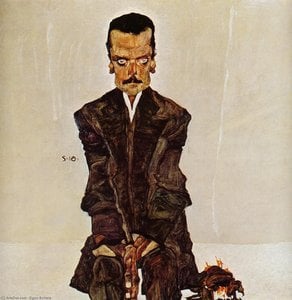
Red Lenin: A Bold Statement Against Celebrity Culture
Andy Warhol’s
Red Lenin stands as a cornerstone of Pop Art, encapsulating the movement's rebellious spirit and its fascination with confronting cultural icons. Created in 1987, shortly before Warhol’s untimely death, this silkscreen print transcends mere visual representation—it’s a deliberate provocation aimed at dissecting the pervasive influence of celebrity on artistic expression and societal perception. Warhol himself recognized the importance of elevating everyday images into art, challenging the elitist conventions of traditional painting and establishing Pop Art as a democratic force within the art world.
The artwork's genesis lies in Warhol’s meticulous observation of photographic documentation—specifically, a portrait taken by Philipp Schönborn of Vladimir Lenin during his lifetime. Rather than attempting to capture Lenin’s likeness with painstaking detail, Warhol opted for a simplified aesthetic, prioritizing bold color and graphic clarity over nuanced representation. This decision reflects the broader Pop Art ethos: embracing mass media imagery and rejecting academic seriousness in favor of accessibility and immediacy.
- Color Palette: Dominantly crimson red against stark white creates a striking visual contrast, mirroring the revolutionary fervor of Lenin’s era while simultaneously highlighting Warhol's masterful use of color theory.
- Composition: Warhol employs minimal lines to delineate Lenin’s figure—a deliberate strategy that emphasizes his iconic status and diminishes any sense of individuality.
- Technique: Warhol utilized the silkscreen printing process, a technique popularized by Roy Fox Lichtenstein and embraced throughout Pop Art, allowing for rapid reproduction and disseminating images widely across the public sphere.
Exploring the Context of Pop Art
Pop Art emerged in the mid-1950s as a reaction to Abstract Expressionism’s dominance on the art scene—a movement that championed emotional intensity and subjective experience. Artists like Warhol, Lichtenstein, and Jasper Johns sought to dismantle the perceived hierarchy between “high” art (museum masterpieces) and “low” culture (advertising billboards, comic books)—blurring these boundaries and engaging with popular culture in unprecedented ways. This artistic revolt was fueled by anxieties surrounding consumerism, mass production, and the homogenization of cultural values during the Cold War era.
Warhol’s fascination with Lenin stemmed from his belief that political figures could serve as potent symbols—capable of conveying complex ideas and emotions through simplified imagery. He famously declared, “I’ve never met a person I couldn’t call a beauty,” reflecting his conviction that even seemingly austere subjects could be transformed into captivating visual narratives.
Symbolism and Emotional Resonance
The bold red hue—a color historically associated with revolution and communism—immediately establishes the artwork's thematic core. Warhol deliberately avoids embellishment, presenting Lenin’s portrait in a starkly minimalist format that underscores his enduring influence as a political leader. The absence of shading or textural detail reinforces this sense of detachment, prompting viewers to contemplate the figure’s significance beyond mere visual appearance.
Warhol's Red Lenin continues to resonate with audiences today—serving as a reminder of Pop Art’s audacious challenge to artistic conventions and its enduring engagement with cultural narratives. Its presence in institutions like The Arnot Art Museum exemplifies Warhol’s lasting legacy within the art world, demonstrating his ability to elevate commonplace images into timeless symbols of artistic innovation.
Further Exploration
To delve deeper into Andy Warhol's oeuvre and explore similar stylistic approaches, consider visiting The Art Media Oil On Canvas. This resource illuminates the diverse techniques employed by artists to achieve expressive effects through oil paints—providing valuable insight into Warhol’s artistic process.
For a comprehensive understanding of Warhol's impact on contemporary art and culture, explore WahooArt—where you can discover additional artworks by Warhol and gain inspiration for your own artistic endeavors.
Domande e risposte
"Red Lenin" di Andy Warhol è di pubblico dominio?
"Red Lenin" di Andy Warhol è ancora protetta dal diritto d'autore. Questo stato determina le modalità con cui l'immagine dell'opera può essere riprodotta.
"Red Lenin" è disponibile come stampa d'arte?
È possibile ordinare una stampa di "Red Lenin" di Andy Warhol direttamente su questa pagina: una stampa fine art su tela di cotone o carta canvas d'archivio.
A quale emozione è associata "Red Lenin"?
"Red Lenin" è associata a una sensazione Drammatico. Il tono emotivo descrive l'impressione che l'opera trasmette.
A quale artista è attribuito "Red Lenin"?
L'artista che ha creato "Red Lenin" è Andy Warhol. L'opera è catalogata sotto il nome di Andy Warhol.
Esiste una guida per "Red Lenin" di Andy Warhol?
La pagina Schede didattiche di "Red Lenin" di Andy Warhol offre una scheda informativa stampabile in due fogli: l'opera d'arte con la sua tabella identificativa, una linea temporale decennale che la colloca nel periodo di vita dell'artista, altre opere dello stesso autore, la tavolozza dei colori misurata e citazioni pronte per essere copiate in quattro stili diversi.
Dove posso acquistare una riproduzione dipinta a mano di "Red Lenin" di Andy Warhol?
Le copie dipinte a mano di "Red Lenin" di Andy Warhol sono in vendita su questo sito: una riproduzione a olio dipinta a mano su tela di lino, ordinabili tramite questa pagina.
Dove e per quale scopo è consigliata "Red Lenin"?
"Red Lenin" di Andy Warhol è consigliato per Accento cromatico, idealmente in un Zona giorno. L'uso e lo spazio aiutano a individuare l'ambiente ideale per una riproduzione.



 Anteprima in scala reale
 Passa alle stampe
 Condividi
 Condividi
 Dettagli
 Guida stampabile

 Scarica
 Articoli simili
 Radiografia
 Slideshow
 Statistiche

 Leggi tutto






































 L'opzione vetro è disponibile solo per dimensioni inferiori a 110 cm