Biografia dell'artista
Alejandro Puente: A Pioneer of Geometric Abstraction
Alejandro Puente (La Plata, Argentina 1933 – Buenos Aires 2013) stands as a pivotal figure in Argentine postwar and contemporary art, recognized primarily for his contribution to the geometric abstraction movement that flourished in the 1960s. His artistic journey began with explorations of gestural painting—a departure from prevailing trends—but he swiftly embraced sensitive geometry, establishing himself as one of the foremost proponents of this influential aesthetic. Puente’s formative years were marked by a profound engagement with theoretical vision under Héctor Cartier at La Plata University, fostering an understanding of color and form that would underpin his subsequent artistic endeavors. Notably, he was deeply involved in Grupo Si, alongside fellow artists who mirrored the spirit of American minimalist and conceptual art during the same period, sharing a dedication to rigorous systems of color and shape.
Early Artistic Development & Influences
Puente’s initial stylistic explorations leaned toward expressive brushstrokes and dynamic compositions—a reaction against the dominant figurative traditions of his time. However, this trajectory quickly transitioned towards a more restrained approach characterized by geometric forms and primary colors. The influence of Héctor Cartier's teachings on perception proved crucial in shaping Puente’s visual vocabulary. Cartier instilled in him a meticulous attention to detail and an unwavering commitment to exploring the fundamental principles of visual experience—a cornerstone of his artistic philosophy. Grupo Si’s collaborative spirit fostered experimentation and dialogue with international artistic currents, particularly those emerging from the United States—a connection that would ultimately propel him toward groundbreaking innovations. Early exhibitions showcased his burgeoning geometric style, establishing him as a voice within the burgeoning Argentine avant-garde scene.
Geometric Abstraction & Key Works
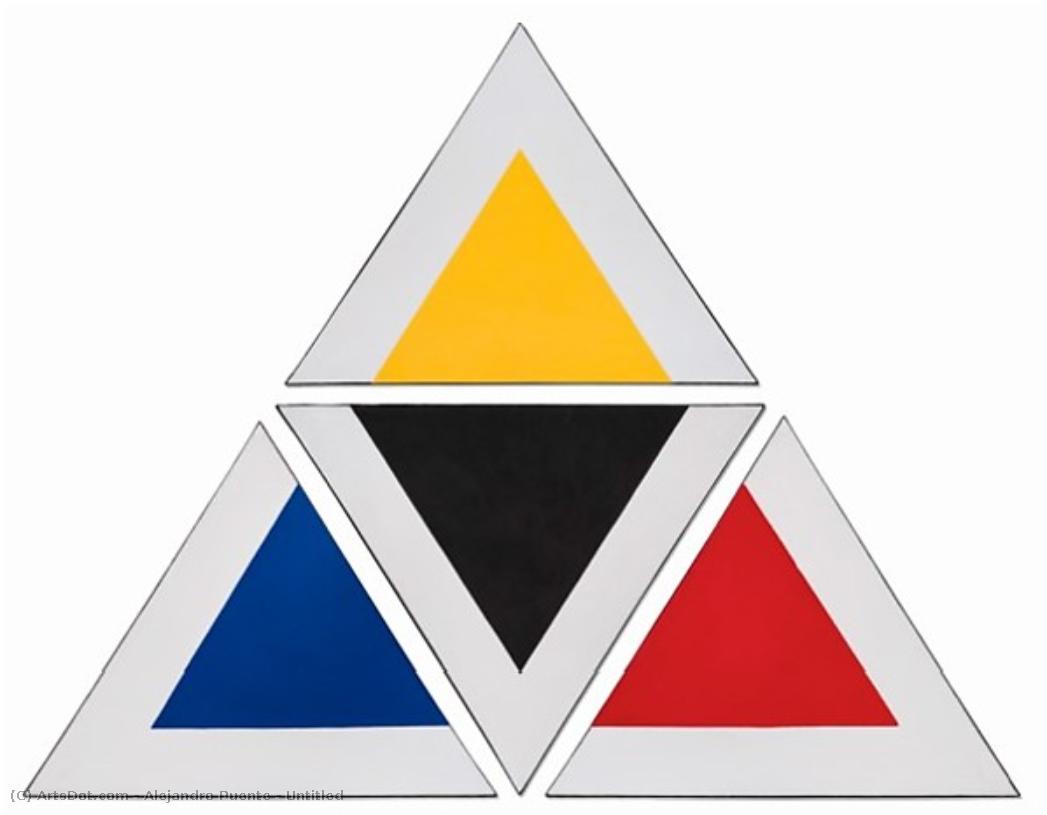
Puente’s breakthrough arrived in 1967 with his debut geometric paintings, which immediately garnered attention and solidified his position at the forefront of the movement. His seminal piece, *Untitled*, exemplifies this aesthetic—a large triangle anchored by black, populated by unmixed primary colors—demonstrating a masterful manipulation of color and form. This work was subsequently recognized as a cornerstone of Argentine minimalist art and gained prominence through its inclusion in the MACBA’s collection. Furthermore, *System Poliptych*, completed in 1967, showcased Puente's unwavering commitment to systematic abstraction, housed at MACBA—a testament to his enduring legacy within the movement. The painting’s meticulous arrangement of equilateral triangles and white strips underscored his belief that art should transcend representational concerns, prioritizing conceptual exploration and formal purity. He was particularly inspired by the American Minimalist movement, spearheaded by artists like Larry Bell and Robert Irwin, who championed simplicity and contemplation as pathways to artistic expression.
Legacy & Recognition
Alejandro Puente’s artistic impact extended beyond Argentina's borders, attracting international acclaim and securing his place among influential figures in modern art. He was instrumental in fostering a vibrant artistic community in La Plata, mirroring the ethos of American minimalist and conceptual artists who championed intellectual rigor alongside aesthetic simplicity. His paintings are held in prestigious collections worldwide, including Butler Institute of American Art and The Metropolitan Museum of Art, where *Untitled* continues to captivate viewers with its understated elegance and profound geometric harmony. Puente’s work has been exhibited alongside luminaries such as Peter Alexander, Larry Bell, and Robert Irwin—a testament to his artistic stature and enduring influence on subsequent generations of artists. His dedication to exploring the relationship between color, form, and space cemented his place in art history, particularly within the context of the Light and Space movement that emerged in the 1960s.



 Ordina la riproduzione
 Invia
Invia Condividi
 Dettagli opera

 Scarica
 Simili
 Radiografia
 Slideshow

 Scopri di più






































 L'opzione vetro è disponibile solo per dimensioni inferiori a 110 cm





