CONSULENZA D'ARTE GRATUITA

x
Ordina la riproduzione Ordina la riproduzioneAcquista download Acquista download InviaInvia
DettagliDettagli Aggiungi ai preferiti Aggiungi ai preferiti ScaricaScarica SimiliSimili RadiografiaRadiografia SlideshowSlideshow

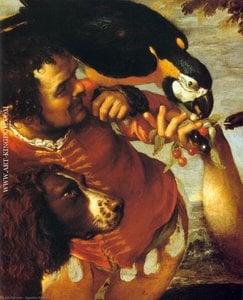
Jupiter

Explore Agostino Carracci’s 'Jupiter,' a stunning Baroque fresco depicting love & mythology. Admire its classical style, dramatic lighting & rich colors – a masterpiece of Parma's Hall of Loves.

Agostino Carracci (1557-1602) fu un pittore e incisore italiano considerato uno dei fondatori della Accademia degli Incamminati. Celebre per affreschi come "Giulio Cesare" e "La Vergine con il Bambino", incarnò lo spirito naturalistico del Barocco bolognese, influenzando artisti come Matisse.

Giclée / Stampa d'arte

Stampa giclée o su tela di qualità museale, con produzione rapida e diverse opzioni di finitura.

Standard
custom
CM
INCH

Scegli tra le nostre dimensioni predefinite, che rispettano le proporzioni originali dell'opera d'arte.

larghezza
altezza

È possibile inserire dimensioni personalizzate per adattare l'opera a una cornice o a uno spazio specifico. Se la dimensione selezionata non corrisponde alle proporzioni dell'immagine originale, procederemo al ritaglio dell'opera o all'estensione dell'immagine con un bordo specchiato o a tinta unita. Un mockup digitale ti verrà inviato per approvazione prima dell'inizio della produzione.
Si prega di notare che l'anteprima a schermo non riflette il ritaglio o l'estensione effettivi. Solo il mockup mostrerà accuratamente la composizione finale.
Sebbene siano disponibili dimensioni personalizzate, si raccomanda di selezionare una dimensione dall'elenco predefinito per preservare le proporzioni originali.

Consegna in tutto il mondo () in 2 settimane invece delle normali 4/5 settimane. (2 Luglio)

why_choose_icon
Spedizione espressa gratuita in tutto il mondo

why_choose_icon
Tela in lino di alta qualità
why_choose_icon
Assicurazione completa sulla spedizione
why_choose_icon
Garanzia di rimborso dei dazi doganali
why_choose_icon
Garanzia di fedeltà cromatica
why_choose_icon
Politica di reso entro 60 giorni (solo per difetti)
why_choose_icon
Garanzia di rimborso al 100%
why_choose_icon
Sconto per acquisti multipli

Prezzo totale

-

reproduction

Jupiter

Giclée / Stampa d'arte

Dimensioni riproduzione

-

Prezzo totale finale

-

Descrizione dell'opera

Vault, central square. The Hall of Loves of Jupiter, whose name identifies the subject represented in the varoius painted scenes, the love presented in different type (OMNIA VINCET AMOR-LOVE CONQUERS EVERYTHING), was painted and painted in stuccoes, respectively, by Agostino Carracci (Bolonia 1557-Parma 1602) and Giovanni Bosco. Speaking of this last person, Giovanni, there are some circumstances that are not clear: was often substitued by Luca Rieti, artist of stuccoes who realized in Parma some statues for the Teatro Farnese. Speaking of Carracci

Biografia dell'artista

Agostino Carracci: Bridging Mannerism and Naturalism in Bolognese Baroque

Agostino Carracci (August 16, 1557 – March 22, 1602) stands as a pivotal figure in the burgeoning Baroque movement within Bologna, Italy. Often overshadowed by his more celebrated brother, Annibale, Agostino’s artistic vision—characterized by a deliberate rejection of Mannerist formalism and an embrace of classical ideals—established him as a crucial innovator who profoundly impacted the stylistic trajectory of Bolognese painting. He wasn't merely a craftsman; he was a pedagogue, shaping the future generation of artists through the Academy degli Incamminati, alongside Annibale and Ludovico Carracci.

Early Life and Training

Born in Bologna to Giovanni Battista Carracci and Lucrezia Panciatichi, Agostino’s artistic talent emerged early under the tutelage of Domenico Tiberiadi, a respected architect and sculptor who instilled in him a foundational understanding of disegno—the humanist concept of drawing—essential for mastering classical proportions and perspective. This rigorous training contrasted sharply with the prevailing Mannerist style, which favored stylized forms and exaggerated poses, prioritizing intellectual contemplation over realistic representation. Unlike many of his contemporaries, Agostino sought inspiration from antiquity, specifically Roman sculpture and architecture, believing these served as models for achieving artistic excellence. He diligently studied the works of Michelangelo and Raphael, absorbing their mastery of anatomy and composition—skills that would inform his own groundbreaking approach to painting.

Engraving and Reproduction

Carracci’s career began not with monumental fresco commissions but with engraving—a technique he skillfully employed to reproduce masterpieces by artists like Federico Barocci, Tintoretto, Antonio Campi, Veronese, and Correggio. This practice wasn't viewed as mere copying; it was considered a crucial step in disseminating artistic knowledge and elevating the visual arts. His engravings demonstrated an acute sensitivity to tonal variations and chiaroscuro—the dramatic interplay of light and shadow—a hallmark of Caravaggio’s style but tempered with Carracci’s humanist aesthetic. He also produced original prints, including two etchings that showcased his mastery of printmaking techniques. These reproductions weren't simply copies; they were carefully executed studies designed to elevate the artistic standards of the time.

The Academy degli Incamminati and Bolognese Artistic Innovation

The establishment of the Accademia degli Incamminati in 1584 marked a watershed moment for Bolognese art. Agostino Carracci, alongside Annibale and Ludovico, spearheaded this initiative—a deliberate reaction against Mannerist conventions—aiming to cultivate a new generation of painters grounded in classical principles and focused on naturalistic observation. The academy’s curriculum emphasized disegno, anatomy, perspective, and color theory, fostering a stylistic shift away from the stylized distortions characteristic of Mannerism toward a more truthful depiction of human form and environment. This commitment to naturalism would become a defining feature of Bolognese Baroque painting. Ludovico Carracci's influence was particularly significant in shaping the academy’s aesthetic sensibilities—a harmonious blend of classical grandeur and humanist compassion.

Notable Commissions and Masterpieces

Carracci’s artistic output spanned diverse projects, including monumental fresco cycles in Palazzo Fava (histories of Jason and Medea) and Palazzo Magnani (histories of Romulus), where he skillfully blended classical ideals with dramatic narrative. His altarpiece of the Madonna with Child and Saints, housed in Bologna's Pinacoteca di Bologna, stands as arguably his most celebrated achievement—a testament to his ability to convey spiritual emotion through meticulous observation and masterful technique. Similarly, his depiction of Saint Jerome at Parma’s National Gallery exemplifies Carracci’s dedication to capturing human psychology and conveying profound religious experience. He also contributed to the decoration of Palazzo Farnese in Rome, collaborating with Annibale on a monumental portraiture project that solidified their reputation as artistic innovators. His masterpiece, "Jupiter," embodies the grandeur and dynamism of Baroque art while simultaneously reflecting Carracci's humanist understanding of the human condition.

Legacy and Influence

Agostino Carracci’s influence extended beyond his immediate contemporaries. His insistence on naturalism served as a counterbalance to Caravaggio’s expressive darkness, establishing Bolognese Baroque as a distinct stylistic tradition. Furthermore, the Academy degli Incamminati he founded nurtured countless artists who would shape the artistic landscape of Europe throughout the 17th century. Notably, Matisse's "Le bonheur de vivre" (Joy of Life) drew inspiration from Carracci’s engraving after Paolo Fiammingo—a poignant illustration of how an artist’s vision could transcend time and inspire subsequent generations of creatives. Agostino Carracci remains a cornerstone of Bolognese Baroque art history, remembered not only for his technical prowess but also for his unwavering belief in the transformative power of classical ideals. He is considered one of the most important artists of his era, whose work continues to resonate with audiences today.
Agostino Carracci

Agostino Carracci

1557 - 1602 , Italia

Dati rapidi

  • Artistic Movement Or Style: Barocco
  • Artists Or Movements Influenced By This Artist: ['Matisse']
  • Artists Who Influenced This Artist:
    • Federico Barocci
    • Tintoretto
    • Antonio Campi
  • Date Of Birth: 1557
  • Date Of Death: 1602
  • Full Name: Agostino Carracci
  • Nationality: Italiano
  • Notable Artworks:
    • Giuseppe
    • La Vergine con il Bambino
  • Place Of Birth: Bologna, Italia
Esplora opere d'arte organizzate per temi, stili e caratteristiche.