Anteprima in scala realeAnteprima in scala reale Anteprima ARAnteprima AR Switch to Print Switch to PrintSwitch to Digital Image Switch to Digital Image InviaInvia
Dettagli operaDettagli opera Aggiungi ai preferiti Aggiungi ai preferiti Scarica immagineScarica immagine SimiliSimili RadiografiaRadiografia SlideshowSlideshow StatsStats

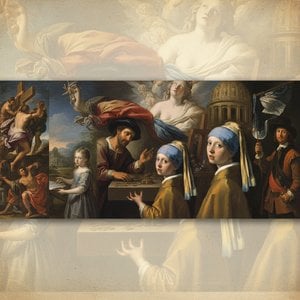
The Flight into Egypt

Adam Elsheimer's 'Flight into Egypt' (1609) is a stunning cabinet painting showcasing the Holy Family amidst a dramatic, star-filled night sky – a masterpiece of Baroque artistry and innovative landscape depiction.

Adam Elsheimer (1578-1610): pittore barocco tedesco celebre per i suoi piccoli dipinti e paesaggi innovativi! Scopri la sua arte influenzata da Rembrandt e Rubens.

Riproduzione a olio fatta a mano

Olio su tela dipinto a mano nelle tue dimensioni e con la tua cornice, realizzato su ordinazione dai nostri artisti. (Switch to Print Switch to PrintSwitch to Digital Image Switch to Digital Image)

P118B $10
P118H $10
P118W $10
P438Z $10
P508JH $12
P508YH $12
P805H $10
P805Z $10
P919BZ $10
P919G $10
P919XJ $10
P959ZH $10
P968JZ $12
W106C $8
W218G $10
W218JH $8
W218Y $10
W307PJ $10
W316G $10
W316PJ $8
W316Y $10
W398PJ $8
W4111J $10
W500HY $15
W500JH $15
W692G $12
W849H $8
W940BG $15
W953PJ $8

Formato standard
su misura
CM
INCH

Scegli tra le nostre dimensioni predefinite, che rispettano le proporzioni originali dell'opera d'arte.

larghezza
altezza

È possibile inserire dimensioni personalizzate per adattare l'opera a una cornice o a uno spazio specifico. Se la dimensione selezionata non corrisponde alle proporzioni dell'immagine originale, provvederemo a ritagliare l'opera o a estendere il dipinto con elementi aggiuntivi dipinti a mano. Un mockup digitale ti sarà inviato per approvazione prima dell'inizio della produzione.
Si prega di notare che l'anteprima a schermo non riflette il ritaglio o l'estensione effettivi. Solo il mockup mostrerà accuratamente la composizione finale.
Sebbene siano disponibili dimensioni personalizzate, consigliamo di selezionare una dimensione dall'elenco predefinito per preservare le proporzioni originali.

Esempi di ciò che può essere modificato: sostituire il volto con una foto del cliente; aggiungere un animale domestico (ad esempio, sostituire un gatto con un cane); inserire un messaggio nascosto nello sfondo; cambiare il paesaggio o gli elementi dello sfondo.
Dopo l'ordine, il team di WahooArt.com contatterà il cliente via e-mail per le istruzioni e fornirà un'anteprima del mockup

Consegna in tutto il mondo () in 3/4 settimane anziché nelle normali 5 settimane. (7 Settembre). Nessun compromesso sulla qualità.

why_choose_icon
Spedizione espressa gratuita in tutto il mondo
why_choose_icon
Tela in lino di alta qualità
why_choose_icon
Assicurazione completa sulla spedizione
why_choose_icon
Garanzia di rimborso dei dazi doganali
why_choose_icon
Garanzia di fedeltà cromatica
why_choose_icon
Politica di reso entro 100 giorni (solo per difetti)
why_choose_icon
Garanzia di rimborso al 100%
why_choose_icon
Offerta per acquisti multipli

Prezzo totale

$ 272

reproduction

The Flight into Egypt

Tecnica di riproduzione

Dimensioni riproduzione

-

Prezzo totale calcolato

$ 272

Informazioni rapide

  • Title: The Flight into Egypt
  • Artist: Adam Elsheimer
  • Year: 1609
  • Notable elements: Night sky, constellations
  • Influences:
    • Rembrandt
    • Rubens
  • Dimensions: 9 x 7 cm
  • Location: Alte Pinakothek, Munich

Quiz d'arte

Per ogni domanda è presente una sola risposta corretta.

Domanda 1:
What is the primary subject of Adam Elsheimer’s ‘The Flight into Egypt’?
Domanda 2:
According to the description, what is unique about Elsheimer's depiction of the night sky in ‘The Flight into Egypt’?
Domanda 3:
What medium did Elsheimer predominantly use for his cabinet paintings like ‘The Flight into Egypt’?
Domanda 4:
In the description, what does the ‘broad-brimmed hats’ symbolize in relation to the figures depicted?
Domanda 5:
The description mentions that Elsheimer was part of a circle of artists in Rome. Which of the following artists was also associated with this group?

A Nocturnal Pilgrimage: Adam Elsheimer’s “The Flight into Egypt”

Adam Elsheimer's "The Flight into Egypt," painted around 1609 during his brief but brilliant Roman period, isn’t merely a biblical depiction; it’s an immersive experience of light, shadow, and profound spiritual contemplation. Far removed from the grand scale of many Baroque masterpieces, this small oil-on-copper panel—a mere 9 x 7 centimeters—holds within its diminutive frame a universe of artistic innovation and emotional resonance. It's a testament to Elsheimer’s singular vision: a master of capturing fleeting moments of intense feeling with remarkable technical precision.

The scene unfolds against a dramatically rendered night sky, an audacious choice for the time. Elsheimer wasn’t simply illustrating a biblical narrative; he was wrestling with the mysteries of darkness and light, mirroring the human condition's inherent struggle between fear and hope. The composition is dominated by this evocative sky, meticulously constructed with a startling accuracy that suggests Elsheimer’s deep engagement with astronomical observations – a detail often overlooked in discussions of his work. The Milky Way stretches across the heavens like a river of stardust, punctuated by recognizable constellations such as Ursa Major and Leo, each rendered with an almost photographic realism. This wasn't merely decorative; it was a deliberate attempt to connect the earthly drama unfolding below with the vastness and order of the cosmos.

The Anatomy of Light: Technique and Innovation

Elsheimer’s mastery lies in his manipulation of light and shadow, techniques that were revolutionary for his time. He employed a technique known as “pointillé,” using tiny dots of paint to build up color and texture—a method borrowed from the Flemish masters but pushed to an unprecedented level of detail. This creates a shimmering effect, particularly noticeable in the depiction of the moon’s reflection on the water and the subtle gradations of light across the landscape. The use of chiaroscuro – the dramatic contrast between light and dark – is not employed for theatricality, but rather to heighten the sense of intimacy and vulnerability within the scene.

The copper panel itself played a crucial role in Elsheimer’s artistic process. It allowed him to work with greater precision and achieve a luminosity that was difficult to replicate on wood panels. The reflective surface also contributed to the painting's ethereal quality, as light bounced off the metal and created an almost otherworldly glow. Furthermore, the small size of the panel demanded careful consideration of composition; every element—from the figures’ clothing to the texture of the trees—had to be rendered with exquisite detail.

Symbolism and Spiritual Depth

Beyond its technical brilliance, “The Flight into Egypt” is rich in symbolic meaning. The journey itself represents a perilous pilgrimage toward salvation, mirroring the Exodus narrative and offering a potent metaphor for humanity’s ongoing quest for redemption. The broad-brimmed hats worn by Joseph and Mary are not merely decorative; they symbolize protection from the harsh realities of the world—a visual reminder of their vulnerability and dependence on divine grace.

The prominent oak tree, bathed in a divine light, is particularly significant. It’s an allusion to the Tree of Life, rooted in biblical tradition and representing immortality – a direct reference to the cross of Christ, whose wood bestowed eternal life upon humanity. The scene subtly suggests that this humble family, fleeing persecution, are also enacting a sacred drama, embodying the promise of salvation through faith and obedience.

A Legacy of Intimacy

Adam Elsheimer’s “The Flight into Egypt” is more than just a beautiful painting; it's a poignant meditation on faith, family, and the human condition. His innovative use of light, his meticulous attention to detail, and his profound understanding of symbolism combine to create an artwork that continues to captivate viewers centuries later. Despite producing only a handful of finished works during his tragically short life, Elsheimer left behind a legacy of artistic innovation and emotional depth—a testament to the power of art to illuminate the darkest corners of our souls.


Biografia dell'artista

Primi Anni e Formazione

  • Nato: Francoforte sul Meno, Germania, 18 marzo 1578
  • Morto: Roma, 11 dicembre 1610 (all'età di 32 anni)
  • Adam Elsheimer nacque in una famiglia di artigiani a Francoforte. Suo padre era un sarto esperto.
  • Dimostrò talento artistico fin da giovane e fu mandato apprendista presso Philipp Uffenbach, un artista locale.
  • Intorno al 1596, visitò probabilmente Strasburgo, esponendosi a diversi stili artistici.
  • Nel 1598, all'età di vent'anni, Elsheimer viaggiò in Italia via Monaco, segnando l'inizio del suo significativo sviluppo artistico.

Periodo Italiano e Sviluppo Artistico

  • Trascorse una notevole quantità di tempo a Venezia, dove fu influenzato dai maestri veneziani come Tintoretto e Paolo Veronese.
  • Intorno al 1600, Elsheimer si stabilì a Roma, diventando parte della comunità artistica locale.
  • Lavorò come assistente di Johann Rottenhammer, un pittore tedesco specializzato in dipinti da studiolo, imparando preziose tecniche.
  • Il suo stile si evolse dalle prime influenze manieriste verso un approccio più naturalistico caratterizzato da innovative rappresentazioni del paesaggio e effetti drammatici di illuminazione.
  • Si crearono importanti amicizie con Giovanni Faber, un medico e botanico papale, e Paul Bril, un pittore paesaggista fiammingo, entrambi legati all'Accademia dei Lincei.

Opere Principali e Stile Artistico

  • Elsheimer è rinomato per i suoi dipinti su piccole lastre di rame, spesso definiti dipinti da studiolo.
  • Le sue opere raffiguravano frequentemente scene mitologiche e bibliche, mostrando un temperamento lirico e una meticolosa attenzione ai dettagli.
  • Dipinti Notabili: Tobias e l'Angelo (c. 1602–1603), La Caduta di Troia, Apollo e Coronis, Cerere e Stellio, Lapidazione di San Stefano.
  • Gli viene riconosciuto il merito di essere stato tra i primi artisti a rappresentare accuratamente le costellazioni nelle scene del cielo notturno.
  • I suoi paesaggi erano innovativi per l'epoca, integrando armoniosamente figure all'interno di ambientazioni naturali.
  • L'uso della luce e dell'ombra (chiaroscuro) da parte di Elsheimer creava effetti drammatici ed esaltava l'impatto emotivo dei suoi dipinti.

Influenza e Significato Storico

  • Nonostante una carriera relativamente breve, Elsheimer esercitò una notevole influenza sulle generazioni successive di artisti.
  • Fu molto apprezzato dai contemporanei, tra cui Peter Paul Rubens, che deplorò la sua prematura morte e lodò il suo eccezionale talento.
  • Influenze Chiave: Albrecht Dürer (prima esposizione), Johann Rottenhammer (formazione tecnica), pittori veneziani (Tintoretto, Paolo Veronese - ispirazione stilistica).
  • Artisti Influenzati: Rembrandt, Peter Paul Rubens e numerosi altri artisti del XVII secolo.
  • Le sue innovative rappresentazioni del paesaggio e le tecniche di illuminazione drammatica aprirono la strada a successivi sviluppi nella pittura barocca.
  • Le incisioni realizzate da Hendrick Goudt aiutarono a diffondere l'opera di Elsheimer in tutta Europa, amplificando ulteriormente la sua influenza.

Ultimi Anni e Eredità

  • Elsheimer affrontò difficoltà finanziarie per tutta la vita, che portarono a periodi di debito e persino all'incarcerazione.
  • Nel 1606 sposò Carola Antonia Stuarda da Francoforte e ebbero un figlio che tragicamente morì giovane.
  • Intorno al 1608 si convertì al cattolicesimo.
  • Elsheimer morì a Roma nel 1610 all'età di 32 anni, lasciando dietro di sé un corpus di opere relativamente piccolo ma altamente influente.
  • La sua eredità si basa sul suo approccio pionieristico alla pittura paesaggistica, sulla sua padronanza della luce e dell'ombra e sul suo duraturo impatto sull'arte barocca.
Adam Elsheimer

Adam Elsheimer

1578 - 1610 , Germania

Dati rapidi

  • Artistic Movement Or Style: Barocco
  • Artists Or Movements Influenced By This Artist:
    • Rembrandt
    • Peter Paul Rubens
  • Artists Who Influenced This Artist:
    • Johann Rottenhammer
    • Tintoretto
    • Paolo Veronese
  • Date Of Birth: 18 marzo 1578
  • Date Of Death: 11 dicembre 1610
  • Full Name: Adam Elsheimer
  • Nationality: Tedesco
  • Notable Artworks:
    • Tobias e l'angelo
    • La caduta di Troia
    • Apollo e Coronis
    • Cerere e Stellio
    • Lapidazione di Stefano
  • Place Of Birth: Francoforte, Germania
Esplora le opere d'arte organizzate per temi, stili e caratteristiche.