INGYENES MŰVÉSZETI TANÁCSADÁS

x
Készíttetnék festményként Készíttetnék festménykéntKép letöltése Kép letöltése MegosztásMegosztás
RészletekRészletek Kedvencekhez ad Kedvencekhez ad LetöltésLetöltés Hasonló alkotásokHasonló alkotások X-ray felvételX-ray felvétel DiavetítésDiavetítés

Figure

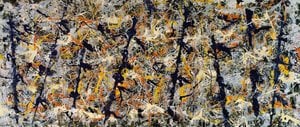
Explore 'Figure' by Jackson Pollock – a dynamic Cubist-influenced work showcasing fragmented forms and a striking monochromatic palette. Discover the power of abstraction!

Paul Jackson Pollock (1912-1956) amerikai festő, az absztrakt expresszionizmus egyik alapítója. Drip technológiája, a képek spontán, dinamikus alkotásai, melyek a művész mozgását és érzelmeit tükrözik. #Pollock #AbsztraktExpresszionizmus

Giclée / Műnyomat

Múzeumi minőségű giclée vagy vászonnyomat, gyors gyártással és rugalmas finomítási lehetőségekkel.

P118B $10
P118H $10
P118W $10
P438Z $10
P508JH $12
P508YH $12
P805H $10
P805Z $10
P919BZ $10
P919G $10
P919XJ $10
P959ZH $10
P968JZ $12
W106C $8
W218G $10
W218JH $8
W218Y $10
W307PJ $10
W316G $10
W316PJ $8
W316Y $10
W398PJ $8
W4111J $10
W500HY $15
W500JH $15
W692G $12
W849H $8
W940BG $15
W953PJ $8

Standard
custom
CM
INCH

Válasszon előre meghatározott méreteink közül, amelyek megfelelnek a műalkotás eredeti arányainak.

szélesség
magasság

Megadhat saját méreteket is egy konkrét kerethez vagy helyszínhez igazítva. Amennyiben a kiválasztott méret nem egyezik az eredeti kép arányokkal, a műalkotást le fogjuk vágni, vagy kiegészítjük a képet tükrözött vagy egyszínű szélekkel. A gyártás megkezdése előtt egy digitális tervezetet küldünk jóváhagyásra.
Kérjük, vegye figyelembe, hogy a képernyőn látható előnézet nem tükrözi a tényleges levágást vagy kiegészítést. Csak a tervezet mutatja pontosan a végső kompozíciót.
Bár az egyedi méretek is elérhetőek, az eredeti arányok megőrzése érdekében azt javasoljuk, hogy válasszon a előre meghatározott listából származó méretet.

Világszerte történő kiszállítás területére 2 hét alatt, a szokásos 4-5 hét helyett. 5 július

why_choose_icon
Ingyenes globális expressz szállítás
why_choose_icon
Prémium minőségű len vászon
why_choose_icon
Teljes szállítási biztosítás
why_choose_icon
Vámvisszatérítési Garancia
why_choose_icon
Tökéletes színpontosság garancia
why_choose_icon
60 napos visszaküldési lehetőség (csak gyártási hibák esetén)
why_choose_icon
100%-os pénzvisszatérítési garancia
why_choose_icon
Kedvezmény több termény esetén

Összesen

-

reproduction

Figure

Giclée / Műnyomat

A reprodukció mérete

-

Összesített ár

-

Rövid tények

  • Artist: Jackson Pollock
  • Notable elements or techniques: Geometric shapes, monochrome
  • Influences: Pablo Picasso
  • Subject or theme: Reclining figure
  • Title: Figure

Művészeti kvíz

Minden kérdésre csak egy helyes válasz létezik.

Kérdés 1:
Based on the provided description, which artistic movement is most strongly associated with this artwork?
Kérdés 2:
What is the dominant color palette used in this artwork?
Kérdés 3:
According to the artist biography, which earlier artistic style initially influenced Jackson Pollock?
Kérdés 4:
The description notes the figure is rendered using what type of shapes?
Kérdés 5:
What technique is Jackson Pollock most famously known for, which developed *after* the style seen in this work?

Termékinformációk

A Fragmented Vision: Decoding Jackson Pollock’s “Figure”

Jackson Pollock, a name synonymous with Abstract Expressionism and the revolutionary ‘drip’ technique, also harbored a period of intensely focused figuration that often goes unacknowledged. The work simply titled “Figure,” dating from an uncertain point in his career but demonstrably aligning with his explorations around 1942, offers a compelling glimpse into this transitional phase. It is not the Pollock of flung paint and boundless energy, but one grappling with form, space, and the legacy of Cubism – specifically echoing the fragmented perspectives pioneered by Pablo Picasso. This piece isn’t about depicting a body as it *is*, but rather how it is *perceived*—a deconstruction of anatomical reality into geometric planes and angular shapes. The monochromatic palette, restricted to shades of gray, white, and black, amplifies this sense of intellectual dissection, stripping away the warmth of flesh and focusing instead on structural analysis.

The Echoes of Cubism and Early Influences

To understand “Figure,” one must consider Pollock’s artistic lineage. His early training included exposure to Regionalist painters like Thomas Hart Benton, but it was his encounter with the European avant-garde – particularly Picasso and Surrealism – that truly ignited his creative evolution. The influence of Cubism is undeniable here; the reclining figure isn't presented from a single viewpoint, but rather as if viewed simultaneously from multiple angles. Limbs are fractured, torsos reassembled, creating a dynamic instability that challenges traditional notions of representation. This wasn’t merely stylistic imitation, however. Pollock was actively engaging with the philosophical underpinnings of Cubism – its attempt to represent not just what is seen, but how it is known. The starkness of the composition and limited color scheme further emphasize this intellectual approach, creating a sense of mystery and introspection. The work feels less like an observation of the human form and more like an exploration of the very act of seeing.

Technique and Emotional Resonance

While “Figure” predates Pollock’s signature drip paintings, it reveals his developing mastery of line and texture. The artwork is likely executed in charcoal or graphite on paper, with a dense layering of lines creating both definition and visual depth. These aren't delicate strokes; they are bold, assertive marks that define the edges of fragmented forms and build up a network of intersecting planes. The combination of straight and subtly curved lines adds complexity to the composition, preventing it from becoming overly rigid. The absence of traditional perspective flattens the space, forcing the viewer to confront the figure as a collection of shapes rather than an illusionistic representation. This flattening contributes to the artwork’s emotional impact – a sense of alienation, perhaps, or the fragmentation of modern experience. The dark background doesn't offer solace but instead intensifies the feeling of isolation and invites contemplation on the complexities of human perception.

A Stepping Stone to Abstraction

“Figure” is not an endpoint in Pollock’s artistic journey; it’s a crucial stepping stone. It demonstrates his willingness to break from convention, to experiment with form and space, and to explore the psychological dimensions of representation. While he would eventually abandon figuration altogether in favor of pure abstraction, this work reveals the intellectual rigor and formal concerns that underpinned his later innovations. It's a reminder that even the most radical artists build upon the foundations laid by their predecessors, and that seemingly disparate styles can be connected by underlying principles of artistic inquiry. For collectors and interior designers, a reproduction of “Figure” offers not just an aesthetically compelling piece but also a window into the mind of one of the 20th century’s most influential artists—a testament to his restless spirit and unwavering commitment to pushing the boundaries of art.

Hasonló műalkotások


A művész életrajza

Early Life and the Seeds of Innovation

Paul Jackson Pollock, born in Cody, Wyoming, in 1912, was a restless spirit from the outset. His early life was marked by frequent relocation as his father pursued work as a land surveyor across the vast landscapes of the American West. This itinerant existence instilled in young Pollock a deep connection to the natural world and an exposure to diverse cultures, particularly through encounters with Native American art during those surveying trips – impressions that would subtly permeate his artistic vision later in life. Though he never explicitly imitated Indigenous styles, the raw energy and spiritual resonance of these early experiences undoubtedly left their mark. Pollock’s formal artistic training began at the Manual Arts High School in Los Angeles, followed by studies at the Art Students League of New York under the tutelage of Thomas Hart Benton. Benton, a prominent figure in the Regionalist movement, emphasized rhythmic composition and narrative themes rooted in American life. While Pollock initially absorbed these lessons, his inherent inclination leaned toward more abstract explorations. He was also profoundly impacted by Mexican muralists like José Clemente Orozco, whose powerful depictions of social struggle resonated deeply with him. These early influences laid a foundation, but it was the burgeoning world of Surrealism that truly unlocked Pollock’s artistic potential.

The Birth of Action Painting and a Revolutionary Technique

The 1930s saw Pollock experimenting with various techniques, seeking alternatives to traditional brushwork. He began pouring paint, exploring its fluidity and unpredictable nature. However, it was around 1947 that his artistic trajectory underwent a radical transformation. Abandoning the easel altogether, Pollock laid canvases directly on the floor, initiating what would become known as his “drip technique.” He then proceeded to drip, splash, and fling paint onto the canvas from above, orchestrating a dynamic dance between artist, medium, and surface. This wasn’t merely about applying paint; it was about embodying the act of creation itself. Pollock's canvases became arenas for physical expression, capturing the immediacy of his gestures and emotions. The resulting paintings are characterized by their “all-over” composition – a lack of central focus that invites the viewer to explore the entire surface as a unified field of energy. Intricate networks of lines and colors intertwine, creating a visual complexity that is both captivating and challenging. He employed unconventional tools—sticks, knives, even syringes—to manipulate the paint in unpredictable ways, further emphasizing the spontaneous nature of his process.
  • He mixed unconventional materials into the paint, such as sand and tar.
  • His technique was a direct rejection of traditional brushwork and compositional rules.

Influence and Development

Pollock’s artistic journey wasn't solely defined by his groundbreaking drip technique. He drew inspiration from diverse sources, including the works of European modernists like Piet Mondrian and Wassily Kandinsky, as well as the vibrant murals of Mexican artists such as Diego Rivera. The influence of Surrealism is also evident in his early work, particularly his exploration of subconscious imagery and dreamlike landscapes. His time at the Art Students League under Thomas Hart Benton provided a crucial grounding in traditional painting techniques, which he later subverted to create his own unique style. His marriage to Lee Krasner was pivotal; she not only provided emotional support but also encouraged his artistic experimentation and helped him navigate the complexities of the New York art scene.

Iconic Works and Lasting Legacy

Pollock’s most celebrated works—such as Number 1, 1950 (Lavender Mist), One: Number 31, 1950, Blue Poles: Number 11, 1952, and *Convergence*—are testaments to his revolutionary technique. These paintings are not simply images; they are records of a performance, imbued with the artist’s physical presence and emotional intensity. The dynamic energy that emanates from these canvases is palpable, drawing viewers into a world of pure abstraction. Key Works:
  • Lavender Mist (1950)
  • One: Number 31 (1950)
  • Blue Poles (1952)
  • Convergence (1956)
His style transcends mere aesthetics; it's an exploration of process over product. Pollock sought to capture the immediacy of his actions and emotions on canvas, rejecting traditional notions of composition and representation. He delved into Jungian psychology, exploring archetypes and the subconscious in his art, seeking to tap into universal symbols and primal energies. Pollock’s impact on the history of art is immeasurable. He fundamentally altered the way artists approached painting, breaking free from easel-based methods and embracing a more performative approach. His work helped solidify New York City's position as a global center for modern art, shifting the focus away from European dominance. His influence can be seen in the work of countless artists who followed, including those associated with Color Field painting and later forms of abstract expressionism. Despite initial skepticism, Pollock’s legacy is now firmly established as one of the most important and influential figures in 20th-century art.

Jackson Pollock

Jackson Pollock

1912 - 1956 , Egyesült Államok

Rövid tények

  • Artistic Movement Or Style: Absztrakt expresszionizmus
  • Artists Or Movements Influenced By This Artist: ['Surrealizmus']
  • Artists Who Influenced This Artist: ['Thomas Hart Benton']
  • Date Of Birth: 1912. jan 28.
  • Date Of Death: 1956. aug 11.
  • Full Name: Paul Jackson Pollock
  • Nationality: Amerikai
  • Notable Artworks:
    • Number 1, 1950
    • Blue Poles
    • Convergence
  • Place Of Birth: Cody, Wyoming
Fedezze fel a műalkotásokat témák, stílusok és jellemzők szerint csoportosítva.