INGYENES MŰVÉSZETI TANÁCSADÁS

x
Nyomat vásárlása Nyomat vásárlásaKép letöltése Kép letöltése MegosztásMegosztás
DetailsDetails Kedvencekhez ad Kedvencekhez ad LetöltésLetöltés Hasonló alkotásokHasonló alkotások X-RayX-Ray DiavetítésDiavetítés

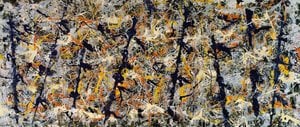
Number 3

Paul Jackson Pollock (1912-1956) amerikai festő, az absztrakt expresszionizmus egyik alapítója. Drip technológiája, a képek spontán, dinamikus alkotásai, melyek a művész mozgását és érzelmeit tükrözik. #Pollock #AbsztraktExpresszionizmus

Kézzel készített olajfestmény reprodukció

Kézzel festett olajvastú vászon, az Ön által választott méretben és keretben, művészeink készítik meglévőre.

P118B $10
P118H $10
P118W $10
P438Z $10
P508JH $12
P508YH $12
P805H $10
P805Z $10
P919BZ $10
P919G $10
P919XJ $10
P959ZH $10
P968JZ $12
W106C $8
W218G $10
W218JH $8
W218Y $10
W307PJ $10
W316G $10
W316PJ $8
W316Y $10
W398PJ $8
W4111J $10
W500HY $15
W500JH $15
W692G $12
W849H $8
W940BG $15
W953PJ $8

Standard
custom
CM
INCH

Válasszon előre meghatározott méreteink közül, amelyek megfelelnek a műalkotás eredeti arányainak.

szélesség
magasság

Ön megadhat saját méreteket egy adott kerethez vagy térhez igazításhoz. Ha a kiválasztott méret nem egyezik az eredeti kép arányával, akkor a műalkotást levágjuk, vagy további kézzel festett elemekkel meghosszabbítjuk a festményt. A gyártás megkezdése előtt küldünk Önnek egy digitális előnézetet jóváhagyásra.
Kérjük, vegye figyelembe, hogy a képernyőn megjelenő előnézet nem tükrözi a tényleges vágást vagy kiterjesztést. Csak az előnézet fog pontosan mutatni a végső kompozíciót.
Bár egyedi méretek állnak rendelkezésre, javasoljuk, hogy válasszon egy méretet az előre meghatározott listából az eredeti arányok megőrzése érdekében.

Példák arra, mit lehet módosítani: az arc kicserélése az ügyfél fotójára; háziállat hozzáadása (pl. macska helyett kutya); rejtett üzenet elhelyezése a háttérben; a háttér tájának vagy elemeinek megváltoztatása.
A rendelést követően a WahooArt.com csapata e-mailt küld az ügyfélnek az instrukciókért, és biztosít egy előnézeti képet (mockup).

Világszerte elérhető szállítás () 3-4 hét alatt a szokásos 5 hét helyett. (1 július). A minőség nem kérdőjelezhető.

why_choose_icon
Ingyenes globális expressz szállítás
why_choose_icon
Prémium minőségű len vászon
why_choose_icon
Teljes szállítási biztosítás
why_choose_icon
Vámvisszatérítési Garancia
why_choose_icon
Tökéletes színpontosság garancia
why_choose_icon
60 napos visszaküldési lehetőség (csak gyártási hibák esetén)
why_choose_icon
100%-os pénzvisszatérítési garancia
why_choose_icon
Kedvezmény több termény esetén

Összesen

-

reproduction

Number 3

Reprodukciós technika

A reprodukció mérete

-

Összesített ár

-

Rövid tények

  • Artistic style: Action Painting
  • Title: Number 3
  • Location: MOCA, Los Angeles
  • Medium: Enamel & Oil
  • Artist: Jackson Pollock
  • Notable elements or techniques: Drip Technique
  • Influences:
    • Surrealism
    • De Kooning

Művészeti kvíz

Minden kérdésre csak egy helyes válasz létezik.

Kérdés 1:
What artistic technique is prominently featured in Jackson Pollock’s ‘Number 3’?
Kérdés 2:
In what year was ‘Number 3’ created?
Kérdés 3:
Which art movement heavily influenced Pollock's style and approach to painting?
Kérdés 4:
Where was ‘Number 3’ exhibited during Pollock’s lifetime?
Kérdés 5:
What is the predominant color palette used in ‘Number 3’?

A műalkotás leírása

Jackson Pollock: A Revolutionary in Abstract Expressionism

Jackson Pollock (1912-1956) stands as a monumental figure within the abstract expressionist movement, forever altering the trajectory of modern art. His groundbreaking approach to painting—characterized by spontaneous gesture and unconventional materials—challenged established artistic conventions and cemented his place among the most influential artists of the 20th century. Pollock’s legacy continues to inspire contemporary creatives, demonstrating the enduring power of innovation and emotional resonance in visual art.

Early Life and Influences

Paul Jackson Pollock was born January 28, 1912, in Cody, Wyoming—a formative experience that instilled a restless spirit within him. His upbringing involved frequent relocations due to his father’s profession as a land surveyor, fostering an environment of instability which arguably fueled his artistic inclination. Despite pursuing formal studies at NYU and the Art Students League, Pollock's initial artistic explorations were shaped by regionalist painters like Thomas Hart Benton and David Alfaro Siqueiros—artists who championed depictions of American landscapes and social realities. Furthermore, he absorbed significant inspiration from Surrealism, particularly the techniques of automatism and dreamlike imagery, alongside Native American art forms that emphasized ritualistic patterns and symbolic representations.

Artistic Development & Technique

Pollock’s artistic journey began with representational works reflecting his teachers' stylistic sensibilities—scenes rendered in a regionalist style imbued with meticulous detail. However, he swiftly transitioned toward experimentation, delving into diverse mediums and approaches. During the 1930s, Pollock honed his skills in watercolor and gouache, mastering tonal gradations and blending techniques—skills that would prove invaluable as he developed his signature drip technique. This method involved pouring or splashing liquid household paint onto a horizontal surface, allowing Pollock to engage with the canvas from all angles and creating an immersive artistic experience for both himself and the viewer. The resulting paintings are characterized by dynamic compositions, vibrant colors, and intricate patterns that seem to dance across the surface—a deliberate departure from traditional painting methods.

“Number 3” – An Emblematic Work

“Number 3,” created in 1948, exemplifies Pollock’s revolutionary drip technique and embodies his artistic philosophy. This monumental canvas—measuring 77.2 by 57.2 centimeters—is a testament to his unwavering commitment to spontaneity and process-based artmaking. The painting's palette is dominated by shades of blue, red, yellow, and orange, interwoven with black lines that contribute to the artwork’s textural complexity. Pollock meticulously applied paint using a drip method, resulting in an astonishing array of shapes and textures—a visual manifestation of his inner turmoil and a bold assertion of artistic freedom. The painting was showcased at the Betty Parsons Gallery in New York City during 1948, marking a pivotal moment in Pollock’s artistic career and establishing him as a leader within the burgeoning abstract expressionist movement.

Historical Context & Legacy

“Number 3” emerged against the backdrop of a period marked by profound social and intellectual upheaval—the postwar era witnessed an explosion of creativity fueled by anxieties about nuclear war and a yearning for new forms of artistic expression. Pollock’s work resonated deeply with fellow artists like Willem de Kooning, fostering a collaborative spirit that propelled the abstract expressionist movement forward. His innovative technique not only challenged conventional notions of beauty but also fundamentally altered the way artists approached their craft—inspiring generations of creatives who followed in his footsteps and shaping the landscape of contemporary art. The painting’s enduring influence is undeniable, serving as a bridge between traditional painting traditions and modern abstraction.

Exhibitions & Recognition

“Number 3” gained considerable acclaim upon its debut at the Museum of Modern Art (MoMA) retrospective exhibition in New York City in 1956—a recognition that underscored Pollock’s impact on the art world and solidified his status as a visionary artist. This monumental undertaking showcased the breadth of Pollock's oeuvre, demonstrating his mastery across various mediums and styles. The painting continues to captivate audiences today, reflecting the timeless appeal of abstract expressionism and its capacity to evoke profound emotional responses. WahooArt.com offers high-quality, handmade oil painting reproductions of “Number 3” and other works by Jackson Pollock. These reproductions capture the essence of his original paintings, providing art enthusiasts with an opportunity to own a piece of history. For more information on Jackson Pollock and his works, visit Jackson Pollock:Number 3 at WahooArt.com.

Hasonló műalkotások


A művész életrajza

Early Life and the Seeds of Innovation

Paul Jackson Pollock, born in Cody, Wyoming, in 1912, was a restless spirit from the outset. His early life was marked by frequent relocation as his father pursued work as a land surveyor across the vast landscapes of the American West. This itinerant existence instilled in young Pollock a deep connection to the natural world and an exposure to diverse cultures, particularly through encounters with Native American art during those surveying trips – impressions that would subtly permeate his artistic vision later in life. Though he never explicitly imitated Indigenous styles, the raw energy and spiritual resonance of these early experiences undoubtedly left their mark. Pollock’s formal artistic training began at the Manual Arts High School in Los Angeles, followed by studies at the Art Students League of New York under the tutelage of Thomas Hart Benton. Benton, a prominent figure in the Regionalist movement, emphasized rhythmic composition and narrative themes rooted in American life. While Pollock initially absorbed these lessons, his inherent inclination leaned toward more abstract explorations. He was also profoundly impacted by Mexican muralists like José Clemente Orozco, whose powerful depictions of social struggle resonated deeply with him. These early influences laid a foundation, but it was the burgeoning world of Surrealism that truly unlocked Pollock’s artistic potential.

The Birth of Action Painting and a Revolutionary Technique

The 1930s saw Pollock experimenting with various techniques, seeking alternatives to traditional brushwork. He began pouring paint, exploring its fluidity and unpredictable nature. However, it was around 1947 that his artistic trajectory underwent a radical transformation. Abandoning the easel altogether, Pollock laid canvases directly on the floor, initiating what would become known as his “drip technique.” He then proceeded to drip, splash, and fling paint onto the canvas from above, orchestrating a dynamic dance between artist, medium, and surface. This wasn’t merely about applying paint; it was about embodying the act of creation itself. Pollock's canvases became arenas for physical expression, capturing the immediacy of his gestures and emotions. The resulting paintings are characterized by their “all-over” composition – a lack of central focus that invites the viewer to explore the entire surface as a unified field of energy. Intricate networks of lines and colors intertwine, creating a visual complexity that is both captivating and challenging. He employed unconventional tools—sticks, knives, even syringes—to manipulate the paint in unpredictable ways, further emphasizing the spontaneous nature of his process.
  • He mixed unconventional materials into the paint, such as sand and tar.
  • His technique was a direct rejection of traditional brushwork and compositional rules.

Influence and Development

Pollock’s artistic journey wasn't solely defined by his groundbreaking drip technique. He drew inspiration from diverse sources, including the works of European modernists like Piet Mondrian and Wassily Kandinsky, as well as the vibrant murals of Mexican artists such as Diego Rivera. The influence of Surrealism is also evident in his early work, particularly his exploration of subconscious imagery and dreamlike landscapes. His time at the Art Students League under Thomas Hart Benton provided a crucial grounding in traditional painting techniques, which he later subverted to create his own unique style. His marriage to Lee Krasner was pivotal; she not only provided emotional support but also encouraged his artistic experimentation and helped him navigate the complexities of the New York art scene.

Iconic Works and Lasting Legacy

Pollock’s most celebrated works—such as Number 1, 1950 (Lavender Mist), One: Number 31, 1950, Blue Poles: Number 11, 1952, and *Convergence*—are testaments to his revolutionary technique. These paintings are not simply images; they are records of a performance, imbued with the artist’s physical presence and emotional intensity. The dynamic energy that emanates from these canvases is palpable, drawing viewers into a world of pure abstraction. Key Works:
  • Lavender Mist (1950)
  • One: Number 31 (1950)
  • Blue Poles (1952)
  • Convergence (1956)
His style transcends mere aesthetics; it's an exploration of process over product. Pollock sought to capture the immediacy of his actions and emotions on canvas, rejecting traditional notions of composition and representation. He delved into Jungian psychology, exploring archetypes and the subconscious in his art, seeking to tap into universal symbols and primal energies. Pollock’s impact on the history of art is immeasurable. He fundamentally altered the way artists approached painting, breaking free from easel-based methods and embracing a more performative approach. His work helped solidify New York City's position as a global center for modern art, shifting the focus away from European dominance. His influence can be seen in the work of countless artists who followed, including those associated with Color Field painting and later forms of abstract expressionism. Despite initial skepticism, Pollock’s legacy is now firmly established as one of the most important and influential figures in 20th-century art.
Jackson Pollock

Jackson Pollock

1912 - 1956 , Egyesült Államok

Rövid tények

  • Artistic Movement Or Style: Absztrakt expresszionizmus
  • Artists Or Movements Influenced By This Artist: ['Surrealizmus']
  • Artists Who Influenced This Artist: ['Thomas Hart Benton']
  • Date Of Birth: 1912. jan 28.
  • Date Of Death: 1956. aug 11.
  • Full Name: Paul Jackson Pollock
  • Nationality: Amerikai
  • Notable Artworks:
    • Number 1, 1950
    • Blue Poles
    • Convergence
  • Place Of Birth: Cody, Wyoming
Fedezze fel a műalkotásokat témák, stílusok és jellemzők szerint csoportosítva.