

Szerezzen be nyomtatásra kész fájlt, amely messze túlmutat a webes előnézeten. Minden általunk értékesített digitális kép az adatbázisunkban található nagy felbontású mesterfájlból származik – általában 5 000 és 15 000 pixel szélességű –, így magabiztosan nyomtathat nagy méretben, sokat vághat a képen, vagy reprodukálhatja a legfinomabb részleteket is.
Stúdiómból egyetlen fájl sem távozik feltartózkodás nélkül. Egy digitális szakértő az eredeti festménnyel összehasonlítja a színeket, és szükség esetén korrigálja azokat, majd professzionális retusználó eszközökkel javítja a tisztaságot és a részletgazdagságot — miközben mindig hű marad a művész vonalvezetéséhez és stílusához. Az eredmény egy olyan kép, amely úgy néz ki, mint egy festmény, és nem úgy, mint egy szűrőzött szkenn.
A végső munka befejezése előtt jóvá kell hagynia a képet: szakértőnk 72 órán belül elküldi azt e-mailben ellenőrzésre. Nem tetszett? Kérhet javításokat vagy korrekciókat, illetve visszatérítést kérhet, amennyiben a minőség nem felel meg az elvárásoknak.
Ez az a minőség, amelyre a kiadók, a design stúdiók, a galériák és a nyomdaték megbízhatnak.
Töltsön le nagy felbontású fájlt személyes kiállításokhoz, nyomtatáshoz és kreatív projektekhez. ( Váltás nyomtatványra Kézzel festett másolat rendelése)
Amikor a WahooArt.com szolgáltatást választja, nem csupán egy képet kap – professzionálisan felmagasított digitális műalkotást kap, amely precizitással készült, és amelyet megelégsedési gwarancia tesz biztoslássá. Az alábbiakban automatikusan minden benne 】
A nagy felbontású digitális képmásolatát a megrendelést követő 72 órán belül e-mailben elküldjük Önnek – azonnal használható formátumban.
Műve professzionális módon kerül optimalizálásra fejlett mesterséges intelligencia eszközök és manuális szerkesztés segítségével, biztosítva a maximális részletességet, tisztaságot és színpontosságot.
Véletlenül törölted vagy elvesztetted a fájlodat? Ne aggódj – bármikor ingyen újra megküldjük neked.
Élvezze műalkotásait azonnal, vám, illeték vagy szállítási költség nélkül – a digitális letöltések mindig adamentesek.
Professzionális eszközök és színkezelés segítségével garantáljuk, hogy digitális képe a lehető legpontosabban tükrözze az eredeti színeket.
Ha nemມີ elégedett a digitális képével, 100 napon belül felülvizsgáljuk vagy 100% visszatérítjük az amountot – kérdés बिना.
Nem tetszett a vásárlás? 100 napon belül teljes visszatérítést garantálunk a digitális fájl megvételétől számítva – kérdés nélkül.
Vásároljon 3 képet, spóroljon 10%-et - Vásároljon 5-öt, spóroljon 15%-et - Vásároljon 10+ képet, spóroljon 20%-at. Kiváló kreatív projektekhez, galériákhoz és ügynökségekhez.

In the grand tapestry of British art history, few figures possess a dual significance as profound as Joseph Farington. While his brush captured the serene, topographical essence of the English landscape, his pen immortalized the very soul of the eighteenth- and nineteenth-century art world. Born in 1747 in Leigh, Lancashire, Farington was raised in an environment of intellectual rigor, the son of a rector whose influence instilled in him a lifelong devotion to observation. His early years were shaped by both the quietude of rural life and the far-reaching shadows of family tragedy, yet it was his move toward the artistic epicenter of London that would ultimately define his destiny. Under the tutelage of the esteemed Richard Wilson, Farington transitioned from a talented student to a master of detail, learning to translate the rugged beauty of the Lake District and the rhythmic flow of the River Thames onto canvas with an almost scientific precision.
Farington’s artistic evolution was deeply intertwined with the rise of the Royal Academy. As he ascended through the ranks—becoming an Associate in 1783 and a full Royal Academician in 1785—his work became more than mere documentation; it became a romanticized dialogue between man and nature. His landscapes, characterized by their meticulous topographical accuracy, offered a window into a Britain undergoing profound transformation. Whether depicting the haunting ruins of Roslyn Castle or the bustling vitality of Westminster Abbey and Bridge, Farington possessed a unique ability to imbue static scenery with a sense of temporal weight. His technique, rooted in the traditions of his mentor Wilson, utilized light and texture to evoke the atmospheric shifts of the English countryside, making him a pivotal bridge between the classical landscape traditions and the burgeoning Romantic movement.
Beyond the borders of his canvases, Farington’s most enduring contribution to history lies in his voluminous, meticulously kept diaries. To read Farington is to step into the heated corridors of the Royal Academy during its most formative and contentious years. He was not merely a passive observer but an active participant in the institutional politics that shaped British art. His writings provide an unparalleled, often biting, look at the personalities, rivalries, and scandals that defined his contemporaries. From the debates surrounding the presidency of Benjamin West to the social nuances of London’s elite, Farington recorded it all with a sharp, discerning eye.
His diaries serve as a vital primary source for historians, offering insights that no formal gallery catalogue could provide. Through his entries, we encounter the following elements of the era:
Ultimately, Joseph Farington remains a monumental figure whose importance transcends the medium of his work. As a painter, he preserved the physical landscape of a nation; as a diarist, he preserved its cultural memory. His life was a testament to the power of observation, proving that whether through the delicate application of oil or the rhythmic scratch of a quill, the act of witnessing is one of the highest forms of art.
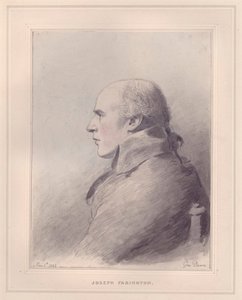
1747 - 1821 , United Kingdom
 Megtekintés
 Küldés
 Megosztás
 Részletek
 Útmutató

 Letöltés
 Hasonló darabok
 X-ray felvétel
 Diavetítés
 Q&A
Q&A Statisztika
 Összes részlet megjelenítése


