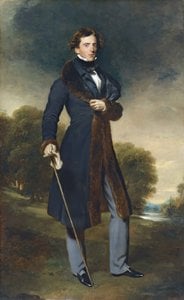
A Brushstroke of Regency Splendor: The Life and Art of Sir Thomas Lawrence
Sir Thomas Lawrence, a name synonymous with the elegance and sophistication of the Regency era, was more than just a portrait painter; he was a chronicler of his time. Born in Bristol in 1769 amidst the vibrant bustle of a port city, his early life was marked by movement – following his father’s innkeeping ventures across Devizes and finally settling in the fashionable spa town of Bath. It was within these convivial settings that Lawrence's artistic talent first began to shine, sketching remarkably accurate portraits for local patrons while still supporting his family. This nascent skill, honed without formal instruction but fueled by innate observation and a keen eye for detail, hinted at a prodigious gift – a gift he would soon transform into a celebrated career.Ascension to Portraiture’s Pinnacle
The move to London in 1789 marked the true beginning of Lawrence's ascent. He quickly established himself as a portrait painter in oils, securing his first royal commission – a captivating portrait of Queen Charlotte – and instantly catapulting him into the heart of London society. This wasn’t merely about technical skill; Lawrence possessed an extraordinary ability to capture not just likeness but also *character*, imbuing his subjects with a flattering yet insightful presence. He became a master of portraying the glamour, refinement, and social dynamics of the Regency period, painting nobility, royalty, and prominent figures with a virtuoso handling of paint that drew comparisons to Sir Joshua Reynolds, whom he deeply admired. Lawrence’s election as an associate, then full member, of the Royal Academy in 1791 and 1794 solidified his position within the established art world – a testament to his growing reputation and artistic merit. His success was further underscored by his appointment as Painter-in-Ordinary to the King in 1800, a prestigious role that granted him unparalleled access to the highest echelons of power and provided a steady stream of lucrative commissions.The Waterloo Chamber and Artistic Innovation
Lawrence’s career reached its zenith during the Napoleonic Wars, particularly with his commission to paint portraits for the Waterloo Chamber at Windsor Castle. This monumental undertaking – intended to commemorate the decisive victory over Napoleon – demanded not only technical mastery but also a profound understanding of composition and scale. The resulting series of portraits, depicting allied leaders from across Europe, showcased Lawrence’s ability to capture gravitas, authority, and the complex relationships between nations. These works were more than just paintings; they were powerful statements about British leadership and the triumph of reason over tyranny. Beyond this grand project, Lawrence continued to innovate in his portraiture style, refining his use of light and shadow, experimenting with color palettes, and developing a distinctive technique that blended classical elegance with a subtle sense of Romanticism.Personal Life and Complexities
Despite his professional triumphs, Lawrence’s personal life was marked by both passion and sorrow. He became deeply involved with the Siddons family – Sarah Siddons, a celebrated actress, and her daughters, Maria and Sally. These relationships provided him with inspiration and companionship but also brought heartache and scandal to his reputation. Lawrence struggled financially throughout much of his career, often burdened by debt despite earning substantial sums from his commissions. He was known for his meticulous attention to detail, sometimes spending weeks perfecting a single portrait, which contributed to the delays and financial pressures he faced. Furthermore, Lawrence’s sitters reflected the social landscape of his time – including both slave owners and abolitionists – a stark reminder of the moral ambiguities inherent in Regency society.A Lasting Legacy
Sir Thomas Lawrence died in London in 1830 at the age of 61, leaving behind a remarkable body of work that continues to captivate audiences today. His portraits are celebrated for their elegance, technical brilliance, and ability to capture the essence of his subjects – offering a vivid glimpse into the world of Regency England. While his reputation experienced a decline during the Victorian era, largely due to shifting artistic tastes, Lawrence’s legacy has been partially restored in recent decades, recognizing him as one of Britain's most accomplished and enduring portraitists. His influence can be seen in the works of later painters who sought to emulate his style and capture the spirit of an era, solidifying his place as a pivotal figure in British art history. His work remains a testament to his talent, charm, and enduring contribution to the world of art.Kérdések és válaszok
Milyen más nevét vagy álneveit használ még Thomas Lawrence?
Thomas Lawrence más néven is ismert: Sir Thomas Lawrence.
Szűrhetem Thomas Lawrence műveit szín alapján?
Thomas Lawrence művei színek szerinti csoportosítással is felfedezhetők a művész Színindex oldalán.
Hogyan fejlődött Thomas Lawrence művészete az idő múlásával?
Thomas Lawrence munkásságának időrendi áttekintése a művész Krónika oldalán érhető el, ahol az alkotások fejezetről fejezetre, a készítés sorrendjében követhetők egymást.