INGYENES MŰVÉSZETI TANÁCSADÁS

x
Nyomat vásárlása Nyomat vásárlásaKép letöltése Kép letöltése MegosztásMegosztás
RészletekRészletek Kedvencekhez ad Kedvencekhez ad LetöltésLetöltés Hasonló alkotásokHasonló alkotások X-ray felvételX-ray felvétel DiavetítésDiavetítés

Cloud Study, Hampstead, Tree at Right

This artwork exemplifies Constable's Romantic style, prioritizing observation and conveying the sublime beauty of nature through expressive brushstrokes.

Fedezze fel John Constable (1776-1837) ikonikus tájképeit! Romantikus angol festő, aki a Suffolk vidékének, különösen a Dedham Vale természetes szépségét ábrázolja. Kézzel festett reprodukciókat kínálunk!

Kézzel készített olajfestmény reprodukció

Kézzel festett olajvastú vászon, az Ön által választott méretben és keretben, művészeink készítik meglévőre.

Standard
custom
CM
INCH

Válasszon előre meghatározott méreteink közül, amelyek megfelelnek a műalkotás eredeti arányainak.

szélesség
magasság

Ön megadhat saját méreteket egy adott kerethez vagy térhez igazításhoz. Ha a kiválasztott méret nem egyezik az eredeti kép arányával, akkor a műalkotást levágjuk, vagy további kézzel festett elemekkel meghosszabbítjuk a festményt. A gyártás megkezdése előtt küldünk Önnek egy digitális előnézetet jóváhagyásra.
Kérjük, vegye figyelembe, hogy a képernyőn megjelenő előnézet nem tükrözi a tényleges vágást vagy kiterjesztést. Csak az előnézet fog pontosan mutatni a végső kompozíciót.
Bár egyedi méretek állnak rendelkezésre, javasoljuk, hogy válasszon egy méretet az előre meghatározott listából az eredeti arányok megőrzése érdekében.

Példák arra, mit lehet módosítani: az arc kicserélése az ügyfél fotójára; háziállat hozzáadása (pl. macska helyett kutya); rejtett üzenet elhelyezése a háttérben; a háttér tájának vagy elemeinek megváltoztatása.
A rendelést követően a WahooArt.com csapata e-mailt küld az ügyfélnek az instrukciókért, és biztosít egy előnézeti képet (mockup).

Világszerte elérhető szállítás () 3-4 hét alatt a szokásos 5 hét helyett. (2 július). A minőség nem kérdőjelezhető.

why_choose_icon
Ingyenes globális expressz szállítás
why_choose_icon
Prémium minőségű len vászon
why_choose_icon
Teljes szállítási biztosítás
why_choose_icon
Vámvisszatérítési Garancia
why_choose_icon
Tökéletes színpontosság garancia
why_choose_icon
60 napos visszaküldési lehetőség (csak gyártási hibák esetén)
why_choose_icon
100%-os pénzvisszatérítési garancia
why_choose_icon
Kedvezmény több termény esetén

Összesen

-

reproduction

Cloud Study, Hampstead, Tree at Right

Reprodukciós technika

A reprodukció mérete

-

Összesített ár

-

Rövid tények

  • Influences: Claude Lorrain
  • Title: Cloud Study, Hampstead
  • Notable elements or techniques: Loose brushstrokes, Atmospheric perspective
  • Movement: Romanticism
  • Location: Private Collection
  • Year: 1821
  • Medium: Oil on Canvas

Művészeti kvíz

Minden kérdésre csak egy helyes válasz létezik.

Kérdés 1:
What artistic movement is John Constable’s ‘Cloud Study, Hampstead’ primarily associated with?
Kérdés 2:
The painting utilizes atmospheric perspective to convey what visual effect?
Kérdés 3:
What is Constable’s primary focus when depicting cloud formations?
Kérdés 4:
The tree in the lower right corner serves what purpose within the composition?
Kérdés 5:
How does Constable achieve textural quality in his painting?

A műalkotás leírása

A Breath of Hampstead’s Sublime

John Constable's "Cloud Study, Hampstead, Tree at Right" isn’t merely a depiction of weather; it’s an embodiment of Romantic idealism—a testament to the power of observation and the profound connection between humanity and the natural world. Painted in 1821, this unassuming canvas holds within it a wealth of artistic and intellectual significance, reflecting Constable's unwavering belief that art should strive to capture not just what is seen but also what is felt.
  • Subject Matter: The artwork focuses intently on the atmospheric conditions above Hampstead Heath—specifically, a dramatic cloudscape punctuated by the silhouette of a solitary tree. Constable eschewed grand landscapes populated with figures, favoring instead a quiet contemplation of nature’s grandeur.
  • Style & Technique: Constable's approach aligns perfectly with Romanticism’s core tenets. He rejected academic conventions in favor of expressive brushwork—loose, visible strokes that convey movement and texture—creating an illusion of depth and dynamism. The painting is characterized by a painterly style prioritizing feeling over precise representation.
  • Color Palette: Dominated by shades of blue – ranging from palest cerulean to deeper indigo – the palette captures the diffused light characteristic of overcast days. Subtle yellows and greens emerge in the tree’s foliage, providing visual contrast and hinting at the vibrancy beneath the dominant atmospheric haze.

Constable's Romantic Vision

The painting speaks volumes about Constable’s philosophical stance. He famously declared that “a gentleman’s park is my aversion,” prioritizing the untamed beauty of the countryside over meticulously landscaped gardens. This preference stemmed from a conviction that true artistic inspiration resided in confronting the sublime—the awe-inspiring grandeur of nature that transcends rational comprehension. "Cloud Study, Hampstead" exemplifies this ideal, inviting viewers to immerse themselves in the tranquility and contemplation offered by unspoiled landscapes.
  • Perspective & Depth: Constable skillfully employs atmospheric perspective – a technique pioneered during the Romantic era – to convey depth within the sky. Distant clouds appear paler and less defined than those closer to the viewer, mirroring how our eyes perceive objects at varying distances.
  • Historical Context: Produced in the wake of Napoleonic Wars, “Cloud Study” reflects the broader cultural preoccupation with emotion and imagination prevalent during the Romantic period. It stands as a counterpoint to Neoclassical art’s emphasis on reason and order, asserting instead the primacy of subjective experience.

Texture & Emotion: The Language of Brushstrokes

The painting's surface is alive with texture—a deliberate choice by Constable that underscores the artwork’s emotional impact. Thick impasto brushstrokes capture the density and softness of the clouds, creating a tactile sensation for the viewer. This technique isn’t merely decorative; it serves to convey the artist’s feeling about his subject matter – an appreciation for its inherent beauty and power. The tree's dark foliage provides grounding contrast, reinforcing the painting's visual harmony.

A Legacy of Observation

“Cloud Study, Hampstead” remains a cornerstone of Constable’s oeuvre and a quintessential example of Romantic landscape painting. Its enduring appeal lies in its ability to transport viewers back to a moment of serene contemplation—a reminder that art can illuminate the profound connections between humanity and the natural world. Reproductions offer an opportunity to experience this sublime vision firsthand, bringing Constable's masterful technique and evocative sensibility into modern homes.

Hasonló műalkotások


A művész életrajza

A Life Rooted in the English Landscape

John Constable (East Bergholt, Suffolk, 1776. június 11. – London, 1837. április 1.) angol tájképfestő. Jelentős szerepe volt az angol romantikus tájképfestészet történetében és alkotói stílusa meghatározó befolyást gyakorolt a francia romantikus festőkre, a barbizoni iskolára és az impresszionistákra. A Királyi Művészeti Akadémia (Royal Academy of Arts, London) tagja volt.

Élete és munkássága

Suffolkban született, édesapja molnár volt. Vidéki környezetben nőtt fel, akárcsak Rembrandt. Korán elkezdett rajzolni, 21 éves korától azonban atyja munkáját kellett segítenie, majd csak 1800-ban ment el Londonba tanulni. Romantikus házasságot kötött, azaz szerelmi házasságot. A fiatal leány Maria Bicknell – evangélikus lelkész nagyapja ellenkezésére nem hallgatva – feleségül ment a festőhöz. Házasságukból született néhány gyermek, de 1828-ban a feleség tüdőbajban meghalt. Constable kiváló arcképfestő is lehetett volna, erről tanúskodik felesége képe 1816-ből. Constable sokkal fontosabbnak tartotta a tájképfestést, mint a portréfestést. Művészeti hitvallása szerint a természet közvetlen és beható tanulmányozása a legfontosabb. Próbálkozott történelmi és vallási témák feldolgozásával is pályája kezdetén, de mindig visszatért a tájképfestéshez. Pályájának kezdetén több 17. századi holland festő (Ruisdael, Koninck, Claude Lorrain (1600–1682), Rubens) és egy 18. század]i angol tájképfestő (Thomas Girtin (1775–1802) volt rá hatással. Azonban e hatások nem voltak tartósak, Constable saját megérzései és meglátásai alapján festett. Constable két jeles kortárs tájképfestővel Turnerrel és Boningtonnal indította el a 19. századi modern tájképfestészetet.

Breaking with Convention: A New Vision of Nature

Constable’s artistic development was marked by a deliberate rejection of prevailing academic conventions. Dissatisfied with the idealized and often theatrical landscapes favored by the Royal Academy, he sought instead a truthful representation of nature, imbued with personal feeling. He wasn't interested in grand historical narratives or mythological scenes; his focus remained steadfastly on the familiar countryside surrounding him. This commitment to depicting ordinary subjects – hay wains, farm buildings, village life – was initially met with resistance from critics who deemed his work too commonplace and lacking in ambition. However, Constable persevered, driven by a conviction that beauty resided in the everyday. He pioneered a technique of *plein air* painting, venturing outdoors to directly observe and capture the fleeting effects of light and weather. This direct engagement with nature allowed him to infuse his canvases with an immediacy and vitality previously unseen in British landscape art. His brushwork became increasingly loose and expressive, employing impasto – thick layers of paint – to create texture and convey a sense of movement and atmosphere. He wasn’t simply recording what he saw; he was translating his emotional response to the land into visual form.

Iconic Works and Lasting Influence

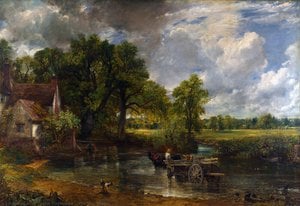
Constable's most celebrated works stand as testaments to his unique vision. The Hay Wain (1821), perhaps his most recognizable painting, depicts a quintessential rural scene on the River Stour, capturing the tranquility and harmony of agricultural life. Hadleigh Castle (1829) showcases his dramatic use of light and atmospheric effects, transforming a crumbling ruin into a powerful symbol of time’s passage. The series of paintings depicting Salisbury Cathedral from the Meadows (1831) demonstrates his ability to evoke different moods and times of day, revealing the cathedral as an integral part of the natural landscape. Netley Abbey (1824), with its evocative depiction of architectural grandeur amidst encroaching nature, exemplifies his skill in blending human creation with the wild beauty of the countryside. Despite facing initial struggles for recognition in England, Constable achieved considerable acclaim in France, where his innovative techniques and emotional depth resonated deeply with artists seeking a more naturalistic approach to landscape painting. He profoundly influenced the Barbizon School, a group of French painters who shared his commitment to *plein air* painting and direct observation of nature.

Personal Life & Final Years

Constable’s personal life was marked by both joy and sorrow. He married Maria Bicknell in 1816, and they had seven children, though sadly several did not survive infancy. His marriage provided him with emotional support but also financial strain. Elected a Royal Academician in 1829, he continued to face criticism from some quarters, particularly regarding his unconventional techniques. His later years were shadowed by Maria’s declining health and eventual death in 1828, an event that deeply affected him. Despite these hardships, Constable remained dedicated to his art, continuing to paint until his own passing on March 31, 1837. He left behind a rich artistic legacy—a testament to his unwavering commitment to capturing the beauty and emotional resonance of the English countryside. His paintings remain powerful evocations of a bygone era, inviting viewers to experience the landscape through his uniquely sensitive eyes.

John Constable

John Constable

1776 - 1837 , Egyesült Királyföld

Rövid tények

  • Artistic Movement Or Style: Romantika
  • Artists Or Movements Influenced By This Artist: ['Barbizon Schule']
  • Artists Who Influenced This Artist:
    • Claude Lorrain
    • Ruisdael
  • Date Of Birth: 1776. június 11.
  • Date Of Death: 1837. április 31.
  • Full Name: John Constable
  • Nationality: Angol
  • Notable Artworks:
    • A fehér ló
    • Dedham Vale
    • Salisbury katedrális
  • Place Of Birth: East Bergholt, Anglia
Fedezze fel a műalkotásokat témák, stílusok és jellemzők szerint csoportosítva.