Megtekintés Műalkotás AR előnézete Áttérés Nyomtatványra Kézzel festett másolat rendelése Küldés
Részletek Kedvencekhez ad Letöltés Hasonló darabok X-ray felvétel Diavetítés Statisztika

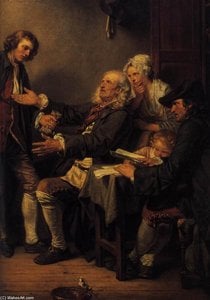
The Broken Pitcher

Experience the poignant emotion of The Broken Pitcher by Jean-Baptiste Greuze (1771), a masterpiece capturing sentimental 18th-century life; bring this timeless sorrow home.

"HungarianMetaDescription": "Greuze francia festő, a 18. század egyik legjelentősebb alakja. Érzelmes zsánerképeivel és morális történeteiivel árasztotta el közönségét, a Rococo stílus egyik kiemelkedő képviselője."

Vásároljon nagy felbontású, javított digitális képet, amely minőségében messze felülmúlja az online előnézetet.

Minden fájlt szakembereink a legmodernebb eszközök és precíz, kézi retusálás segítségével készítenek el aprólékosan. Gondoskodunk arról, hogy minden kép kivételes tisztasággal, pontos színhelyességgel és részletgazdag finomsággal rendelkezzen.

A végleges fájl 72 órán belül e-mailben megérkezik, professzionális, szerkesztői és nyomtatási környezetbe optimalizálva az azonnali használathoz. Ez ugyanaz a minőség, amelyben a legmeghatározóbb tervezőstúdiók, kiadók és galériák is megbízhatnak.

Digitális kép

Töltsön le nagy felbontású fájlt személyes kiállításokhoz, nyomtatáshoz és kreatív projektekhez. ( Áttérés Nyomtatványra Kézzel festett másolat rendelése)

Összesített ár

$ 24,90

Minden digitális kép rendeléséhez tartozó extrák

Szakértői digitális kézbesítés, garantáltan

Amikor a WahooArt.com szolgáltatást választja, nem csupán egy képet kap – professzionálisan felmagasított digitális műalkotást kap, amely precizitással készült, és amelyet megelégsedési gwarancia tesz biztoslássá. Az alábbiakban automatikusan minden benne 】

shipping_icon
Gyors e-mail teslimítés

A nagy felbontású digitális képmásolatát a megrendelést követő 72 órán belül e-mailben elküldjük Önnek – azonnal használható formátumban.

canvas_icon
MI-alapú digitális fejlesztésű fájl

Műve professzionális módon kerül optimalizálásra fejlett mesterséges intelligencia eszközök és manuális szerkesztés segítségével, biztosítva a maximális részletességet, tisztaságot és színpontosságot.

insurance_icon
Örök életű ingyenes újradelivery

Véletlenül törölted vagy elvesztetted a fájlodat? Ne aggódj – bármikor ingyen újra megküldjük neked.

tax_icon
Nincs importköltség – soha

Élvezze műalkotásait azonnal, vám, illeték vagy szállítási költség nélkül – a digitális letöltések mindig adamentesek.

color_icon
Színpontosság garantálása

Professzionális eszközök és színkezelés segítségével garantáljuk, hogy digitális képe a lehető legpontosabban tükrözze az eredeti színeket.

return_icon
100 napos elégedettségi garancia

Ha nemມີ elégedett a digitális képével, 100 napon belül felülvizsgáljuk vagy 100% visszatérítjük az amountot – kérdés बिना.

guarantee_icon
100% Pénzvisszatérítési garancia

Nem tetszett a vásárlás? 100 napon belül teljes visszatérítést garantálunk a digitális fájl megvételétől számítva – kérdés बिना.

discount_icon
Tömegrendelési kedvezmények

Vásároljon 3 képet, spóroljon 10%-et - Vásároljon 5-öt, spóroljon 15%-et - Vásároljon 10+ képet, spóroljon 20%-at. Kiváló kreatív projektekhez, galériákhoz és ügynökségekhez.

Gyors információk

  • Year: 1771
  • Artist: Jean-Baptiste Greuze
  • Subject or theme: Distress, loss, heartbreak
  • Artistic style: Sentimental genre painting
  • Dimensions: 109 x 87 cm

Művészeti kvíz

Minden kérdésre csak egy helyes válasz létezik.

Kérdés 1:
What is the primary emotional atmosphere suggested by 'The Broken Pitcher'?
Kérdés 2:
Who is the artist credited with painting 'The Broken Pitcher'?
Kérdés 3:
In what year was 'The Broken Pitcher' painted?
Kérdés 4:
Which element is NOT mentioned as being in the background of the painting?
Kérdés 5:
Jean-Baptiste Greuze was known for his talent in capturing which aspect of human life?

A Whisper of Melancholy: Exploring The Broken Pitcher

To stand before Jean-Baptiste Greuze's The Broken Pitcher is to step directly into the heart of eighteenth-century sentimentality. This painting, executed in 1771, is far more than a mere portrait; it is a carefully composed tableau vivant of human vulnerability. The subject—a woman enveloped in a simple white dress—commands immediate attention, her posture speaking volumes without uttering a single word. Her hands, clasped together near her chest, suggest a profound internal dialogue, perhaps one tinged with loss or deep contemplation. Greuze masterfully captures that fleeting moment when emotion crests just before it breaks.

The Art of Sentiment: Context and Style

Greuze himself was a pivotal figure whose career blossomed during the rise of genre painting, an art form deeply attuned to the everyday dramas and emotional nuances of bourgeois life. While academic tastes often favored grand historical epics or mythological grandeur, Greuze found his voice in the intimate sphere. The Broken Pitcher exemplifies this shift toward sentimentality. The inclusion of secondary elements—the watchful dog and the sturdy chair—are not mere props; they are silent witnesses to the woman's emotional state. They ground the ethereal quality of her sorrow in a tangible, domestic reality, making her heartbreak feel immediate and deeply relatable to the viewer.

Technique and Emotional Resonance

The technical brilliance at play here lies in Greuze’s ability to render texture and gesture with exquisite care. Observe the soft fall of the white drapery against the darker tones of the background; this contrast serves to isolate and illuminate the figure's emotional core. The brushwork, while skilled enough for a high-quality reproduction, retains the characteristic warmth of an artist deeply invested in narrative feeling. It is through these subtle gradations of light and shadow that Greuze guides our eye directly to the poignant expression on her face, inviting us into the quiet drama unfolding within the frame.

Symbolism of Loss and Connection

The title itself, The Broken Pitcher, hints at a narrative tragedy or a broken promise—a potent symbol of shattered domestic peace or emotional wholeness. The pitcher, though unseen in its broken state, acts as an emotional proxy for the woman's own fractured spirit. The dog, often symbolizing unwavering loyalty, adds a layer of poignant companionship to her solitude. For the modern collector or decorator, this piece offers more than just aesthetic beauty; it offers a contemplation point—a beautiful meditation on resilience found within moments of perceived breakage.

Bringing Sentiment Home

Reproducing such an emotionally charged work allows one to infuse a space with history and deep feeling. Whether displayed in a formal drawing-room or a more intimate study, The Broken Pitcher acts as a soulful anchor. It speaks to the enduring human capacity for profound feeling—joy, sorrow, longing—and reminds us that the most powerful art often resides not in what is grandly depicted, but in what is quietly felt.


A művész életrajza

A Life Etched in Sentiment: The World of Jean-Baptiste Greuze

Jean-Baptiste Greuze, a name synonymous with the intimate and emotionally charged world of 18th-century French painting, was born in Tournus, a small Burgundian town steeped in history, on August 21st, 1725. His early life, far removed from the grand salons and aristocratic circles that dominated the art world, shaped his artistic vision profoundly. His father, a humble roofer, initially discouraged his son’s burgeoning artistic inclinations, believing it an unsuitable pursuit for a young man destined for a practical trade. However, a chance encounter with Grandon, a respected Lyonese artist known for his portraits, ignited a spark within Greuze – a passion that would ultimately redefine the landscape of French painting. Grandon recognized and nurtured this talent, providing young Jean-Baptiste with invaluable instruction and laying the foundation for his future success. This early mentorship proved pivotal, setting him on a path that defied societal expectations and led to an extraordinary artistic career.

The Rise of a Genre Painter

Greuze’s ascent to fame began in 1755 with *Le Père de famille expliquant la Bible à ses enfants* (The Father Explaining the Bible to His Children). This wasn't merely a depiction of domestic life; it was an embodiment of Enlightenment ideals, a carefully constructed tableau that championed familial piety and moral instruction. The painting resonated deeply with contemporary audiences, capturing a spirit of bourgeois virtue – a burgeoning sense of morality and social responsibility – that was rapidly gaining prominence in French society. The discerning collector Ange-Laurent de La Live de Jully recognized the work’s significance and acquired it, catapulting Greuze to immediate recognition and establishing him as a rising star within the Parisian art scene. Following this initial success, he embarked on a series of further genre scenes – intimate glimpses into everyday life imbued with emotional depth and moral undertones. A pivotal journey to Italy in 1755, undertaken alongside Abbé Gougenot, broadened his artistic horizons, exposing him to classical models and influencing his approach to composition and subject matter. However, despite this exposure, Greuze ultimately found greater inspiration in the realities of French society than in the idealized world of ancient Greece and Rome.

Mastering Emotion and Moral Narrative

Greuze’s true genius lay not simply in his technical skill but in his unparalleled ability to capture and convey human emotion. His paintings are characterized by a remarkable sensitivity to nuance, a profound understanding of psychological states, and an almost uncanny capacity to evoke empathy in the viewer. Works such as *La Jeune Fille qui pleure son oiseau mort* (The Young Girl Weeping for Her Dead Bird) and *Savoyard with a Dancing Doll* are prime examples of this talent. These aren’t merely portraits; they are explorations of grief, innocence, vulnerability, and the complexities of human experience. He possessed an extraordinary ability to capture subtle expressions – a fleeting glance, a tremor in the hand, a tear rolling down a cheek – conveying inner turmoil with remarkable precision. His compositions were often meticulously staged, utilizing dramatic lighting, carefully chosen props, and expressive gestures to heighten emotional impact. The use of chiaroscuro—the contrast between light and dark—was particularly effective in drawing attention to key moments and amplifying the drama of his scenes. Denis Diderot, a leading intellectual of the Enlightenment, recognized Greuze’s unique talent, praising his ability to “paint morality” – to distill complex ethical dilemmas into accessible and emotionally resonant narratives.

The Academy and Shifting Styles

Despite his burgeoning fame and critical acclaim, Greuze faced significant obstacles in achieving recognition within the established art world. He initially sought admission to the Académie Royale de Peinture et de Sculpture in Paris, hoping to be accepted as a history painter – the most prestigious category within the institution. However, his attempts were repeatedly rebuffed, largely due to his refusal to submit a “salon piece” – a work designed to impress the Academy’s members. This rejection led him to focus on genre painting, a less demanding but equally rewarding path. In 1769, he presented *Septimius Severus Reproaching Caracalla* (The Emperor Septimius Severus Reproaching His Son Caracalla), an ambitious historical scene intended to demonstrate his mastery of classical composition and subject matter. Unfortunately, the painting was met with harsh criticism, and Greuze was ultimately accepted into the Academy only as a genre painter – a decision that deeply wounded his artistic pride. This rejection marked a turning point in his career, leading him to withdraw from exhibiting at the Salon for many years and to increasingly explore darker and more morally ambiguous themes in his work.

Later Years and Lasting Legacy

The final years of Greuze’s life were characterized by financial hardship and increasing isolation. He continued to paint prolifically, but his later works often explored themes of seduction, illicit love, and moral transgression – subjects that departed significantly from the sentimental morality of his earlier masterpieces. These paintings, while technically proficient, lacked the emotional depth and moral clarity that had defined his most celebrated work. Despite this decline in artistic form, Jean-Baptiste Greuze’s influence on French art remains profound. He pioneered a new genre of painting – a distinctly modern approach to depicting everyday life and exploring universal human emotions. His ability to capture subtle nuances of expression and to tell compelling moral stories paved the way for later artists who sought to portray the realities of contemporary society with honesty and sensitivity. Greuze’s legacy endures as one of the most important figures in 18th-century French art, a testament to his extraordinary talent and enduring ability to move audiences through the power of paint.

Key Works & Their Significance

  • Le Père de famille expliquant la Bible à ses enfants (1755): A cornerstone of his early success, embodying Enlightenment ideals of familial piety.
  • La Jeune Fille qui pleure son oiseau mort (c. 1765): Demonstrates Greuze’s mastery of emotional expression and poignant storytelling.
  • Savoyard with a Dancing Doll (c. 1763): Captures the spirit and vulnerability of childhood, showcasing his skill in portraiture.
  • Septimius Severus Reproaching Caracalla (1769): A failed attempt at historical painting that highlighted his strengths lay elsewhere.
  • The Broken Pitcher (c. 1770s): Represents a shift towards more sensual and morally ambiguous themes in his later work.

Greuze János

Greuze János

1725 - 1805 , Franciaország

Érdekességek

  • Artistic Movement Or Style: Rococo, Zsánerfestészet
  • Artists Or Movements Influenced By This Artist: ['Holland zsánerfestők']
  • Artists Who Influenced This Artist: ['Francia zsánerfestők']
  • Date Of Birth: 1725. augusztus 21.
  • Date Of Death: 1805. március 4.
  • Full Name: Jean-Baptiste Greuze
  • Nationality: Francia
  • Notable Artworks:
    • A Vaterő magyarázza a Bibliát...
    • Egy lány halott madárral
    • Savoyárd táncoló plüssköbökkel
  • Place Of Birth: Tournus, Franciaország