Anna Borkowska: Threads of Memory and Resilience
Anna Borkowska (1916 – 2008) emerged from the crucible of Soviet exile, forging a distinctive artistic path rooted in textile art—a medium that served as both a reflection of her personal journey and a powerful expression of broader themes concerning displacement, memory, and the enduring spirit of human experience. Born in Mykolaiv, Russia, Borkowska’s early life was irrevocably altered by the tumultuous events of World War II and the subsequent Soviet occupation of Poland. Forced to flee her homeland with her family, she endured the hardships of Siberian resettlement—a formative period that instilled within her a profound understanding of vulnerability and resilience.
Her artistic vocation blossomed amidst this backdrop of upheaval. Borkowska’s fascination with textiles stemmed from an instinctive desire to capture intangible emotions and experiences – memories woven into fabric itself. Unlike many artists of her time who focused on representational painting, Borkowska embraced abstraction, utilizing color palettes reminiscent of the Baltic Sea—a landscape deeply ingrained in her subconscious and symbolizing both tranquility and turbulent currents. Her distinctive style combined meticulous craftsmanship with a conceptual depth that resonated powerfully with audiences worldwide.
A pivotal moment arrived when she gained international recognition for her portrayal of the benevolent elderly woman in Jafar Panahi’s acclaimed film “The White Balloon” (1995). This role cemented Borkowska's reputation as an actress capable of conveying profound empathy and capturing the essence of human connection—a skill that translated seamlessly into her artistic endeavors. Her work consistently explored themes of loss, nostalgia, and the transformative power of confronting one’s past. The film showcased her ability to portray nuanced characters with sensitivity and grace, highlighting her commitment to portraying humanity's complexities.
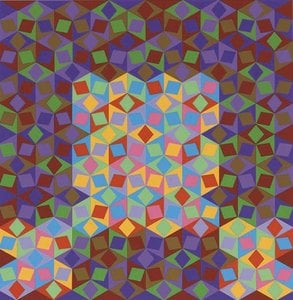
Borkowska’s oeuvre comprises numerous textile artworks, notably “Clothing Fabric” (1972), a mesmerizing watercolor design characterized by cool blues and purples arranged in a mosaic-like pattern. This piece exemplifies her commitment to conveying emotion through color and texture—a technique that speaks volumes about the artist's ability to distill complex feelings into visual form. The artwork’s serene aesthetic invites contemplation on themes of remembrance and transformation, mirroring Borkowska’s own life experience as a refugee who found solace in artistic creation. Her meticulous attention to detail—evident in the precise layering of pigments and the careful rendering of textures—underscores her dedication to mastering her craft and communicating profound ideas through visual language.
Despite her relatively modest output compared to some contemporaries, Anna Borkowska left an indelible mark on Iranian cinema and the broader art landscape. Her unwavering dedication to her craft—coupled with her ability to imbue her work with emotional resonance—ensured that her legacy would endure beyond her lifetime. She remains a testament to the transformative potential of artistic expression in confronting adversity and celebrating the beauty inherent in human memory, embodying resilience and creativity amidst challenging circumstances.
### Useful Links:
### Useful Content:
Early Life and Influences
Anna Borkowska was born in Mykolaiv, Russia, in 1916. Her formative years were marked by the devastation of World War II and subsequent Soviet occupation of Poland, experiences that profoundly shaped her worldview and instilled within her a deep appreciation for resilience.
Textile Art: A Reflection of Emotion
Borkowska’s artistic passion originated from an instinctive desire to capture intangible emotions—memories woven into fabric itself. Rejecting representational painting, she embraced abstraction, drawing inspiration from the tranquil yet turbulent Baltic Sea landscape.
Recognition in Film
Her breakthrough came with her portrayal of a compassionate elderly woman in Jafar Panahi’s “The White Balloon” (1995), securing her reputation as an actress adept at conveying empathy and capturing the essence of human connection. This role demonstrated her ability to portray complex characters with sensitivity.
Notable Artwork: Clothing Fabric
"Clothing Fabric" (1972) exemplifies Borkowska’s distinctive style—a watercolor design characterized by cool blues and purples arranged in a mosaic-like pattern. Her meticulous technique conveyed emotion through color and texture, reflecting her belief that art could communicate profound ideas.
Legacy
Despite her relatively modest output, Anna Borkowska’s unwavering dedication to her craft ensured that her legacy would endure beyond her lifetime. She remains a symbol of artistic resilience and creativity in the face of adversity—a testament to the transformative power of art.



 Acheter la peinture faite à la main
 Partager
 Partager
 Détails

 Télécharger
 Articles similaires
 Voir le diaporama
 Statistiques


 Afficher la suite






































 L'option verre n'est disponible que pour les dimensions inférieures à 110 cm.